Theopolis Logo

Writing

Explore our collection of theological essays, biblical studies, and reflections on faith and culture.

See all
aaron-burden-1ebsmyrau-s-unsplash
John

Moses & Jesus: Friends or Foes?

A Look at John 1.17 For the law was given through Moses, but grace and truth came through Jesus Christ. The above quotation is John 1.17 and comes from the New King James Version of the Bible. It is quite similar to the original translation in the old King James…

by Mark HorneJune 6, 2002

ben-white-w8qqn1pmqh0-unsplash
Christology

Grace Apart From Sin

And the Child continued to grow and become strong, increasing in wisdom; and the grace of God was upon Him. There is nothing faulty in this translation (New American Standard Bible); Jesus was the recipient of the grace of God His Father from whom He is eternally begotten and with…

by Mark HorneJune 6, 2002
ivan-aleksic-16yxcjsoaek-unsplash
Philemon

Flesh and Lord: Philemon 15 & 16

When Paul wrote to Philemon asking him to forgive his runaway slave, Onesimus, he gave Philemon an interesting perspective on how God used Onesimus’ action to bring about his conversion: For perhaps he was for this reason parted from you for a while, that you should have him back forever,…

by Mark HorneJune 6, 2002
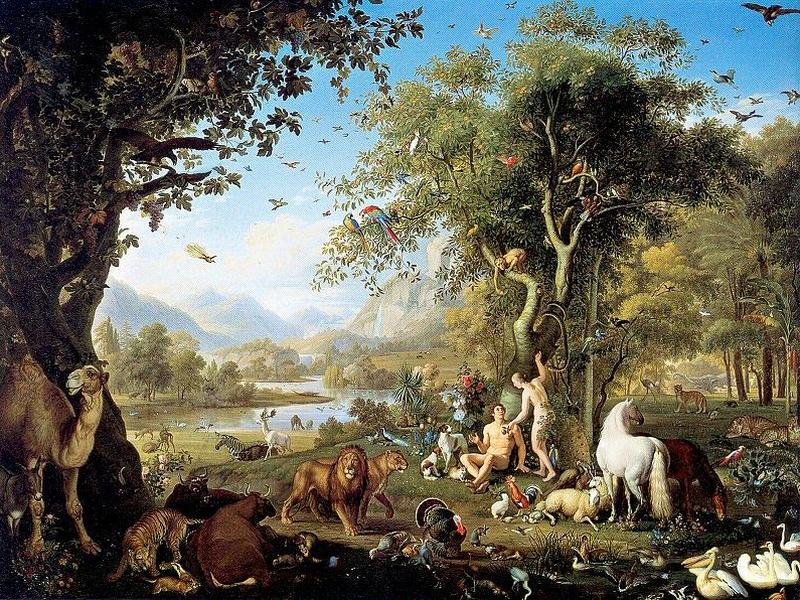
adam-and-eve-in-the-garden-of-eden-wenzel-peter
Covenant

Covenant of Works?

Adam’s good works were acceptable to God. He could do them and God would receive them. Our own “good” works, our very best works, require the forgiveness of God and the continual intercession of Jesus Christ due to their impurity. Thus, it is appropriate to describe God’s covenant with Adam…

by Mark HorneJune 6, 2002
sixteen-miles-out-al48tflf4e8-unsplash
Mark

Blasphemy Against the Holy Spirit?

In Mark’s Gospel we read: “And the scribes who came down from Jerusalem were saying, ‘He is possessed by Beelzebul,’ and ‘He casts out the demons by the ruler of the demons’” (3.22). Jesus replied in part, “Truly I say to you, all sins shall be forgiven the sons of…

by Mark HorneJune 6, 2002
e99a4713
Ecclesiology

A Visionary Ecclesiology

A Primer for Church Members on the Nature and Functions of the Body of Christ Introductory Note: I intend this paper to serve as something of a “user’s guide” for church members, though church leaders may also find it valuable in developing vision statements for their local bodies. I have…

by Rich LuskJune 5, 2002

Showing page 237 of 309

See all

Showing page 28 of 43

See all

Losing the Body

The Economist's review of Thomas Lacqueur's The Work of the Dead highlights the shifts in our funeral customs over the past few centuries: “A large part of the book is devoted to the slow transition from churchyards to cemeteries, a story of changing sensibilities, epitomised by the gradual replacement of…

December 4, 2015

Cultural Geography

In his forthcoming collection of essays, The Ways of the World , David Harvey observes that “it is impossible on the ground and in the streets to see where nature ends and culture begins. imposing a dichotomy where there is none is a fatal mistake.” Geography is his great illustration…

December 4, 2015

Hamlet Among Protestants and Catholics

Most readers and viewers of Hamlet take Hamlet’s most famous soliloquy as a meditation on suicide. In Hamlet, Protestantism, and the Mourning of Contingency , John E. Curran, Associate Professor of English at Marquette University, argues there are bigger things at work. Hamlet is opposing two ontologies, religious universes, moralities.…

December 3, 2015

Rhetoric: Ancient, Modern, Postmodern

Rhetoric is an ancient art. It was one of the main courses of study in ancient schools, along with grammar and logic. During the days of the Roman Empire, learning rhetoric was a path to power and prestige. Augustine, the great church father of North Africa, was trained as a…

December 3, 2015

Jerusalem, Sennacherib, and Us

The story of Jerusalem's deliverance from Sennacherib's Assyrian army, told in both 2 Kings and Isaiah, is an exciting account. It's a story worthy of Byron’s galloping verse, his medieval ballad. But still: So what? What does all this ancient history have to do with me, with my problems, with…

December 3, 2015

Would you sacrifice yourself for Iraq?

Why do we talk about patriotism in religious terms? asks Ivan Strenski (in a Library of Social Science essay): “For a student of religion what strikes one as odd is that we name the act of giving up one’s life for the sake of one’s nation, as a ‘sacrifice.' Why…

December 2, 2015

Showing page 345 of 2212

Browse by Category

In Medias Res

Your weekly digest for all things Theopolis.

Donate

Theopolis is nearly 100% donor-supported. Consider joining us on our mission.