Theopolis Logo

Writing

Explore our collection of theological essays, biblical studies, and reflections on faith and culture.

See all
kelly-sikkema-gpoh17dxqdm-unsplash
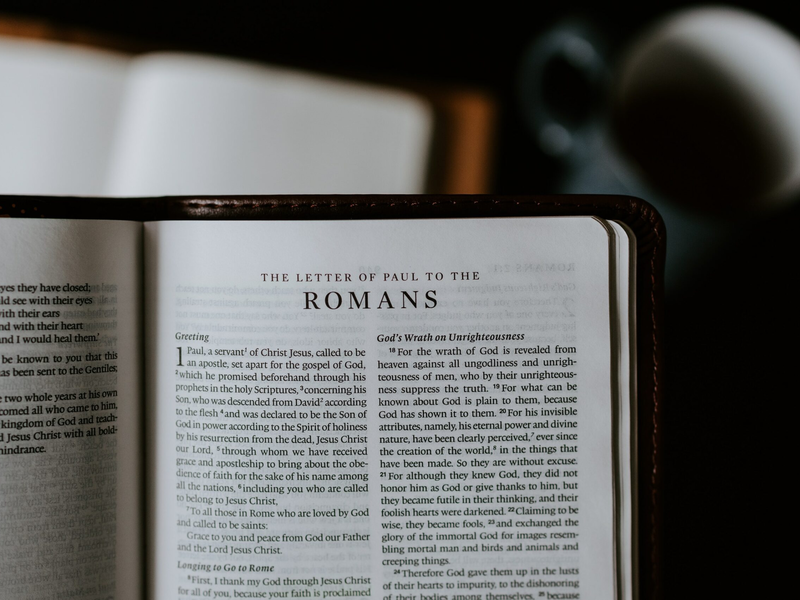
Romans

Paul’s Gospel & the Theme of Romans

Paul, a bond-servant of Christ Jesus, called as an apostle, set apart for the gospel of God, which He promised beforehand through His prophets in the holy Scriptures, concerning His Son, who was born of a descendant of David according to the flesh, who was declared the Son of God…

by Mark HorneJune 6, 2003

screenshot-2023-07-27-at-10-25-35-am
History

The Nelda Boswell Scroll: The Apostle Paul’s Town Hall Meeting in Iconium

With the surprising discovery of the Nelda Boswell scroll historians have deciphered its contents and concluded that the apostle Paul returned to the region of Galatia shortly after he wrote the letter that we call Galatians. The evidence suggests that a number of local pastors, elders, and deacons, along with…

by Jeff MeyersJune 6, 2003
aaron-burden-qjdzyt_k8xg-unsplash
Jonah

Jonah, the Judaizers, and the Gospel

Second Temple Judaism was a form of covenantal nomism, according to E. P. Sanders’ terminology. This means that Torah-observance was a way of expressing loyalty to the Lord of the covenant who had graciously elected Israel. I think Sanders’ view (taken up in bits and pieces and with some modifications…

by Rich LuskJune 6, 2003
Theologia

Gratitude or Faith?

We often hear that the key to Christian obedience is thankfulness for what God has done. But the Bible stresses faith and hope much more than gratitude. The Baptist pastor and author John Piper has written, “Nowhere in the Bible is gratitude connected explicitly with obedience as a motivation. We…

by Mark HorneJune 6, 2003
aaron-burden-qjdzyt_k8xg-unsplash
Federal Vision

God’s Righteousness & Our Justification

One of the questions that is commonly asked about Tom Wright regards his teaching about how Paul uses the term “the righteousness of God.” Since Wright’s interpretation of the term in Paul’s epistles is commonly mentioned in passing but rarely analyzed, it seems like a good idea to explicitly spell…

by Mark HorneJune 6, 2003
jordan-wozniak-xp_agmeea6s-unsplash
Genesis

Forever Means Forever: God’s Promises to the Jews

If God promised a certain land to the seed of Abraham, saying that it would be theirs “forever” (Gen. 13:15), why do Reformed churches teach that the Jews permanently lost their right to the land? What about all these Old Testament “forever” promises and prophesies made to the Jews? How…

by Jeff MeyersJune 6, 2003

Showing page 230 of 309

See all

Showing page 28 of 43

See all

Purity, Pauline Style

In his study of The Concept of Purity at Qumran and in the Letters of Paul , Michael Newton argues that Paul transfers the logic and patterns of purity and cult from the temple to the new temple-community, the church. Relying mainly on Corinthians, Newton writes: “By describing the Christian…

May 12, 2015

Sodom v. Circumcision

A hermeneutical rule of thumb I share with students: Chapter 2 comes after chapter 1. It has many applications, as in “Chapter 18 comes after chapter 17.” Make the observation, then ask, Why? Why is that story there , after this one and before that one? The story of Sodom…

May 11, 2015

Is David Among the Prophets?

After describing the heroes of faith from creation to Jericho with some leisure, Hebrews 11 closes with a rapid-fire survey of everything from the judges on (vv. 32-38). It's a nicely constructed passage. First, six individuals are named, followed by a general reference to “prophets”: Gideon, Barak, Samson, Jephthah, David,…

May 11, 2015

Mark of the Beast

In a 1991 article in the Tyndale Bulletin , Edwin Judge reviews the symbolic resonances of the phrase “mark of the beast,” but notes, rightly that “the visions of Revelation keep disconcertingly coming down to earth” (158). So he looks for historical evidence of a mark imposed by Roman authorities…

May 11, 2015

Anthropology and the Bible

In an essay on atonement in the Jewish Studies Quarterly from the early 1990s, Mary Douglas explains “the social origins of ideas about defilement in general”: Living in a community, people find themselves wanting to keep apart from some dissimilar others and to be included within sets of similars. To…

May 11, 2015

The Imperialism of Liberal Reason

“The ambition of the liberal political philosopher,” writes Paul Kahn ( Putting Liberalism in its Place , 120), is to find that set of arguments that is so compelling that every individual, not corrupted by the illogic of interest, would necessarily affirm those reasons as his own.” Because it assumes…

May 8, 2015

Showing page 428 of 2212

Browse by Category

In Medias Res

Your weekly digest for all things Theopolis.

Donate

Theopolis is nearly 100% donor-supported. Consider joining us on our mission.