Theopolis Logo

Writing

Explore our collection of theological essays, biblical studies, and reflections on faith and culture.

See all
e99a2225
Sacramental Theology

The Gospel according to the Sacraments (Part 3): One Lord, One Faith, One Baptism

In the first post of this series, I proposed that the sacraments of baptism and communion are the nexus point for the evangelical and ecumenical movements. In the following post , I proposed a new orientation for ecumenism – a conciliarity of the cross – with the necessary confession of…

by Michael SpalioneJanuary 2, 2018

img_1456
Baptism

Christian Mission and Cultural Transformation

“Contextualization” is now, and has been for a long time, the buzzword for the day. 1 Missionary effort in non-Western countries is all about “contextualization” — making our communication of the Gospel, if not the Gospel itself, fit into the culture to whom we from the West speak. 2 There…

by Ralph Allan SmithDecember 28, 2017
screen-shot-2016-03-31-at-9-32-11-am
Sacramental Theology

The Gospel According to the Sacraments, Part 2

In my previous post , I highlighted the sacraments as the point of convergence between evangelicalism and ecumenism arguing that baptism and communion are presented in the New Testament as signs of the gospel that simultaneously enact and remember union with Christ and the unity of Christ’s body. I concluded…

by Michael SpalioneDecember 27, 2017
e99a2313
Baptism

Baptism and Contextualization: Part 2

Click HERE for Part I of this series. What does baptism have to do with culture? As I said in the previous essay, the short answer is “everything!” To begin with, baptism is baptism into Jesus’ death (Romans 6:3). Paul explains this as the crucifixion of the “old man” (“old…

by Ralph Allan SmithDecember 21, 2017
e99a9334
Advent

Twin Nativities

In the accounts of our Lord’s nativity and early childhood, so familiar to us from many years of Advent and Christmas services, we often fail to recognize in them the gentle intimations of a greater nativity that is yet to come. The attentive ear, however, can discover in these passages…

by Alastair RobertsDecember 19, 2017
screen-shot-2017-11-02-at-12-43-15-pm
Advent

Daughters of Zion

Isaiah warns that Yahweh is coming to remove Judah’s leaders in every area of social, economic and political life so completely that there will be no one left to lead besides children (3:4) and women (v. 12). As Isaiah goes on, however, it becomes clear that the women of Judah…

by Peter LeithartDecember 14, 2017

Showing page 101 of 309

See all

Showing page 28 of 43

See all

Battle of the Soul

Prudentius’s Psychomachia (5 th century AD) is one of the first and one of the most influential of medieval allegories. It is the source of the battle of Virtue and Vice that was one of the key themes of medieval allegory, which carries right into the Elizabethan allegory of Spenser's…

April 27, 2015
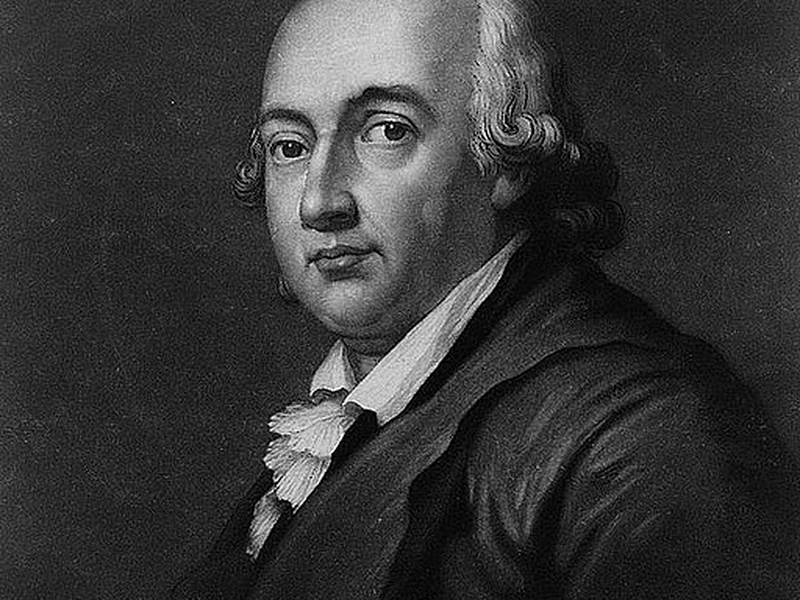
johann_gottfried_von_herder_by_john_sartain
Nationalism

Nations: Grown or Imagined?

R omantic thinkers like Johann Gottfried Herder, developed an organic conception of nationhood. For Herder, a nation is an extended family, and so a perfect nation, the most natural state, is “one nation, an extended family with one national character." (I rely on this essay by Richard White.) People have…

April 27, 2015

Imagining Finland

Nations are “imagined communities,” and one of the ways nations imagine themselves is to imagine themselves as very, very old. The Finnish epic, the Kalevala , serves as an illustration of the nexus between ancient literature and national identity. Anderson writes ( Imagined Communities , 74-5), “In the eighteenth century…

April 27, 2015

The Un-Dante

In a contribution to Petrarch: A Critical Guide to the Complete Works Teodolinda Barolini contrasts the love poetry of Petrarch's Rerum vulgarium fragmenta (also known as the Canzoniere ) with that of Dante. Petrarch continues the courtly paradigm. His interest is in the shifting psychology and drama of the male…

April 27, 2015

Deflating Humanism

In his E nglish Literature in the Sixteenth Century , CS Lewis makes two deflationary comments about the effects of Renaissance humanism. First, “The ‘barbarous’ books [of medieval Latin] have survived in the only sense that really matters: they are used as their authors meant them to be used. It…

April 24, 2015

Mystic Ark

Conrad Rudolph's The Mystic Ark is the product of impressive scholarship. Its focus is on the image of the mystic ark, a complex cosmic portrait showing “the Majesty” (looking like Jesus) enthroned, flanked by angels, holding a large disk, inscribed with a square turned sideways like a diamond. Inside the…

April 24, 2015

Showing page 435 of 2212

Browse by Category

In Medias Res

Your weekly digest for all things Theopolis.

Donate

Theopolis is nearly 100% donor-supported. Consider joining us on our mission.