Theopolis Logo

Writing

Explore our collection of theological essays, biblical studies, and reflections on faith and culture.

See all
david-weber-fwuo_zluhnw-unsplash
Books

For the Life of This World

Russian Orthodox liturgist Alexander Schmemann died in 1983, but his importance continues to grow, sometimes in surprising ways. A Russian transplanted to Paris and then to Crestwood, New York, he was an acute observer of the American religious scene. He possessed the clarity of vision the Spirit often grants to…

by Peter LeithartApril 15, 2013

aaron-burden-h8s0pf2rcqs-unsplash
Deuteronomy

Law and History: How to Read the Law of Moses (Part 5)

This is the fifth in a series of studies of Deuteronomy 22:3-23:8. "A bastard ( mazmer ) shall not enter into the assembly of Yahweh; even to the tenth generation shall none of his enter into the assembly of Yahweh" (Deuteronomy 23:2). [i] The translation “bastard” here for mazmer ,…

by Ralph Allan SmithApril 11, 2013
pawel-czerwinski-jbg6al282wq-unsplash
Christian Nationalism

Christian Imperialism

The Enlightenment project is very comprehensible in terms of the “Wars of Religion” that followed the Reformation. It's questionable whether all that is said about the Wars of Religion is entirely fair (R. J. Rushdoony’s Christian Survey of World History has some very helpful things to say about this). Still,…

by Richard BledsoeApril 8, 2013
aaron-burden-1ebsmyrau-s-unsplash
Deuteronomy

Law and History: How to Read the Law of Moses (Part 4)

The fourth in a series of studies on Deuteronomy 22:30-23:8. One wounded by crushing, or cut in the member shall not enter into the assembly of Yahweh (Deuteronomy 23:1. [i] The translation of this verse varies in different English versions. The basic idea is clear enough, however: a eunuch is…

by Ralph Allan SmithApril 3, 2013
markus-winkler-aid-xyrtlec-unsplash
Theopolis News

Leithart at Wheaton

Trinity House President Peter Leithart will give a lecture on violence at the 2013 Wheaton Theology Conference later this week.

by Peter LeithartApril 2, 2013
kiwihug-l4gw27xzn1i-unsplash
Deuteronomy

Law and History: How to Read the Law of Moses (Part 3)

The third in a series of studies on Deuteronomy 22-23. This continues the second essay, which examines Deuteronomy 22:30: "A man shall not take his father’s wife, and shall not uncover his father’s wing" (Hebrew: kanaf ). The Sin of Ham Another story would almost certainly occur to an ancient…

by Ralph Allan SmithMarch 27, 2013

Showing page 196 of 309

See all

Showing page 28 of 43

See all

Battle of the Soul

Prudentius’s Psychomachia (5 th century AD) is one of the first and one of the most influential of medieval allegories. It is the source of the battle of Virtue and Vice that was one of the key themes of medieval allegory, which carries right into the Elizabethan allegory of Spenser's…

April 27, 2015
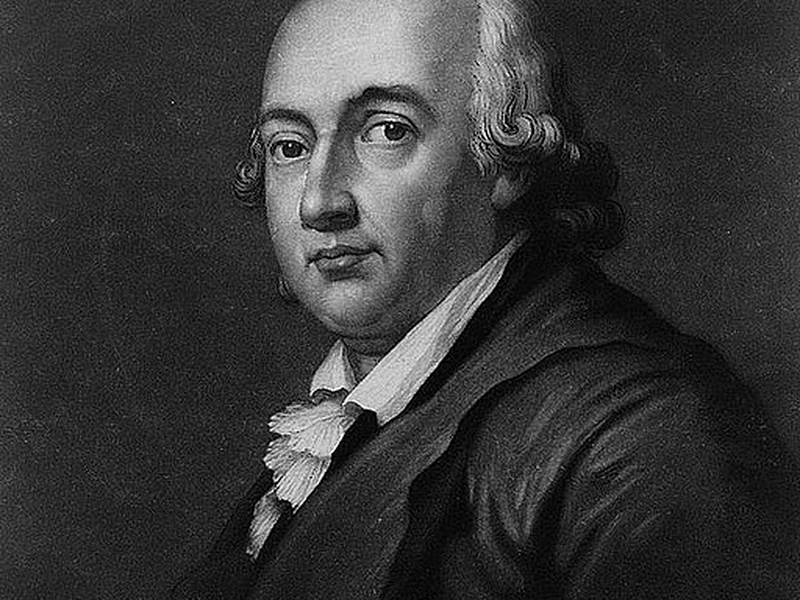
johann_gottfried_von_herder_by_john_sartain
Nationalism

Nations: Grown or Imagined?

R omantic thinkers like Johann Gottfried Herder, developed an organic conception of nationhood. For Herder, a nation is an extended family, and so a perfect nation, the most natural state, is “one nation, an extended family with one national character." (I rely on this essay by Richard White.) People have…

April 27, 2015

Imagining Finland

Nations are “imagined communities,” and one of the ways nations imagine themselves is to imagine themselves as very, very old. The Finnish epic, the Kalevala , serves as an illustration of the nexus between ancient literature and national identity. Anderson writes ( Imagined Communities , 74-5), “In the eighteenth century…

April 27, 2015

The Un-Dante

In a contribution to Petrarch: A Critical Guide to the Complete Works Teodolinda Barolini contrasts the love poetry of Petrarch's Rerum vulgarium fragmenta (also known as the Canzoniere ) with that of Dante. Petrarch continues the courtly paradigm. His interest is in the shifting psychology and drama of the male…

April 27, 2015

Deflating Humanism

In his E nglish Literature in the Sixteenth Century , CS Lewis makes two deflationary comments about the effects of Renaissance humanism. First, “The ‘barbarous’ books [of medieval Latin] have survived in the only sense that really matters: they are used as their authors meant them to be used. It…

April 24, 2015

Mystic Ark

Conrad Rudolph's The Mystic Ark is the product of impressive scholarship. Its focus is on the image of the mystic ark, a complex cosmic portrait showing “the Majesty” (looking like Jesus) enthroned, flanked by angels, holding a large disk, inscribed with a square turned sideways like a diamond. Inside the…

April 24, 2015

Showing page 435 of 2212

Browse by Category

In Medias Res

Your weekly digest for all things Theopolis.

Donate

Theopolis is nearly 100% donor-supported. Consider joining us on our mission.