Theopolis Logo

Writing

Explore our collection of theological essays, biblical studies, and reflections on faith and culture.

See all
aaron-burden-h8s0pf2rcqs-unsplash
Galatians

The Restoration of the Galatians

While controversies over the writings of Paul continue in various corners of the intellectual globe, the word of God given through Paul and his scribe and all of the church’s interpreters and translators over the last two millennia is still readily available to the lofty and the lowly. Paul, as…

by Grace LangnessMarch 25, 2013

kiwihug-l4gw27xzn1i-unsplash
Deuteronomy

Law and History: How to Read the Law of Moses (Part 2)

The second in a series of studies in Deuteronomy. Deuteronomy 22:30: A man shall not take his father’s wife, and shall not uncover his father’s wing (Hebrew: kanaf ). There are a number of unusual features in this law that mark it out from the previous context, indicating that it…

by Ralph Allan SmithMarch 20, 2013
200403-moss-pilate-tease_pncfq5
History

Victimhood and the Gospel

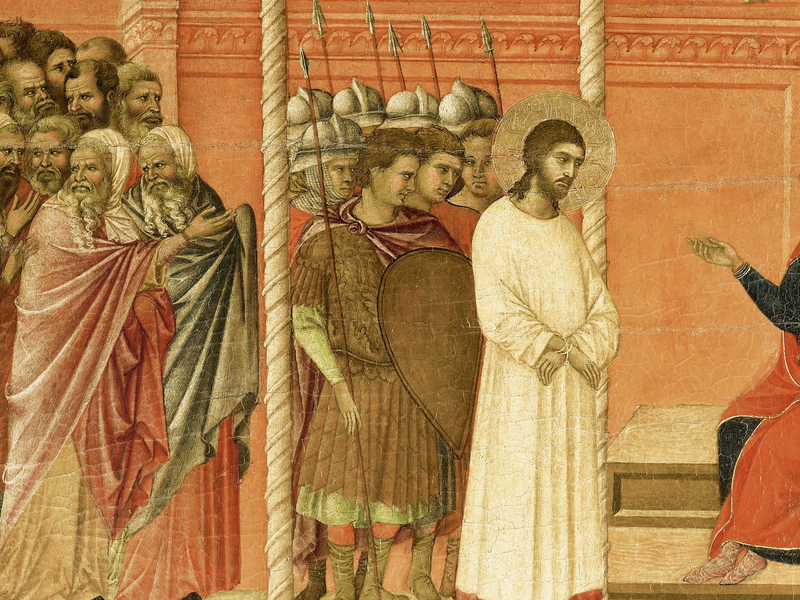
The texts of Christianity have been slowly at work, under the power of the Holy Spirit for 2000 years now. If we could be magically transported back into the world of two millennia ago, modern Americans would be shocked at the cruelty of that world. There was no concern for…

by Richard BledsoeMarch 18, 2013
aaron-burden-1ebsmyrau-s-unsplash
Luke

The Dysfunctional Family of the Gadarene Madman

The Story of the Gadarene Madman is told in all three synoptic Gospels (Matthew 8:28-34, Mark 5:1-20, Luke 8:26-37). Jesus ventures into a Gentile area when He passes over the Sea of Galilee. Upon disembarking from his boat, he is immediately met by a demon-possessed madman. Upon meeting Jesus, he…

by Richard BledsoeMarch 13, 2013
aaron-burden-1ebsmyrau-s-unsplash
Deuteronomy

Law and History: How to Read the Law of Moses

Part 1 of a multi-part series of studies on Deuteronomy 22:30-23:8. Eric Auerbach, in his classic work on Western literature, devotes his first chapter to contrasting Homer with the Bible. Of Homer, he writes of the “need of Homeric style to leave nothing which it mentions half in darkness and…

by Ralph Allan SmithMarch 12, 2013
markus-winkler-aid-xyrtlec-unsplash
Theopolis News

James Jordan in Korea, Japan

Trinity House Fellow James B. Jordan will be a speaker at an International Conference on Biblical Symbolism that will be held in Seoul on Monday, May 27 in 2013. He will address "The Importance of Biblical Symbolism and Symbolic Interpretation of the Bible." The conference will have three other speakers…

by Peter LeithartMarch 9, 2013

Showing page 197 of 309

See all

Showing page 28 of 43

See all
Angels

Angelic Bodies

Paul Griffiths ( Decreation ) ably defends a minority position in the history of theology, namely, that angels are not bodiless, though they are “immaterial.” They are “living creatures with discarnate bodies of energy” (125). To defend this point, he offers this brilliant little analysis of the meaning of “matter”…

March 24, 2015

Eschatological Lamb

The final sequence of Revelation begins with the fourth “in Spirit” vision of John (21:9-10). From that point to the end of the book, the “Lamb” is mentioned 7 times (21:9, 14, 22, 23, 27; 22:1, 3). The Lamb is entering His Sabbath, the wedding feast with His Bridal city.…

March 24, 2015

New Moses

Elijah's life history tracks closely with that of Moses. When he appears on the scene, he curses Israel with drought, then flees the land (1 Kings 17). Like Moses after he killed the Egyptian, he goes out from his people and lives among Gentiles. (Elijah's sojourn in Zarephath also linked…

March 24, 2015

Atonement from Heaven

When the seventh trumpet blows, heaven opens and the ark of the covenant appears (Revelation 11:19). We're in the Most Holy Place. Before the ark-throne are two heavenly signs - a laboring woman and a dragon. It's Zechariah 3, with Satan and the priest Joshua before the throne, Satan accusing.…

March 23, 2015
Creation

Suspended—By What?

Following a long tradition, Paul Griffiths says that creatures who come from nothing are constantly inclined to return to the nihil . We “remain uneasily in being, hovering over the void from which we came” ( Decreation , 142). Venerable as this is, it's misconceived. For starters we can ask…

March 23, 2015

Open ending

As Andrei Zorin argues in a TLS piece this week, Tolstoy intended to defy novelistic convention in writing War and Peace . His book was not a novel, and Tolstoy refused the easy resolutions of the novel genre. Zorin agrees that there is something to this: “In one of the…

March 23, 2015

Showing page 449 of 2212

Browse by Category

In Medias Res

Your weekly digest for all things Theopolis.

Donate

Theopolis is nearly 100% donor-supported. Consider joining us on our mission.