Theopolis Logo

Writing

Explore our collection of theological essays, biblical studies, and reflections on faith and culture.

See all
rembrandt-main
Art

The Second Word V: On Images and Art, Part 3

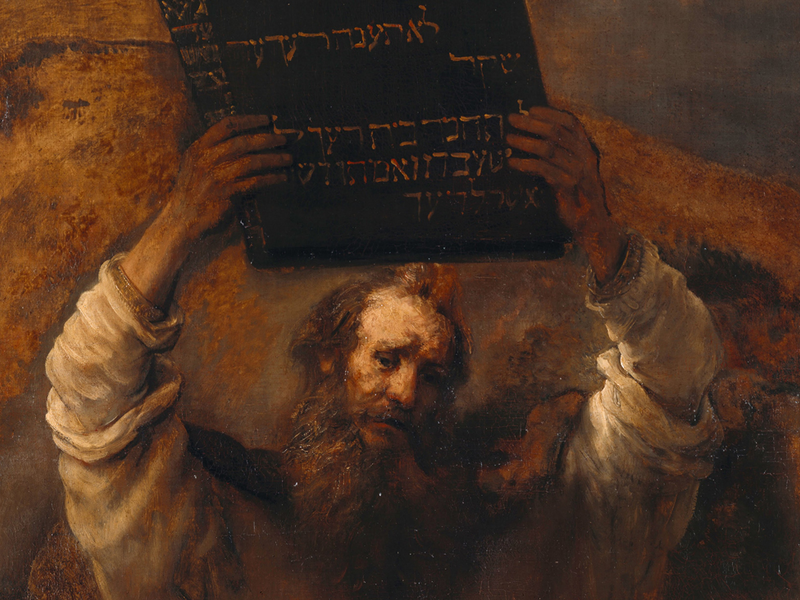
The Failure of the Church Yet a third factor played an important role in this historical development, in addition to the imperial adoption of icons and the rise of the icons of the holy man. Brown writes: "The great Christian basilicas of the previous centuries tended to stand empty, except…

by James B. JordanSeptember 4, 1998
screenshot-2023-09-11-at-11-34-45-am
Biblical Horizons

Patriarchal Dominion

The three large patriarchal narratives of Genesis concern the three aspects of the cosmos: matter, space, and time. Over these three is man given dominion. Lucifer was originally appointed to train man in this dominion, but he chose to lead man into rebellion instead. Thus, the Angel of Yahweh replaced…

by James B. JordanAugust 4, 1998
trnava-university-beeyeib-am8-unsplash
Biblical Horizons

The Case Against Western Civilization, Part 6

Part 6: Living in a Dying World (continued) The "Trivium" (continued) The five stages of education are simply the five stages of the covenant as God administers it in human life and history, and in the liturgy of covenant renewal: First, God announces Himself. "I am Yahweh Your God." He…

by James B. JordanAugust 4, 1998
screen-shot-2022-05-12-at-12-07-23-pm
Biblical Studies

Re-creation in the Ascension Offering

The following essay is tentative and exploratory, offered for your consideration. It seems to me that the ritual of the Ascension Offering (incorrectly translated as Burnt Offering) of Leviticus 1 is a symbolic recapitulation of Genesis 1, which thereby portrays the sacrificial ritual as way of moving from a fallen…

by James B. JordanJuly 4, 1998
Biblical Horizons

The Framework Hypothesis: A Gnostic Heresy

Just as the vast majority of evangelical Christians in America today are Arminian and Baptist, so the vast majority do not believe in a creation around 4000 BC. I don’t expect any of these three situations to change anytime soon. Powerful presuppositions are at work in all three instances, along…

by James B. JordanJuly 4, 1998
picture-mosaic-cathedral-jesus-christ-cefalu-italy-copy
Art

The Second Word V: On Images and Art, Part 2

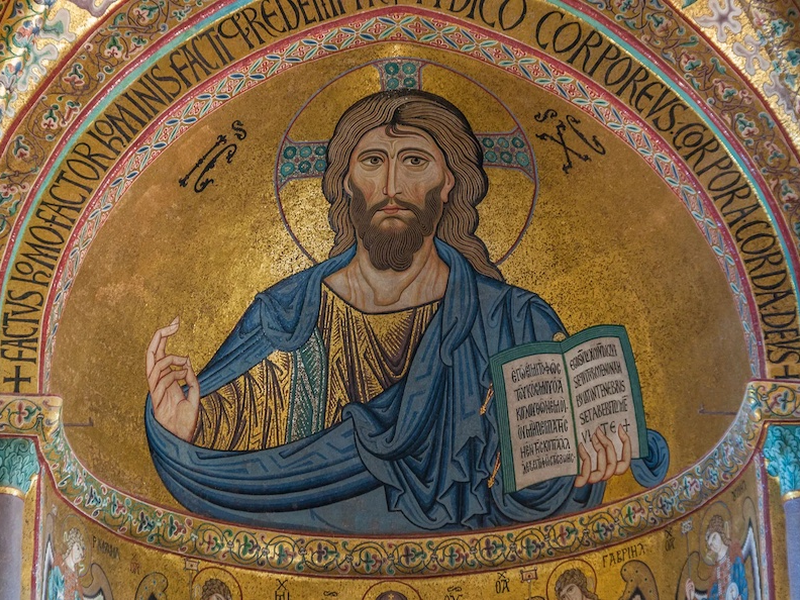
The Iconoclastic Controversy Continuing Pagan Influence How did images creep in? To begin with, there was in the post-Constantinian Church a concerted effort on the part of the semi-pagans to interpret Christianity in essentially pantheistic terms. The heretics put God and man on a continuum of "being," so that God…

by James B. JordanJuly 4, 1998

Showing page 248 of 309

See all

Showing page 28 of 43

See all

History of Disgust

Norbert Elias’s The Civilizing Process traces modern standards of disgust and cleanliness to the development of court society during the Renaissance. Drawing on Elias, William Miller ( Anatomy of Disgust ) suggests sensitivity to disgust and being civilized are directly proportional. Martha Nussbaum ( Hiding from Humanity , 115-6) disagrees…

December 15, 2014

Islamic Revolutionaries

In his brilliant Earthly Powers (3), Michael Burleigh cites a passage from Tocqueville’s book on the French Revolution. Taking a note from Schiller about “how early modern religious wars spilled across political boundaries, which reminded Tocqueville of the ideological struggle between Jacobins and counter-revolutionaries in late-eighteenth-century Europe,” Tocqueville drew a…

December 12, 2014

Sacrificial Politics

Semyon Frank was a Russian emigre to London. Michael Burleigh ( Sacred Causes , 39) sums up his life: “Born in 1877 into a Russian-Jewish family, he had quickly outgrown a juvenile Marxism, converting to Orthodox Christianity in 1912, on the ground that the Jewish God was as remote from…

December 12, 2014
Modernity

Un-Secular Age

Our secular age can be sustained only if the secular has been carefully distinguished from the sacred, and only if the boundary between the two is vigorously, not to say violently, guarded. But boundary-drawing between the sacred and profane is the work of a priest. It is the sacred act…

December 12, 2014

Pure Aesthetics

Hugh Grady opens his Shakespeare and Impure Aesthetics (6-10) with a brief and illuminating discussion of Kant’s aesthetics of purity. By “pure” here is meant the freedom of aesthetic experience from cognitive reason and teleological judgments, from practical or moral interests. This disinterested experience of art is an encounter with…

December 12, 2014

After the Temple

Jonathan Klawans is a great one for cutting through nonsense. In his Purity, Sacrifice, and the Temple , he points to the oddity that “documents composed three, four, or even five centuries after the destruction are labeled as delayed responses to the destruction. . . the suggestion that it took…

December 11, 2014

Showing page 487 of 2212

Browse by Category

In Medias Res

Your weekly digest for all things Theopolis.

Donate

Theopolis is nearly 100% donor-supported. Consider joining us on our mission.