Theopolis Logo

Writing

Explore our collection of theological essays, biblical studies, and reflections on faith and culture.

See all
tanner-mardis-xuxghzhibn4-unsplash-1-2
Biblical Studies

Tweets-turned-Notes on the Bible’s Chronology

Summary In what follows, I will consider the “year-stamps” employed in Scripture, i.e., statements of the form, “Such-and-such an event took place in the Xth year of Y.” In the process, I will suggest some ways in which the Biblical narrative might relate to events in the extra-Biblical world, though…

by James BejonJuly 16, 2019
durer-prodigal-son-2
Luke

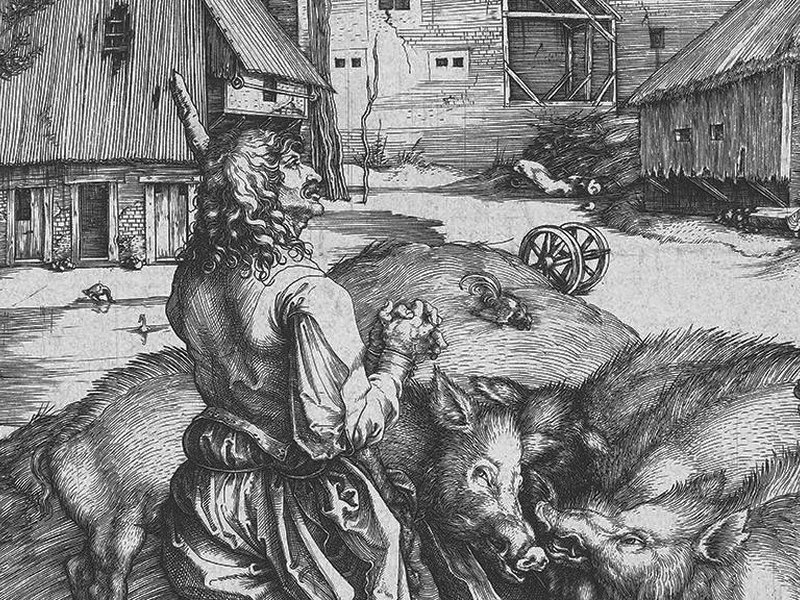
Perspectives on the Prodigal, (Part 2)

In the first essay on the parable of the Prodigal Son, I suggested that the problems commentators and others encounter in interpreting Jesus three-part parable are not accidental. These are not just problems in our ignorance of cultural background. They are intentional features of the stories —stories designed to poke…

by Ralph Allan SmithJuly 11, 2019
durer-prodigal-son-2
Luke

Perspectives on the Prodigal, (Part 1)

The story of the Prodigal Son is perhaps the most well-known story in the Bible. As others have observed, it may also be one of the most misunderstood. In two short essays, I will point out features of this story that are commonly neglected, aspects of Jesus’ parable that might…

by Ralph Allan SmithJuly 9, 2019
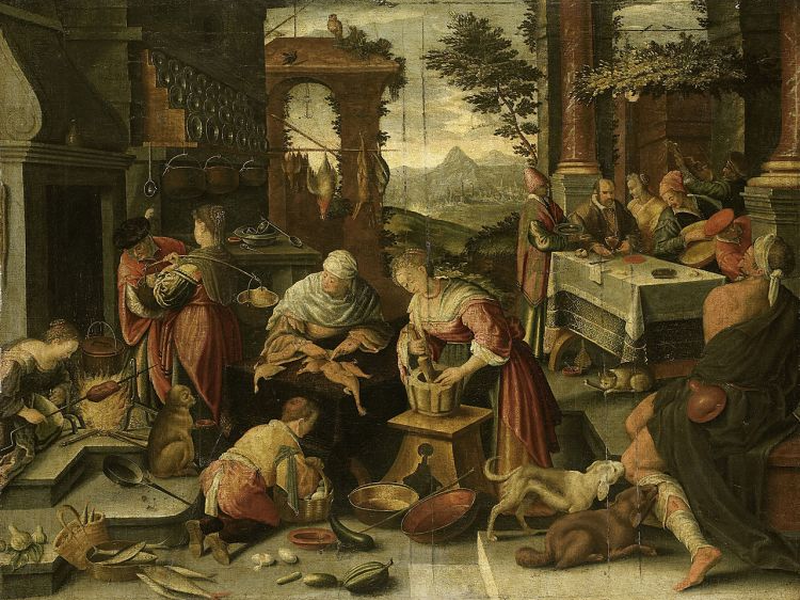
de-rijke-man-en-de-arme-lazarus-by-jacopo-da-ponte-16th-century
Luke

Lazarus and the Rich Man

The parable of Lazarus and the nameless rich man is not an independent story. It is part of a long context that begins in Luke 15:1, where Jesus is eating with tax collectors and sinners and the scribes and Pharisees grumble. In response to their hardheartedness, Jesus tells a three-part…

by Ralph Allan SmithJuly 4, 2019
aaron-burden-uynrnfdkjwg-unsplash
Luke

Everybody has Dropsy - Luke 14:1-24

The Bible is written so that even when a reader cannot pick up on what might be deeper or more detailed aspects of a text, there is virtually always a message to be heard. In the ancient world, where the “reader” of Scripture would likely be a church official facing…

by Ralph Allan SmithJuly 2, 2019
communion
Biblical Theology

Fruit Trees and Grain Plants

The distinction between garden (or vineyard) and field begins in Genesis 2. This relates to the ordering of the formless world. Plants of the field are contrasted with the garden planted by God in Genesis 2:5&8. Later on, under the Old Covenant the Israelites will be required to keep their…

by James B. JordanJune 27, 2019

Showing page 77 of 309

See all

Showing page 28 of 43

See all

The Weapons of Our Warfare

In The Empty Men , his study of the heroic theme in the Bible, Gregory Mobley catalogs some of the odd weapons used by biblical warriors: “In Judges and 1 Samuel, the relative inferiority of the weapons of the biblical heroes is emphasized. Shamgar ben Anat is lauded for killing…

December 11, 2014

Individualist Collectivism

I have a great deal of sympathy with Jose Miranda’s claim (in Marx and the Bible ) that Paul is writing about justice in Romans, and that the apostles is concerned “with the problem of society . . . of human civilization. His anguish is over the injustice which reigns…

December 11, 2014

Baptized into the New Age

John Dunnill ( Body and Sacrifice , 128-9) argues that for Paul baptism is more than a “sign” of the new age: “For him, resurrection is the actual transformation of the mortal body of Jesus, the reversal of the deathward trend established by Adam: not merely the resuscitation of a…

December 10, 2014

Sacrificial death?

In some ways, Daniel Ullucci’s The Christian Rejection of Animal Sacrifice helpfully complicates our picture of views on ancient sacrifice, both pre-Christian and Christian. He challenges the standard narrative that claims that Christians straightforwardly and pretty much immediately recognized Jesus’ death as a final sacrifice, and pretty much immediately abandoned…

December 10, 2014

The Universe is a Kitchen

In a recent article in the Journal of the American Academy of Religion , Natalie Gummer lays out the sacrificial cosmology embodied in early Buddhist texts. The premise is that the world is a kitchen, in which things take the forms of ingredients in a cosmic stew - saps, juices,…

December 10, 2014

Horizontal Hierarchy

In his monograph on Israel’s Tabernacle as Social Space , Mark George makes the observation that tabernacle space is “configured horizontally”: “There is not a single step, platform, or dais in tabernacle space. No steps differentiate court space from common space, holy space from court space, or most holy space…

December 10, 2014

Showing page 488 of 2212

Browse by Category

In Medias Res

Your weekly digest for all things Theopolis.

Donate

Theopolis is nearly 100% donor-supported. Consider joining us on our mission.