Theopolis Logo

Writing

Explore our collection of theological essays, biblical studies, and reflections on faith and culture.

See all
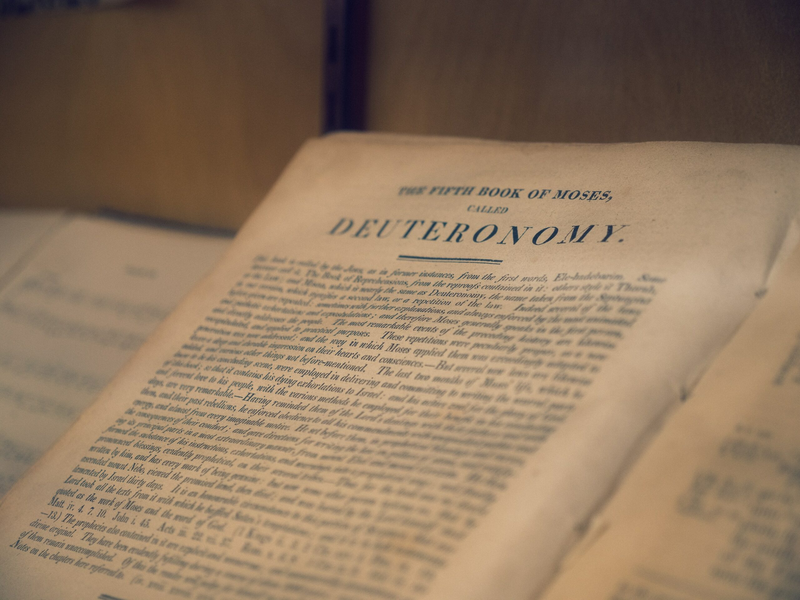
chris-bair-ndczc5739ck-unsplash
Deuteronomy

Allusive Torah

In the first part of this essay, I argued that the story of the covenant is what unifies and grounds the laws in the book of Deuteronomy. In the third section of this essay, as part of my argument that Deuteronomy 14:1-21 forms a distinct pericope, I claimed that these…

by Ralph Allan SmithJuly 22, 2013

blogging-guide-k5dy18hy5jq-unsplash
Economics

So You Wanna Be Rich?

Paul ends 1 Timothy with convicting warnings about the temptations of wealth and the danger of pursuing wealth. Godliness involves contentment and gratitude for the basics – food and clothing (1 Timothy 6:8). To reinforce the point, Paul reminds Timothy that we came into the world without anything, which is…

by Peter LeithartJuly 17, 2013
channel-82-urfja47nuhu-unsplash
Catholicism

The Festival and the Mass

Like Marx himself, the Marxist sociologist Henri Lefebvre was a firm believer in the dictum that “the criticism of religion is the premise of all criticism,” though he dissented from Marx’s prior claim that the criticism of religion is essentially complete. He includes a vicious, sarcastic, Marxist diatribe against the…

by Peter LeithartJuly 15, 2013
markus-winkler-aid-xyrtlec-unsplash
Theopolis News

Biblical Horizons Summer Conference

This week, Trinity House fellows James Jordan, Jeff Meyers, Rich Bledsoe, and Peter Leithart will be lecturing in Niceville, Florida, at the Biblical Horizons Summer Conference. Fore more information, check the Biblical Horizons web site.

by Peter LeithartJuly 15, 2013
guido-jansen-nz-zat4qiuu-unsplash
Isaiah

Combustible God

Fire seems to be a motif in Isaiah 6. The chapter opens “in the year that king Uzziah died,” and we know that Uzziah died a leper because he tried to burn incense in the temple against the law of God. And in this context, in the year king Uzziah…

by Daniel StanleyJuly 10, 2013
sixteen-miles-out-d40gdcd_-he-unsplash
Biblical Studies

Rehabilitating the Quadriga

According to the medieval theory of the "Quadriga" or the "fourfold sense" of Scripture, each passage of Scripture has four dimensions of meaning. Protestants generally cast a suspicious eye on this "method" of reading. That's a mistake. It's a handy guide to the questions we should always ask as we…

by Peter LeithartJuly 8, 2013

Showing page 191 of 309

See all

Showing page 29 of 43

See all
History

Hyperreal

Baudrillard sounds like a nut when he says that we are now living in a hyperreal world, a virtual world. But there is certainly something to it. We’re still physical creatures, of course, surrounded by physical objects, and that doesn’t change when we get strapped in for some virtual experience.…

November 2, 2006
History

Community of the fearful

Postmodernity unleashes fear, Bauman says: “Modernity was a continuous and uncompromising effort to fill or to cover up the void; the modern mentality held a stern belief that the job can be done - if not today then tomorrow. The sin of postmodernity is to abandon the effort and to…

November 2, 2006
History

Chronopolitics

Johannes Fabian argues in his Time and the Other that “geopolitics has its ideological foundations in chronopolitics.” Bauman summarizes the argument: “The modern perspective ‘denied coevality’ to any form of life different from its own; it construed the Other of itself as ‘living in another time.’ The allochronic distancing device…

November 2, 2006
History

Slavery in America

In his recent history of slavery in the New World, David Brion Davis records some surprising facts about American slavery. Prior to 1820, for instance, African slaves were more numerous than European settlers by a ratio of 5 to 1. About 5-6 percent of slaves in the Western hemisphere were…

November 1, 2006
Politics

Toleration and absolutism

In his history of the idea of toleration, the late A.J. Conyers summarizes the arguments of Robert P. Kraynak on the development of Locke’s thought on religious toleration. The puzzle is this: Locke’s early works are absolutist in a Hobbesian vein, invoking the supreme magistrate’s power to oversee religion for…

November 1, 2006
Literature

Herbert on Pop Music

Zbigniew Herbert writes in a poem entitled “Mr Cogito and Pop” of a visit to a concert. “Mr Cogito,” a recurring character in Herbert’s poems, reflects on the “aesthetics of noise” and offers some penetrating observations on the character of contemporary pop music: “to be a god means to hurl…

November 1, 2006

Showing page 1772 of 2212

Browse by Category

In Medias Res

Your weekly digest for all things Theopolis.

Donate

Theopolis is nearly 100% donor-supported. Consider joining us on our mission.