Theopolis Logo

Writing

Explore our collection of theological essays, biblical studies, and reflections on faith and culture.

See all
brian-moats-2
Theopolis News

Meet Brian Moats

Theopolis is delighted to announce that we have hired Brian Moats as Assistant to President Peter Leithart. An Alabama native and graduate of Boyce College in Louisville, Brian is a professional photographer who has also worked as a salesman and dispatcher for Charter Communications and Wayne's Environmental Services. Brian and…

by TheopolisJune 10, 2015
theopolis-liturgy
History

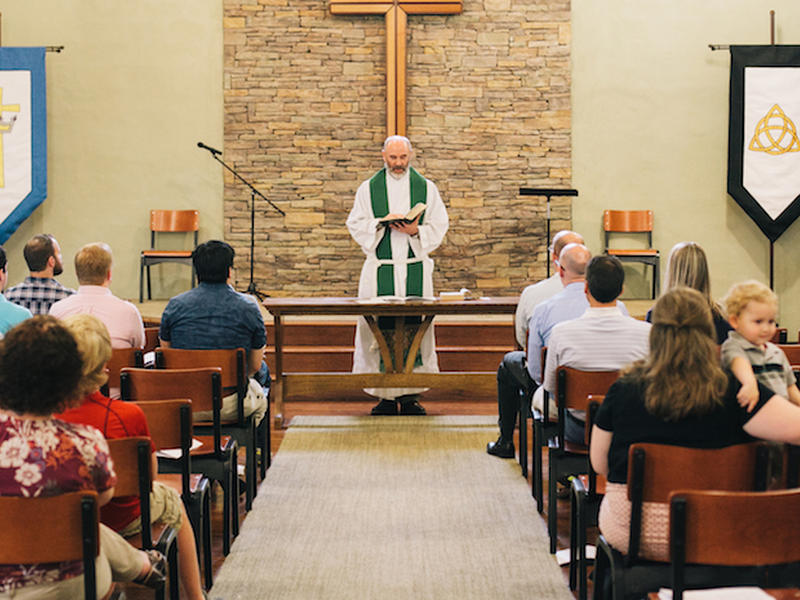
Christians, Liturgy, and the Past, (Part 1)

Over the last few years, I have had frequent cause to return to the question of the ways in which the past and its forms of liturgy should be handled within the Church today. Keeping faith with the past is seldom as straightforward an endeavour as it might initially appear,…

by Alastair RobertsJune 9, 2015
medievalilluminatedmanuscript
Hermeneutics

The Dramatic Structure of Proverbs

The book of Proverbs appears as a largely random collection of aphorisms drawn from experience saturated in law. Despite its random arrangement, however, the book does have an over-arching structure that reinforces its main themes. One way to gather clues regarding the structure of a biblical book (or any book)…

by Peter LeithartJune 4, 2015
milwaukee
Charity

Mission to Milwaukee

Prior to attending the week-long intensive course on Holistic Mission, my wife and I were living two counties away from Milwaukee, in the comfortably quiet and rural village of Slinger, Wisconsin. In God’s providence, after nearly ten years of living in Slinger, we realized some changes to our comfortable and…

by Jonathan SedlakJune 2, 2015
james-coleman-orks2dpueo0-unsplash
Bonaventure

One Body and One Loaf: Eucharistic Unity Through the Theology of St. Bonaventure

I have many Roman Catholic friends. Leading from my time at Saint Louis University and continuing through various scholarly engagements I often get an opportunity to discuss history and theology with Roman Catholics who are very well educated in their tradition and practice, some of whom are leading scholars in…

by Timothy LeCroyMay 28, 2015
107394ab
Theopolis News

Music in Life and Liturgy

Theopolis ended its second year of operation with its Pentecost Term course on Music in Life and Liturgy last week. Co-taught by Ken Myers of Mars Hill Audio and scholar-in-residence James Jordan, the Music course was the largest Theopolis course yet. Sixteen pastors, seminary students, and music ministers from nine…

by TheopolisMay 26, 2015

Showing page 152 of 309

See all

Showing page 29 of 43

See all
Philosophy

Hermeneutics v. Semiology

According to Michel Foucault, what Marx, Nietzsche, and Freud introduce is an age of interpretation. He develops one of the implications of this by suggesting there is a “fierce war” between semiology and hermeneutics, between treating words as signs and treating them as interpretations. Nietzsche in particular, Foucault claims, develops…

August 26, 2006
Literature

Shakespeare and Bible

Steven Marx’s Shakespeare and the Bible (Oxford, 2000), purports to be the “first book to explore the pattern and significance” of Shakespeare’s biblical allusions. Perhaps. The results are mixed. Each chapter of Marx’s book attempts to show structural, plot, and thematic parallels between a section of Scripture and a play…

August 26, 2006
Literature

Ubiquitous Shakespeare

Exploring Lake Superior in 1840, one Charles W Penny wrote, “We read the Bible I dare say much more than we would have done had we been in Detroit. Shakespeare was duly honoured, as he is every day when we travel. When on the water, some one of the party…

August 26, 2006

Divine Love

The Persons of the Trinity live out an eternal round of self-sacrificing love. If a proof text is needed, John 15 supplies it. 1) Jesus says, “as the Father loved Me, I have also loved you” (v. 9). Jesus’ love for the disciples is modeled on the Father’s for Him.…

August 26, 2006

Queen of the Sciences

John Stuart Mill declared at the beginning of his book on logic that “Logic is the common judge and arbiter of all particulars investigations. It does not undertake to find evidence, but to determine whether it has been found. Logic neither observes, nor invents, nor discovers; it judges.”

August 24, 2006
History

New

Hans Jonas writes in an essay on technological and scientific advance that one of the key cultural shifts in the sixteenth and seventeenth centuries was a, well, new understanding of “new,” and a corresponding revision of traditional ways of thinking about history: “A sign of this spreading mood is the…

August 24, 2006

Showing page 1804 of 2212

Browse by Category

In Medias Res

Your weekly digest for all things Theopolis.

Donate

Theopolis is nearly 100% donor-supported. Consider joining us on our mission.