Theopolis Logo

Writing

Explore our collection of theological essays, biblical studies, and reflections on faith and culture.

See all
aaron-burden-qjdzyt_k8xg-unsplash
Federal Vision

Justification by Union with Christ Only Through Living Faith

A Brief Comparison of Calvin’s Institutes with the Westminster Confession and Catechisms regarding the shape of imputation This essay is a brief argument that the soteriology of John Calvin in his Institutes of the Christian Religion regarding union with Christ and the imputation of his righteousness is the same as…

by Mark HorneJune 5, 2003

ben-white-mo9vkbg5csg-unsplash
Baptism

Some Thoughts on the Means of Grace: A Few Proposals

The thoughts in this paper were largely prompted by a study of Walter E. Krebs, “The Word and the Sacraments,” Mercersburg Review (July, 1867), 366-383. The discussion in this paper presupposes my earlier studies of baptism, “Baptismal Efficacy and the Reformed Tradition: Past, Present, and Future” and “Calvin on Baptism,…

by Rich LuskJune 3, 2003
aaron-burden-qjdzyt_k8xg-unsplash
Baptism

Faith, Baptism, & Justification

Sometimes our systematic theology creates an illusion of precision. For example, we distinguish the ground and instrument of justification. Justification is grounded in Christ’s work alone, and is instrumentally received by faith alone. That makes good sense and guards us from thinking that faith itself is somehow meritorious. All the…

by Rich LuskJune 1, 2003
todd-cravens-g2pdilavgcy-unsplash
Covenant

DO THIS AS MY MEMORIAL: Understanding How the Lord’s Supper Reminds God to Keep Covenant

Whenever we participate in the Sacrament of the Eucharist, we remember Christ and His Work for us. We remember. And in remembering, we imitate God, as His creatures made after His image. God remembers. This is mysterious to us because we usually think of remembering in the context of our…

by Mark HorneMay 30, 2003
24542-cropped-john-calvin
Baptism

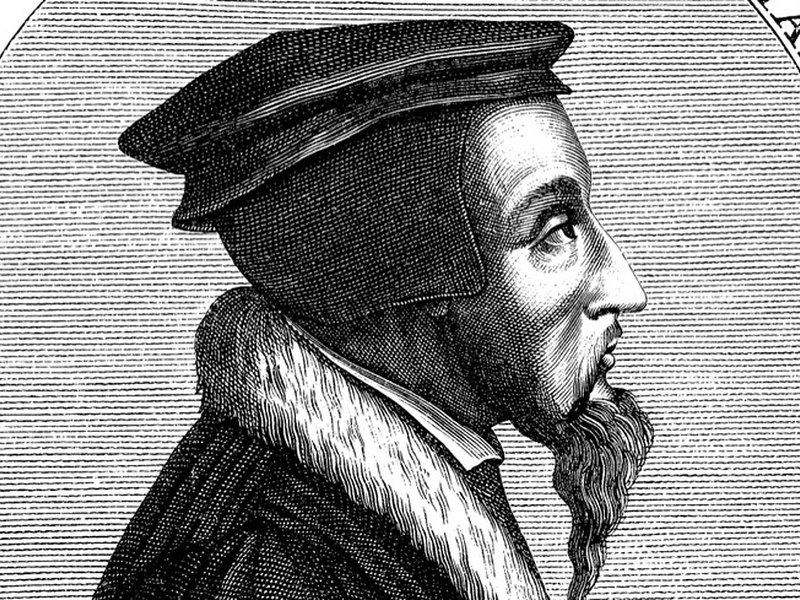
Calvin & the Efficacy of Infant Baptism

It is standard in paedobaptist circles to argue for the baptism of infants out of the Old Covenant system. Because there is no explicit command in the New Testament, we are left to the broader principles and patterns of Scripture. In the Old Covenant, we continually find that the children…

by Rich LuskMay 30, 2003
sixteen-miles-out-d40gdcd_-he-unsplash
Biblical Theology

Why the Law/Gospel Paradigm is Flawed

Luther popularized the law/gospel hermeneutic. Luther argued that any demands God made upon us fell into the category of “law” and could only condemn. By contrast, anything God gave us was “gospel” and came with no strings attached. Calvin paid lip service to this law/gospel antithesis, even though it was…

by Rich LuskMay 29, 2003

Showing page 232 of 309

See all

Showing page 29 of 43

See all

Architecture of Fancy

T he title essay of John Summerson's Heavenly Mansions sets Gothic architecture in a story of the architecture of fancy. He begins with doll houses, and moves to aedicules, originally small buildings holding the image of a god that eventually became purely decorative alcoves. In Gothic, the ornament is turned…

February 17, 2017

Slow Grow

I n his Rise and Fall of American Growth , Robert J. Gordon argues that the growth rates for the American economy have leveled because the rate of innovation has leveled. And the rate of innovation has leveled, in part, because some innovations happen only once: The flood of inventions…

February 17, 2017

Anthropology of Deficiency

A ccording to Ingolf Dalferth ( Creatures of Possibility ), Christianity “contradicts a view that understands human beings in their fundamental dependence, finitude, and passivity, not merely biologically, but anthropologically, as deficient beings , interpreting their absolute dependence as absolute neediness, their finitude as a metaphysical evil, and their experience…

February 17, 2017

Passive Creativity

C hristian theology has long taught that we are “finite copies of the infinite Creator: created creators” (Dalferth, Creatures of Possibility , 198). Christian anthropology is eschatologically oriented: “Who we are is not determined by our origin; it will become evident in our future” (198). This comes to expression in…

February 17, 2017

Slackers

I t’s a challenge to get a clear idea of what slackers are really all about. Tom Lutz isolates the dilemma in his Doing Nothing (18-19): The famous or almost-famous idlers, loafers, loungers, and slackers throughout history had to produce work about not working in order for us to know…

February 17, 2017

Living Sacrifices

J oseph Ratzinger reflects on Romans 12:1-2 in his Theology of the Liturgy (349-51), which is evident in the Roman Canon's prayer that “our sacrifice may be rationabilis .” He writes: It is not enough—indeed, it is quite wrong—to translate this as saying that it should become rational. We are…

February 17, 2017

Showing page 205 of 2212

Browse by Category

In Medias Res

Your weekly digest for all things Theopolis.

Donate

Theopolis is nearly 100% donor-supported. Consider joining us on our mission.