Theopolis Logo

Writing

Explore our collection of theological essays, biblical studies, and reflections on faith and culture.

See all
tanner-mardis-xuxghzhibn4-unsplash-1-2
Biblical Studies

Tweets-turned-Notes on the Bible’s Chronology

Summary In what follows, I will consider the “year-stamps” employed in Scripture, i.e., statements of the form, “Such-and-such an event took place in the Xth year of Y.” In the process, I will suggest some ways in which the Biblical narrative might relate to events in the extra-Biblical world, though…

by James BejonJuly 16, 2019
durer-prodigal-son-2
Luke

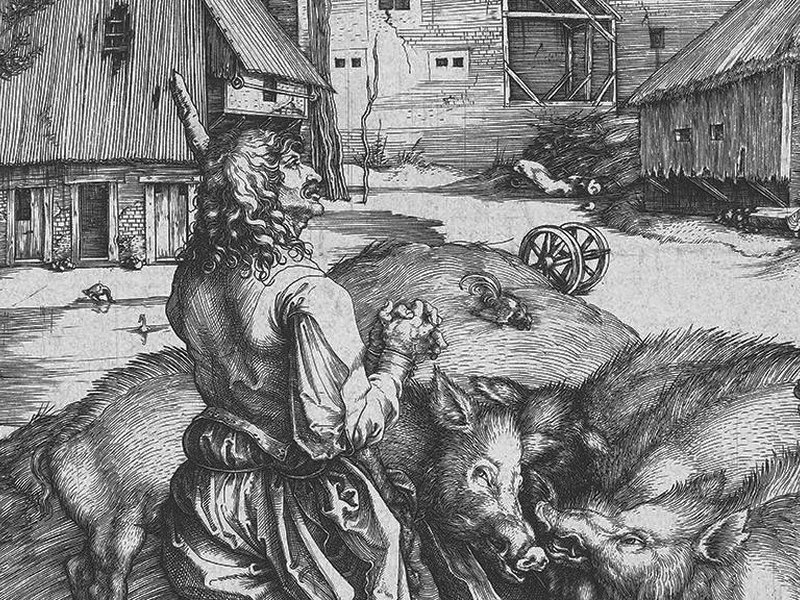
Perspectives on the Prodigal, (Part 2)

In the first essay on the parable of the Prodigal Son, I suggested that the problems commentators and others encounter in interpreting Jesus three-part parable are not accidental. These are not just problems in our ignorance of cultural background. They are intentional features of the stories —stories designed to poke…

by Ralph Allan SmithJuly 11, 2019
durer-prodigal-son-2
Luke

Perspectives on the Prodigal, (Part 1)

The story of the Prodigal Son is perhaps the most well-known story in the Bible. As others have observed, it may also be one of the most misunderstood. In two short essays, I will point out features of this story that are commonly neglected, aspects of Jesus’ parable that might…

by Ralph Allan SmithJuly 9, 2019
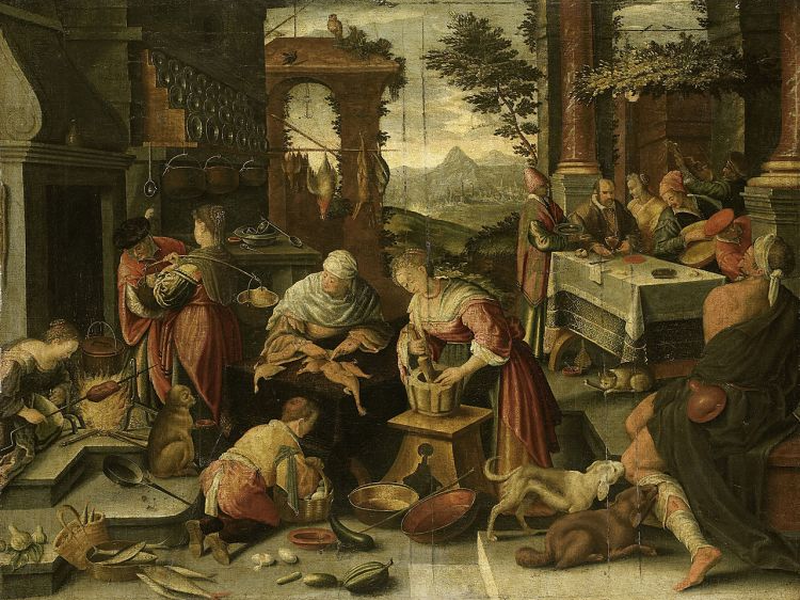
de-rijke-man-en-de-arme-lazarus-by-jacopo-da-ponte-16th-century
Luke

Lazarus and the Rich Man

The parable of Lazarus and the nameless rich man is not an independent story. It is part of a long context that begins in Luke 15:1, where Jesus is eating with tax collectors and sinners and the scribes and Pharisees grumble. In response to their hardheartedness, Jesus tells a three-part…

by Ralph Allan SmithJuly 4, 2019
aaron-burden-uynrnfdkjwg-unsplash
Luke

Everybody has Dropsy - Luke 14:1-24

The Bible is written so that even when a reader cannot pick up on what might be deeper or more detailed aspects of a text, there is virtually always a message to be heard. In the ancient world, where the “reader” of Scripture would likely be a church official facing…

by Ralph Allan SmithJuly 2, 2019
communion
Biblical Theology

Fruit Trees and Grain Plants

The distinction between garden (or vineyard) and field begins in Genesis 2. This relates to the ordering of the formless world. Plants of the field are contrasted with the garden planted by God in Genesis 2:5&8. Later on, under the Old Covenant the Israelites will be required to keep their…

by James B. JordanJune 27, 2019

Showing page 77 of 309

See all

Showing page 29 of 43

See all

Junk Mail Blues

Since I subscribe to a variety of magazines and journals, I get a wildly diverse range of junk mail. Some assume I’m Catholic, others than I’m Jewish, some that I’m a Democrat, others that I’m a Republican or Libertarian or have signed on with the Constitution Party. One of the…

May 14, 2004
Biblical Studies

Sermon Outline, May 16

Raising Priests and Kings, Deuteronomy 6:1-25 INTRODUCTION We have been applying the sequence of priest, king, and prophet to Israel?s history and to our own biographies. God raises us to maturity by leading us through a period of service and a period of rule into an eldership where we guide…

May 14, 2004
Theology

Enemies

Here is an address I gave at NSA graduation, May 12, 2004. Graduating Seniors, Parents, Friends of the College, Colleagues: It is a great privilege to address you all this evening, especially the graduating seniors. I am more grateful than I can express that I have had the privilege of…

May 12, 2004

Herod and Pilate

As a student, Erin Linton, pointed out to me, Herod and Pilate are typical pagan enemies: Their enmity is skin deep, and liable to change to alliance and friendship when it is to their advantage. When faced with a scapegoat, the mimetic rivals become friends. (Just so, the windy plains…

May 11, 2004
Literature

Dostoevsky

The Brothers Karamazov , like many of Dostoevsky’s works, is partly an attack on Western rationalism. For Dostoevsky, this rationalism is manifested in the insistent question, Why? Why should a father love a son, or vice versa? Dostoevsky’s answer is partly taken from the story of Job: Why should Job…

May 11, 2004

Icons

One possible defense of the iconodule position is to draw an analogy between the use of icons in worship and the use of words in worship. The argument would be basically: 1. Venerating the word “YHWH” is superstitious. 2. But we do worship “through” the word “YHWH.” 3. Similarly, venerating…

May 10, 2004

Showing page 2091 of 2212

Browse by Category

In Medias Res

Your weekly digest for all things Theopolis.

Donate

Theopolis is nearly 100% donor-supported. Consider joining us on our mission.