Theopolis Logo

Writing

Explore our collection of theological essays, biblical studies, and reflections on faith and culture.

See all
sixteen-miles-out-al48tflf4e8-unsplash
Food

Gluttony In The Bible (As Opposed To Gluttony In The American Church)

In the Bible, fatness is such a blessing, that it is especially hard to understand why wicked men are permitted to enjoy such a state. It requires a theodicy and faith in God. Thus: “For they have no pangs until death; their bodies are fat and sleek . They are…

by Mark HorneAugust 12, 2013

jeremy-yap-j39x2xx_8cq-unsplash
How to Worship

Biblical Worship (Video with James B. Jordan)

[fve]http://vimeo.com/71901553[/fve]

by Peter LeithartAugust 8, 2013
chris-bair-ndczc5739ck-unsplash
Deuteronomy

Holy Things for Holy People

The allusion to the Exodus story is contained in the first words of Deuteronomy 14:1 — “ye are the sons of Yahweh your God” — as well as in 14:2 in the use of the technical term translated “treasured possession,” “His own possession,” “peculiar people,” “precious people,” and so forth.…

by Ralph Allan SmithAugust 5, 2013
adam-and-eve-in-the-garden-of-eden-wenzel-peter
Deuteronomy

Forbidden Foods

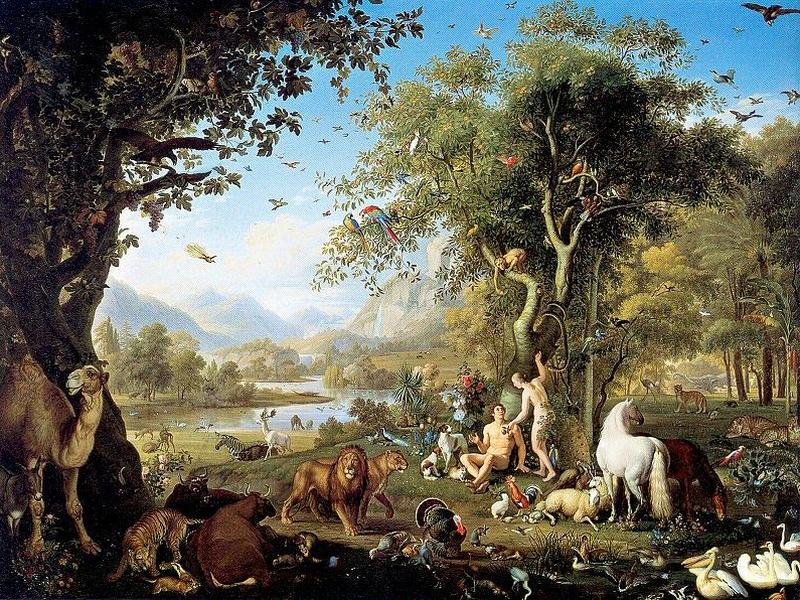
I have argued that Deuteronomy 14:1-21 is an independent literary unit that applies the Third Word to the lives of Israelites from the time of Moses and Joshua. In this short pericope, Moses suggests broad and deep meaning by means of literary allusion to the stories of the creation and…

by Ralph Allan SmithJuly 31, 2013
david-weber-fwuo_zluhnw-unsplash
How to Worship

Pro-Sacramental Reformation

In his recently republished The New Creation , the late, delightful Herbert McCabe defends the priesthood of the plebs as roundly as anyone could want. Citing Hebrews, he claims that "there is an essential difference between the Christian community and the community of the Old Law, or any other religious…

by Peter LeithartJuly 29, 2013
eric-ward-7kqe_8meex8-unsplash
Augustine

Sexual Idolatry

Augustine famously prayed, “Our hearts our restless until they rest in You.” True indeed. Being creatures, we inherently sense our ontological poverty—our innate condition of dependence—and are compelled to find a sense of security. And it is also true—as Augustine’s own narrative painfully illustrates—that one of the things we most…

by Gerald HiestandJuly 24, 2013

Showing page 190 of 309

See all

Showing page 29 of 43

See all
Music

Romanticism and the Rhetoric of Music

Prior to the 18th century, writes Mark Evan Bonds, instrumental music was considered inferior to music that accompanied words ( Wordless Rhetoric ). According to the artistic theory developed by Johann Georg Sulzer, “instrumental music . . . can be pleasing and at times moving, but its ‘meaning' is relatively…

April 7, 2016

Areopagus in Acts

Paul's speech on the Areopagus is the second of three programmatic speeches in Acts. Robert Tannehill notes ( The Narrative Unity of Luke-Acts ) that they trace the progression of Paul's mission: “Careful planning is indicated by the fact that we have three different types of speeches addressed to three…

April 7, 2016

World Self-Revealed

In his now-classic Sources of the Self (143-4), Charles Taylor observes that Descartes is “in many ways profoundly Augustinian: the emphasis on radical reflexivity, the importance of the cogito, the central role of a proof of God's existence which starts from ‘within,' from features of my own ideas, instead of…

April 6, 2016

Pure Music

Mark Evan Bonds's Absolute Music is a study of 19th-century debates concerning the purity or absoluteness of music, the question of the possibility and/or propriety of segregating music from the rest of the world, music as a sheer aesthetic experience, an experience of pure beauty or simple form. It's a…

April 6, 2016

Pattern of Paul's Mission

Robert Tannehill points out in the second volume of his Narrative Unity of Luke-Acts that Acts 16-19 depicts a recurring “public accusation type-scene.” Prior to chapter 16, the public accusations against Paul and his associates are not highlighted. After chapter 16, they are. “In 16:20-21 Romans accuse the mission of…

April 6, 2016

Autonomy v. Independence

Matthew B. Crawford argues in The World Beyond Your Head that things discipline our attention and thus make genuine knowledge of the world possible: “ things that can serve as a kind of authority for us, by way of structuring our attention. The design of things—for example, cars and children’s…

April 5, 2016

Showing page 302 of 2212

Browse by Category

In Medias Res

Your weekly digest for all things Theopolis.

Donate

Theopolis is nearly 100% donor-supported. Consider joining us on our mission.