Theopolis Logo

Writing

Explore our collection of theological essays, biblical studies, and reflections on faith and culture.

See all
tanner-mardis-xuxghzhibn4-unsplash-1-2
Biblical Studies

Tweets-turned-Notes on the Bible’s Chronology

Summary In what follows, I will consider the “year-stamps” employed in Scripture, i.e., statements of the form, “Such-and-such an event took place in the Xth year of Y.” In the process, I will suggest some ways in which the Biblical narrative might relate to events in the extra-Biblical world, though…

by James BejonJuly 16, 2019
durer-prodigal-son-2
Luke

Perspectives on the Prodigal, (Part 2)

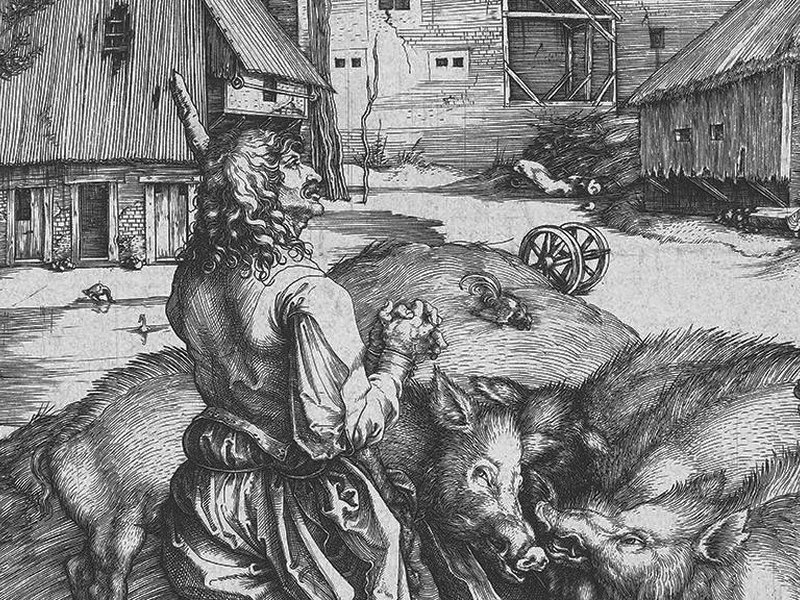
In the first essay on the parable of the Prodigal Son, I suggested that the problems commentators and others encounter in interpreting Jesus three-part parable are not accidental. These are not just problems in our ignorance of cultural background. They are intentional features of the stories —stories designed to poke…

by Ralph Allan SmithJuly 11, 2019
durer-prodigal-son-2
Luke

Perspectives on the Prodigal, (Part 1)

The story of the Prodigal Son is perhaps the most well-known story in the Bible. As others have observed, it may also be one of the most misunderstood. In two short essays, I will point out features of this story that are commonly neglected, aspects of Jesus’ parable that might…

by Ralph Allan SmithJuly 9, 2019
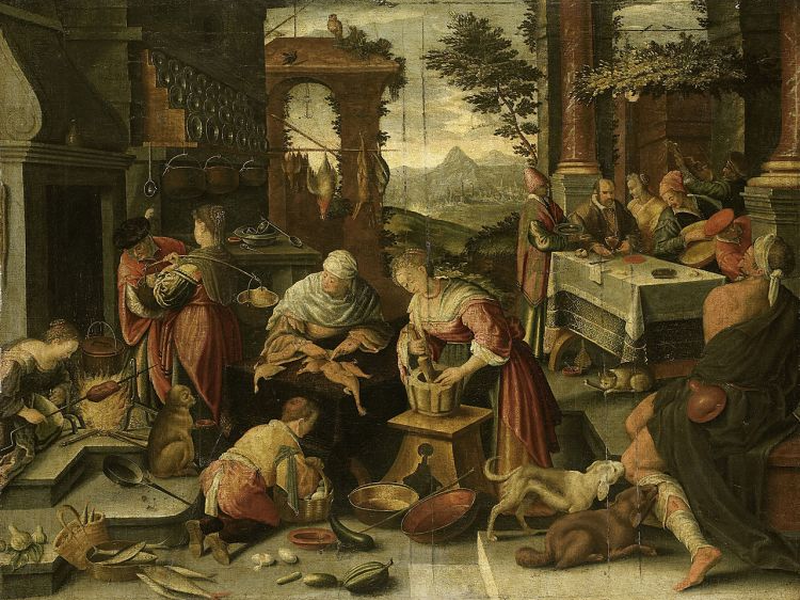
de-rijke-man-en-de-arme-lazarus-by-jacopo-da-ponte-16th-century
Luke

Lazarus and the Rich Man

The parable of Lazarus and the nameless rich man is not an independent story. It is part of a long context that begins in Luke 15:1, where Jesus is eating with tax collectors and sinners and the scribes and Pharisees grumble. In response to their hardheartedness, Jesus tells a three-part…

by Ralph Allan SmithJuly 4, 2019
aaron-burden-uynrnfdkjwg-unsplash
Luke

Everybody has Dropsy - Luke 14:1-24

The Bible is written so that even when a reader cannot pick up on what might be deeper or more detailed aspects of a text, there is virtually always a message to be heard. In the ancient world, where the “reader” of Scripture would likely be a church official facing…

by Ralph Allan SmithJuly 2, 2019
communion
Biblical Theology

Fruit Trees and Grain Plants

The distinction between garden (or vineyard) and field begins in Genesis 2. This relates to the ordering of the formless world. Plants of the field are contrasted with the garden planted by God in Genesis 2:5&8. Later on, under the Old Covenant the Israelites will be required to keep their…

by James B. JordanJune 27, 2019

Showing page 77 of 309

See all

Showing page 29 of 43

See all
Pneumatology

Wind of the Spirit

From the first moments of the creation, the Spirit of God has been working in the world to enliven and move it. As soon as there is a heaven and earth, the Spirit of God hovers over the formless emptiness of the waters, bringing light and order and moving the…

November 18, 2015

Crisis, Non-Sectarian Style?

To many Americans, Christians complaining about our culture sound whiny, self-interested, and sectarian. We yell, “Fire! Cultural conflagration!” Our unbelieving neighbors sniff and wonder why they can’t smell smoke. To their ears, our critiques of culture take this form: Christians used to be in charge; we aren’t anymore; we’d like…

November 18, 2015

Ezekiel in John's Gospel

John's gospel differs in many ways from the three “synoptic” gospels. John begins with the majestic prologue that has no analogy in the other gospels. He never once hints that Jesus is an exorcist, he records Jesus' many visits to Jerusalem, he places the cleansing of the temple early in…

November 17, 2015

Eros in Iberia

Early twentieth-century Spain is often characterized as Catholic-conservative, repressive, backward. In Cultures of the Erotic in Spain, 1898-1939 , UCLA's Maite Zubiaurre introduces “the ‘other' early twentieth-century Spain— sparkling, dynamic, uninhibited, freed from tradition, happily oblivious to sexual constraints and gender norms, so radically different from the somber, identity-searching country…

November 17, 2015

Being and Becoming

Jesus is the “living one” (Revelation 1:18). He doesn't mean that He has always been. He is the living one in the sense that He has been through the chiasm of death to life: A. and I became ( egenomen ) B. dead C. and behold B'. alive A'. I…

November 17, 2015

Emma's Moral Imagination

Jane Austen's Emma is centrally concerned with character formation and guidance. Rich, beautiful, independent, Emma Woodhouse has no one to shepherd her. Her father is too frail, and everyone else in Hughbury too intimidated. She doesn't think she needs to be shepherded, and instead spends her time meddling with other…

November 16, 2015

Showing page 350 of 2212

Browse by Category

In Medias Res

Your weekly digest for all things Theopolis.

Donate

Theopolis is nearly 100% donor-supported. Consider joining us on our mission.