Theopolis Logo

Writing

Explore our collection of theological essays, biblical studies, and reflections on faith and culture.

See all
kelly-sikkema-gpoh17dxqdm-unsplash
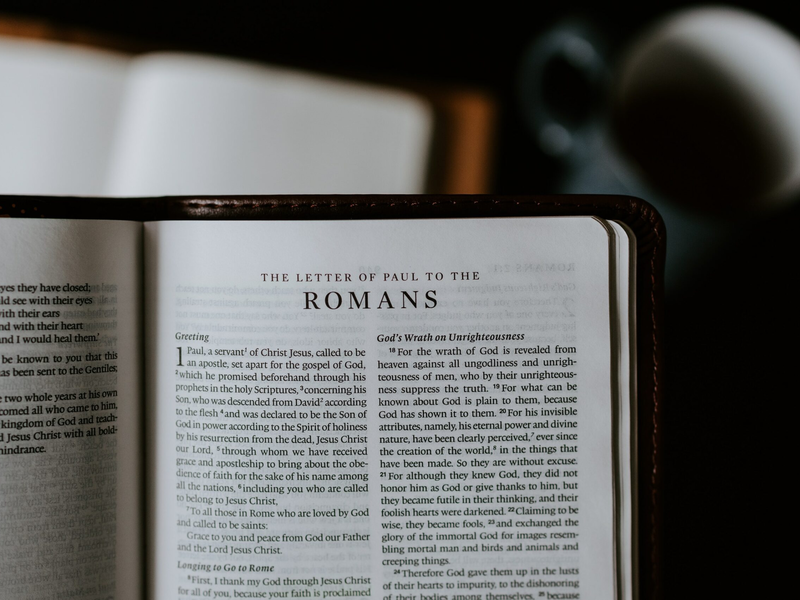
Romans

Paul’s Gospel & the Theme of Romans

Paul, a bond-servant of Christ Jesus, called as an apostle, set apart for the gospel of God, which He promised beforehand through His prophets in the holy Scriptures, concerning His Son, who was born of a descendant of David according to the flesh, who was declared the Son of God…

by Mark HorneJune 6, 2003

screenshot-2023-07-27-at-10-25-35-am
History

The Nelda Boswell Scroll: The Apostle Paul’s Town Hall Meeting in Iconium

With the surprising discovery of the Nelda Boswell scroll historians have deciphered its contents and concluded that the apostle Paul returned to the region of Galatia shortly after he wrote the letter that we call Galatians. The evidence suggests that a number of local pastors, elders, and deacons, along with…

by Jeff MeyersJune 6, 2003
aaron-burden-qjdzyt_k8xg-unsplash
Jonah

Jonah, the Judaizers, and the Gospel

Second Temple Judaism was a form of covenantal nomism, according to E. P. Sanders’ terminology. This means that Torah-observance was a way of expressing loyalty to the Lord of the covenant who had graciously elected Israel. I think Sanders’ view (taken up in bits and pieces and with some modifications…

by Rich LuskJune 6, 2003
Theologia

Gratitude or Faith?

We often hear that the key to Christian obedience is thankfulness for what God has done. But the Bible stresses faith and hope much more than gratitude. The Baptist pastor and author John Piper has written, “Nowhere in the Bible is gratitude connected explicitly with obedience as a motivation. We…

by Mark HorneJune 6, 2003
aaron-burden-qjdzyt_k8xg-unsplash
Federal Vision

God’s Righteousness & Our Justification

One of the questions that is commonly asked about Tom Wright regards his teaching about how Paul uses the term “the righteousness of God.” Since Wright’s interpretation of the term in Paul’s epistles is commonly mentioned in passing but rarely analyzed, it seems like a good idea to explicitly spell…

by Mark HorneJune 6, 2003
jordan-wozniak-xp_agmeea6s-unsplash
Genesis

Forever Means Forever: God’s Promises to the Jews

If God promised a certain land to the seed of Abraham, saying that it would be theirs “forever” (Gen. 13:15), why do Reformed churches teach that the Jews permanently lost their right to the land? What about all these Old Testament “forever” promises and prophesies made to the Jews? How…

by Jeff MeyersJune 6, 2003

Showing page 230 of 309

See all

Showing page 29 of 43

See all
American Religion

America and the Outsiders

Laurence Moore's Religious Outsiders and the Making of Americans is a study of American religion that is not considered “mainstream” or “mainline”—Mormons, Catholics, Jews, Christian Science, Fundamentalists, Black churches. The goal is not to fill in a gap. The goal is to challenge the assumption that the “mainline” should function…

September 21, 2015

Sabbath

After John introduces the new scene – “I saw another sign in the heaven, great and marvelous” – the sign is described with two clauses (Revelation 15:1). The first is, woodenly translated, “angels seven having plagues seven the last”; and the second it “in them finished the passion of God.”…

September 21, 2015
Christendom

Christendom v. Christendom

Both Old and New Testaments, writes David Martin ( Pentecostalism , 12) include principles that “by persistent extension and deepening . . . can divest systems of authority of their justification and turn law into a matter of inward judgement and sincerity rather than external observance.” “Rend your heart and…

September 21, 2015

Blindness and Sight

Greek myths valorize blindness. Tiresias is a blind seer, and when Oedipus finally “sees,” he becomes Tiresias, digging out his eyes with Jocasta's brooches. The bard who sings of the Trojan War in the Odyssey is, like Homer himself, blind. For the Greeks, the sightless are the true seers. Scripture…

September 18, 2015

Power, Propaganda, Pack

The saints playing harps and singing on the fiery firmament are there because they are victorious over three enemies: the beast, the image of the beast, and the number of the beast's name (Revelation 15:2). When we look back at how those three are presented earlier in Revelation, we realize…

September 18, 2015

Girard and the Gospel

Girard's theory of scapegoating as the great virtue of explaining how the death of Jesus can remake human society. By refusing to acknowledge sin, Jesus becomes the innocent scapegoat, and thereby exposes the scapegoat mechanism for what it is. That exposure is the good news, and undoes the perverse dynamics…

September 18, 2015

Showing page 374 of 2212

Browse by Category

In Medias Res

Your weekly digest for all things Theopolis.

Donate

Theopolis is nearly 100% donor-supported. Consider joining us on our mission.