Theopolis Logo

Writing

Explore our collection of theological essays, biblical studies, and reflections on faith and culture.

See all
31-03-0213
Hermeneutics

Apocalyptic Eyes

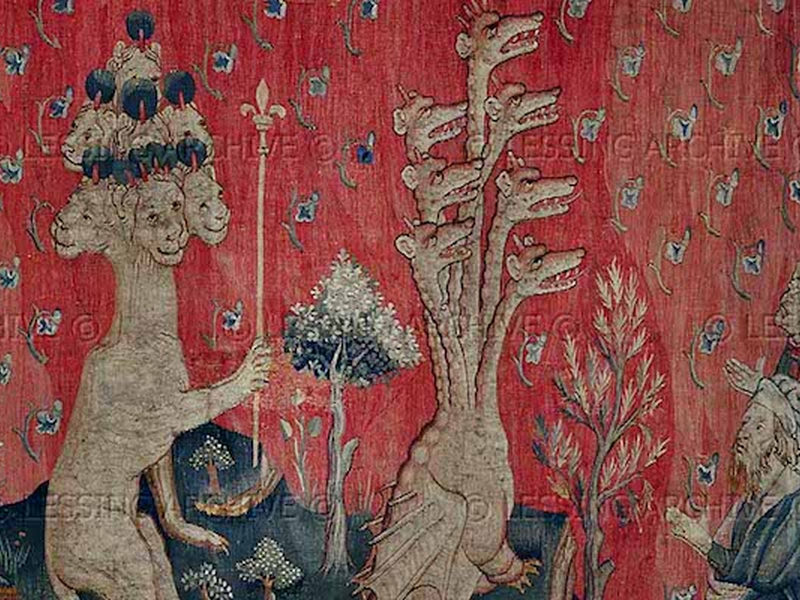
Flying scrolls. Red horses. Beasts coming out of the sea. Winged women. The list goes on. Apocalyptic literature in the Bible is like a cross between science fiction and Marvel comics. And the Bible has a fair bit of this sort of thing. Daniel sees visions in Babylon, Zechariah sees…

by Toby SumpterNovember 4, 2014

bhm-skyline-2
Theopolis News

New Name, New Look

Trinity House Institute has taken a new name, the Theopolis Institute. This striking new name expresses our unique vision and mission and captures the unified purpose behind all our specific programs and activities. We still have Bible, liturgy, and culture in our tagline. We still offer the same courses on…

by TheopolisNovember 4, 2014
istock_000012860926small
Atonement

Not Fearing the Devil

Adam Kotsko offers a socio-political variation on the Christus Victor atonement theory in his 2010 study, The Politics of Redemption: The Social Logic of Salvation . He does this by explaining "the devil" in terms of the Hegelian concept of "objective spirit," Geist . As Kotsko puts it, Geist "refers…

by Peter LeithartOctober 13, 2014
jez-timms-8muutamcwu4-unsplash
Leviticus

The Meaning of Sacrifice

Two factors keep Nahtali Meshel from discussing the meaning of sacrifice until late in his The "Grammar" of Sacrifice . The first has to do with the texts he draws from: "P says little about the meaning of its rituals" (174). The other has to do with the grammatical theory…

by Peter LeithartOctober 8, 2014
jez-timms-8muutamcwu4-unsplash
Leviticus

Praxemics

Chapter 5 of Naphtali Meshel's The "Grammar" of Sacrifice focuses on "praxemics," the physical actions of sacrificial ritual. Praxemes are constituted by six elements: an "atomact," an elementary physical act or gesture; an actor; an object that is acted up; a target for the action and often for the object…

by Peter LeithartOctober 6, 2014
markus-winkler-aid-xyrtlec-unsplash
Leviticus

Jugation and Hierarchy

Two chapters of Naphtali Meshel’s The “Grammar” of Sacrifice cover what he calls “jugation” and “hierarchies.” The first involves the addition of other materials to an animal offering. Jugates include wine, cereal, and oil that are added to the animals (zoemes) that are offered in sacrifice. Some jugates are coordinated…

by Peter LeithartOctober 1, 2014

Showing page 167 of 309

See all

Showing page 29 of 43

See all

Overlapping Structures in Revelation 21-22

James Jordan has suggested that the vision of new Jerusalem (Revelation 21:9-22:5) is arranged as a chiastic recasting of the creation week: A. Day 1: Light in the city, 21:10-11 B. Day 2: Boundaries and measurements of the city, 21:12-17 C. Day 3: Materials of the city, 21:18-21 D. Day…

July 30, 2015

Show & Tell

The verb “show” ( deiknuo ) occurs eight times in Revelation, and the eight uses fall into a neat pattern. Twice at the beginning (1:1; 4:1) and twice at the end (22:6, 8), the verb is used with a generic object. God shows “things which must shortly take place” (1:1;…

July 30, 2015

Musical Bridges

In an essay on “barriers and bridges” in American religion, Stephen Warner emphasizes the role of music in building bridges, forging solidarity without requiring assent to a common set of propositions. He offers a florilegium of quotations from various scholars: “At an emotional level, there is something ‘deeper' about hearing…

July 30, 2015

Keeping Time, Keeping Together

William H. McNeill's Keeping Together in Time explores the role of “emotional bonding through rhythmic muscular movement” in history (52). The significance of the phenomenon occurred to him during military training in 1941: “A sense of pervasive movement in unison is what I recall; more specifically, strange sense of personal…

July 30, 2015

End of the End

The final chapter of the Bible (Revelation 22:6-21) is a rapid series of speeches and dialogues, structured in fourfold parallelism. Each new section introduces a new speaker or speech with some form of “he said.” The speakers move from an angel to Jesus to the Spirit and bride. The chapter…

July 29, 2015

Seven Heads

In a 2007 Bibliotheca Sacra article, Mark Hitchcock examines various theories about the identity of the seven heads of the beast in Revelation 17:9-11. It's been proposed that the number seven is purely symbolic of fulness, and that the heads are not to be identified with any historical characters. Hitchcock's…

July 29, 2015

Showing page 396 of 2212

Browse by Category

In Medias Res

Your weekly digest for all things Theopolis.

Donate

Theopolis is nearly 100% donor-supported. Consider joining us on our mission.