Theopolis Logo

Writing

Explore our collection of theological essays, biblical studies, and reflections on faith and culture.

See all
31-03-0213
Hermeneutics

Apocalyptic Eyes

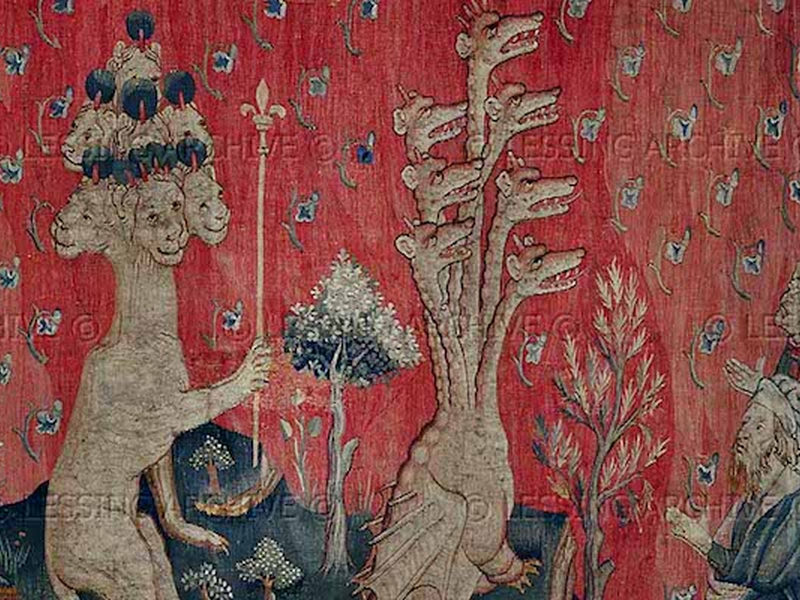
Flying scrolls. Red horses. Beasts coming out of the sea. Winged women. The list goes on. Apocalyptic literature in the Bible is like a cross between science fiction and Marvel comics. And the Bible has a fair bit of this sort of thing. Daniel sees visions in Babylon, Zechariah sees…

by Toby SumpterNovember 4, 2014

bhm-skyline-2
Theopolis News

New Name, New Look

Trinity House Institute has taken a new name, the Theopolis Institute. This striking new name expresses our unique vision and mission and captures the unified purpose behind all our specific programs and activities. We still have Bible, liturgy, and culture in our tagline. We still offer the same courses on…

by TheopolisNovember 4, 2014
istock_000012860926small
Atonement

Not Fearing the Devil

Adam Kotsko offers a socio-political variation on the Christus Victor atonement theory in his 2010 study, The Politics of Redemption: The Social Logic of Salvation . He does this by explaining "the devil" in terms of the Hegelian concept of "objective spirit," Geist . As Kotsko puts it, Geist "refers…

by Peter LeithartOctober 13, 2014
jez-timms-8muutamcwu4-unsplash
Leviticus

The Meaning of Sacrifice

Two factors keep Nahtali Meshel from discussing the meaning of sacrifice until late in his The "Grammar" of Sacrifice . The first has to do with the texts he draws from: "P says little about the meaning of its rituals" (174). The other has to do with the grammatical theory…

by Peter LeithartOctober 8, 2014
jez-timms-8muutamcwu4-unsplash
Leviticus

Praxemics

Chapter 5 of Naphtali Meshel's The "Grammar" of Sacrifice focuses on "praxemics," the physical actions of sacrificial ritual. Praxemes are constituted by six elements: an "atomact," an elementary physical act or gesture; an actor; an object that is acted up; a target for the action and often for the object…

by Peter LeithartOctober 6, 2014
markus-winkler-aid-xyrtlec-unsplash
Leviticus

Jugation and Hierarchy

Two chapters of Naphtali Meshel’s The “Grammar” of Sacrifice cover what he calls “jugation” and “hierarchies.” The first involves the addition of other materials to an animal offering. Jugates include wine, cereal, and oil that are added to the animals (zoemes) that are offered in sacrifice. Some jugates are coordinated…

by Peter LeithartOctober 1, 2014

Showing page 167 of 309

See all

Showing page 29 of 43

See all

Voice of Lord

I've noted before that the word “voice” appears seven times in Psalm 29. That suggests a link with creation, and we can see a general creation sequence in the Psalm: Days 1-2: In Genesis, the Spirit hovers over the waters, and then the Lord divides the waters above and below…

June 8, 2015

Ten Plagues

The Greek word “plague” ( plege ) is used 16 times in the book of Revelation, but twice we get a count of plagues. The hyacinth army of Revelation 9 breathes out the “ three plagues” of fire, smoke, brimstone (9:18). Those plagues show up later (14:10-11 [all three]; 19:20;…

June 8, 2015

A Brief Brief for Books

Derrida revived the ancient myth of Thoth, told in the Phaedrus , according to which the invention of writing was like a fall of man. Writing things down destroyed the personalism and in-placedness of speech, and eventually would destroy memory. Being a book, the Bible is understandably pro-book, and the…

June 8, 2015

Prooftext for Hell?

In a 2001 article in Evangelical Quarterly , Ralph Bowles argues that Revelation 14:10-11 does not teach that the wicked are eternally punished in hell, as many have thought. The text says that beast-worshipers will be tormented in fire and brimstone and “the smoke of their torment goes up forever…

June 5, 2015

After Denominations, What?

Suppose denominations are declining in importance. Suppose other patterns and groupings are taking their place. What form will those other patterns and groupings have? The short answer is: We don't know. No patriarch could have imagined the Mosaic system, and no priest serving the tabernacle could have anticipated all the…

June 5, 2015

Reformation and Statism

Princes didn't start the Reformation, but Mark Greengrass ( Christendom Destroyed ) says that they benefited most from it: “The empire's evolution allowed them to present themselves as its primary law-makers and keepers of the peace” (314). It was beginning already before the Reformation: “Princes and imperial cities attempted to…

June 5, 2015

Showing page 416 of 2212

Browse by Category

In Medias Res

Your weekly digest for all things Theopolis.

Donate

Theopolis is nearly 100% donor-supported. Consider joining us on our mission.