Theopolis Logo

Writing

Explore our collection of theological essays, biblical studies, and reflections on faith and culture.

See all
aaron-burden-h8s0pf2rcqs-unsplash
Galatians

The Restoration of the Galatians

While controversies over the writings of Paul continue in various corners of the intellectual globe, the word of God given through Paul and his scribe and all of the church’s interpreters and translators over the last two millennia is still readily available to the lofty and the lowly. Paul, as…

by Grace LangnessMarch 25, 2013

kiwihug-l4gw27xzn1i-unsplash
Deuteronomy

Law and History: How to Read the Law of Moses (Part 2)

The second in a series of studies in Deuteronomy. Deuteronomy 22:30: A man shall not take his father’s wife, and shall not uncover his father’s wing (Hebrew: kanaf ). There are a number of unusual features in this law that mark it out from the previous context, indicating that it…

by Ralph Allan SmithMarch 20, 2013
200403-moss-pilate-tease_pncfq5
History

Victimhood and the Gospel

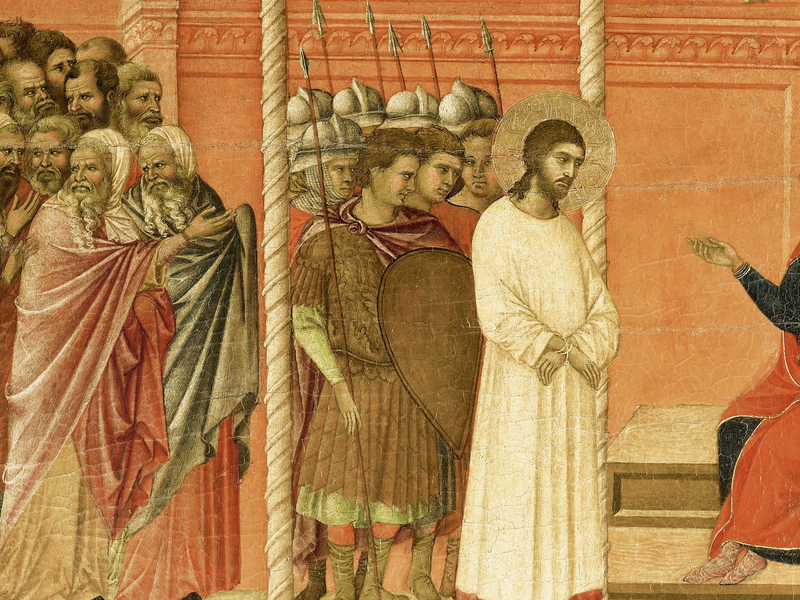
The texts of Christianity have been slowly at work, under the power of the Holy Spirit for 2000 years now. If we could be magically transported back into the world of two millennia ago, modern Americans would be shocked at the cruelty of that world. There was no concern for…

by Richard BledsoeMarch 18, 2013
aaron-burden-1ebsmyrau-s-unsplash
Luke

The Dysfunctional Family of the Gadarene Madman

The Story of the Gadarene Madman is told in all three synoptic Gospels (Matthew 8:28-34, Mark 5:1-20, Luke 8:26-37). Jesus ventures into a Gentile area when He passes over the Sea of Galilee. Upon disembarking from his boat, he is immediately met by a demon-possessed madman. Upon meeting Jesus, he…

by Richard BledsoeMarch 13, 2013
aaron-burden-1ebsmyrau-s-unsplash
Deuteronomy

Law and History: How to Read the Law of Moses

Part 1 of a multi-part series of studies on Deuteronomy 22:30-23:8. Eric Auerbach, in his classic work on Western literature, devotes his first chapter to contrasting Homer with the Bible. Of Homer, he writes of the “need of Homeric style to leave nothing which it mentions half in darkness and…

by Ralph Allan SmithMarch 12, 2013
markus-winkler-aid-xyrtlec-unsplash
Theopolis News

James Jordan in Korea, Japan

Trinity House Fellow James B. Jordan will be a speaker at an International Conference on Biblical Symbolism that will be held in Seoul on Monday, May 27 in 2013. He will address "The Importance of Biblical Symbolism and Symbolic Interpretation of the Bible." The conference will have three other speakers…

by Peter LeithartMarch 9, 2013

Showing page 197 of 309

See all

Showing page 29 of 43

See all

Typical Beauty

Ruskin's concept of "typical beauty" is a piece of theological aesthetics. In the second volume of Modern Painters , Ruskin distinguished kinds of beauty, the typical and the vital. Of the first, he says: "that external quality of bodies already so often spoken of, and which, whether it occur in…

July 26, 2018

Of Subject and Objects

In the third volume of Modern Painters , Ruskin addresses the "German dulness, and English affectation" that has "multiplied among us the use of two of the most objectionable words that were ever coined by the troublesomeness of metaphysicians,—namely, 'Objective,' and 'Subjective.'" The words are "exquisitely . . . useless"…

July 25, 2018

Hopkins and Typology

George Landow argues ( Victorian Types, Victorian Shadows ) that the poetry of Gerald Manley Hopkins would look less bizarre, though no less innovative, if we placed Hopkins more firmly in the poetics of his time. Which is to say, placed him in the context of a typological poetics. Hopkins's…

July 24, 2018

Architecture of Sacrifice

Architecture, Ruskin claims ( Seven Lamps of Architecture ), isn’t the same as building. Architecture refers to the specifically artistic features of a building, and the specifically artistic features have to do with adornment and not function: “Architecture concerns itself only with those characters of an edifice which are above…

July 23, 2018

Types of Color

John Ruskin was the main art critic of his time; he was an artists himself, and also wrote on a variety of other topics, especially on the state of English politics and economy. He abandoned explicit attachment to Evangelical Christianity but remained deeply indebted. He provides an excellent example of…

July 19, 2018

The Typological Imagination

Typological forms of thought weren't confined to sermons and commentaries, but made their way into 19 th -century English poetry. -Some poets put typology to orthodox uses, though here we can see divergent deployments of a similar typology. Elizabeth Barrett Browning wrote a poem, Casa Guidi Windows (1851) about the…

July 18, 2018

Showing page 64 of 2212

Browse by Category

In Medias Res

Your weekly digest for all things Theopolis.

Donate

Theopolis is nearly 100% donor-supported. Consider joining us on our mission.