Theopolis Logo

Writing

Explore our collection of theological essays, biblical studies, and reflections on faith and culture.

See all
g-_k-_chesterton_at_work
Books

Interpreting "The Man Who Was Thursday"

I just finished re-reading G. K. Chesterton’s The Man Who Was Thursday . I have in the past had the temerity to say that I believe it to be the best novel of the 20th century. Be that as it may, I still maintain that it is at least one…

by Richard BledsoeJanuary 7, 2022
10779-istockgetty-images-plusredletterw
Hebrews

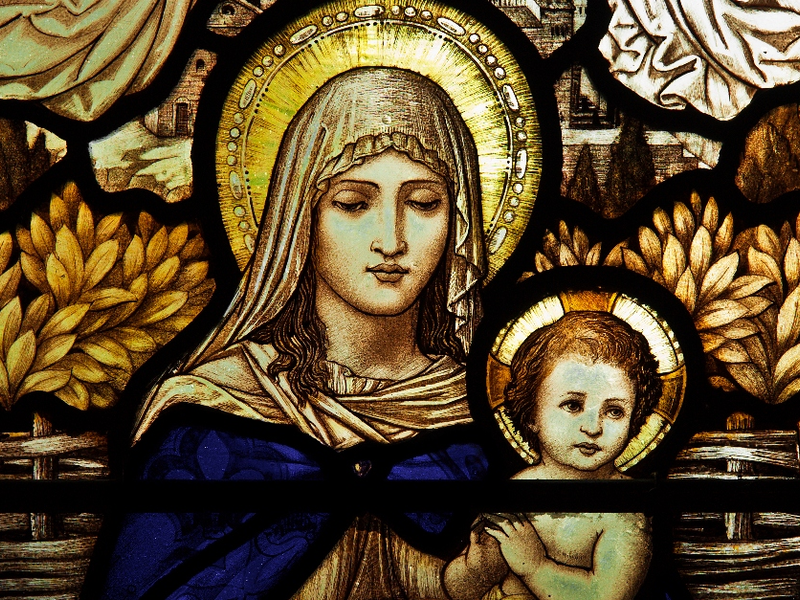
The Universality of Mary’s Wound

And Simeon blessed them and said to Mary his mother, “Behold, this child is set for the fall and rising of many in Israel, and for a sign that is spoken against and a sword will pierce through your own soul also, that thoughts out of many hearts may be…

by Garrett SoucyJanuary 4, 2022
heartierhymnals-stockimage
Music

An Argument for Heartier Hymnals

I was inspired to write this article after reading John Ahern’s The Case for Shorter Hymnals first published on Theopolis Institute’s website on November 16, 2021. Mr. Ahern and I are writing with different audiences and emphases in mind. I am thankful we both share a mutual desire to see…

by Jarrod RicheyDecember 30, 2021
tim-marshall-k2u71wv2ei4-unsplash-1
Biblical Studies

Image of God

If you’ve spent any time in the social-media galaxy of Christian cultural commentators, you have almost definitely run across the Latin phrase Imago Dei . It means image of God . Why they usually say it in Latin, I couldn’t tell you. We saw it in the wake of the…

by Daniel HoffmanDecember 28, 2021
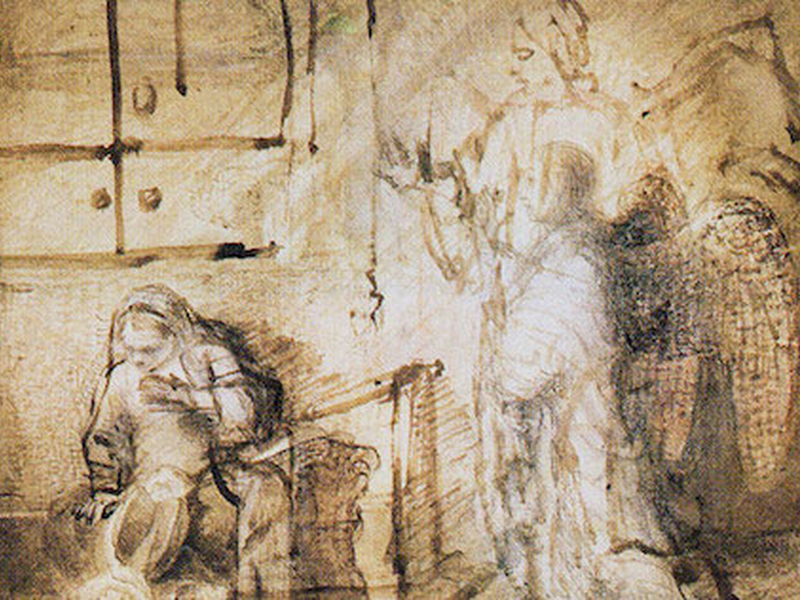
annunciation
Advent

He Comes to Make His Blessings Known: "Son of David" and "Son of Abraham" in Matthew 1:1

The Gospel of Matthew—indeed, the New Testament—begins with a list of names, and that list of names is introduced by this heading: “The book of the generations of Jesus Christ, the son of David, the son of Abraham.” Why start like this? Why “the son of David” and “the son…

by Josh JensenDecember 23, 2021
49980-nicolas_poussin_-_the_judgment_of_solomon_-_wga18330-800w-tn
Biblical Studies

On Not Needing to Cut the Baby in Half

A blade is raised. A child wails. But the brow under the crown is untroubled. Solomon knows that the raising of the sword will reveal the true parent and the identity of the son. But how did he know this? Abraham’s willingness to sacrifice Isaac certainly bears some of the…

by Jonathan WhiteDecember 21, 2021

Showing page 48 of 309

See all

Showing page 29 of 43

See all

Bride-priest

The harlot of Revelation 17 is dressed like a priest - robes of blue and scarlet, precious stones, an inscription on her head. So is the bride of Revelation 21: She is a city adorned with precious stones with streets of gold. Why would a female city be dressed like…

April 30, 2013

Angelic measurements

In an aside, John informs us that the angel measuring the walls of new Jerusalem measures according to human measurements (measure of man), which are also angelic measurements (Revelation 21:17). One of my students, Kameron Edenfield, suggests that this is another indication late in Revelation that angels and humans have…

April 30, 2013

Offertory’s Origins

Rebecca Maloy’s Inside the Offertory: Aspects of Chronology and Transmission is mainly about Gregorian chant in the offertory, but early on she summarizes current opinion regarding the origins of the offertory. Contrary to some earlier liturgical historians, “A lay offering during the liturgy of the early church . . .…

April 30, 2013
History

Purity and race

Contrary to popular impressions, racial ideology does not constitute the center of Afrikaner nationalism, according to Donald Akenson’s God’s Peoples: Covenant and Land in South Africa, Israel, and Ulster , a study of the modern afterlife of biblical covenant theology. Racial beliefs did not constitute the “central vaulting arch” of…

April 30, 2013

Ravished chastity

Revelation loomed large in the political conflicts of seventeenth-century England. On every side, the images of whore and bride were deployed to defend one church and condemn another. Una and Duessa in Spenser are one version of this battle. According to Esther Richey’s The Politics of Revelation in the English…

April 30, 2013

Housekeeping

In her contribution to To Train His Soul in Books: Syriac Asceticism in Early Christianity , Susan Harvey describes how the “emergence of the ascetic single-sex household - and later its organized communal form, the monastery - appears to have brought a sea change in the (male) awareness of and…

April 30, 2013

Showing page 740 of 2212

Browse by Category

In Medias Res

Your weekly digest for all things Theopolis.

Donate

Theopolis is nearly 100% donor-supported. Consider joining us on our mission.