
Theopolis Logo

Writing

Explore our collection of theological essays, biblical studies, and reflections on faith and culture.

See all
giammarco-zeh-ljawhtg-unsplash
Biblical Horizons

OPEN BOOK: Views and Reviews

Isaac E. Mozeson, The Word: The Dictionary that Reveals the Hebrew Sources of English (Northvale, NJ: Jacob Aaronson Inc., 1995), 310 pp. Reviewed by James B. Jordan. Once there was only one language in the world, the language God spoke to Adam. At the Tower of Babel, there came to…

by James B. JordanJune 28, 1996
tim-wildsmith-j6jv-mkdzqs-unsplash
Esther

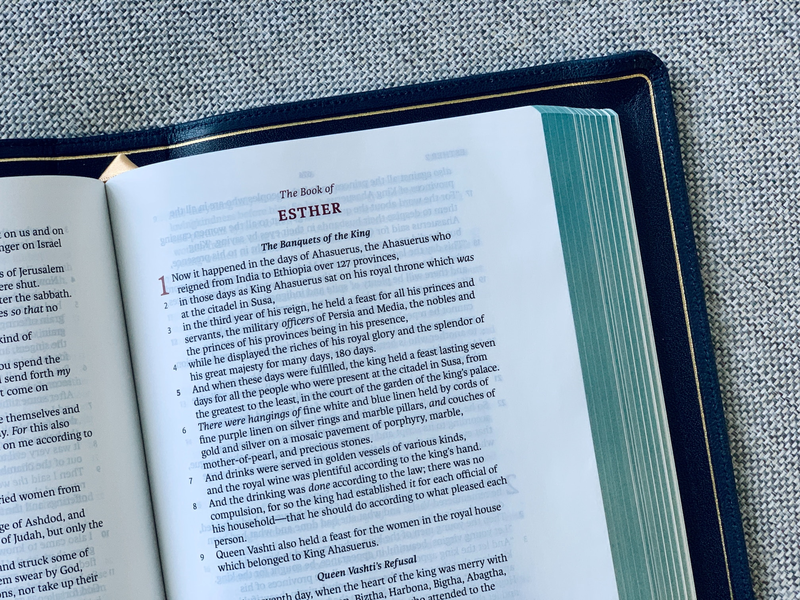
Esther: Historical & Chronological Comments (IV)

2. The Setting of the Book of Esther A. Xerxes (continued from previous issue) Ezra 6:14 says that the Jews finished building "according to the command of the God of Israel and the decree of Cyrus and Darius and Artaxerxes king of Persia." The problem with this verse is that…

by James B. JordanJune 28, 1996

ales-krivec-4mibe6zg5r0-unsplash
Acts

Jesus and Amalek

This essay goes with our previous study of the Amalek pattern back in Biblical Horizons No. 2. Since many do not have this essay, entitled "The Battle of Gog and Magog," let me cite the relevant paragraphs: Note in Genesis 12-15 that Abram moves into the land after escaping Pharaoh…

by James B. JordanJune 28, 1996

aaron-burden-1ebsmyrau-s-unsplash
Proverbs

The Strange Woman

Proverbs 7:6-23 is one of several passages early in the Proverbs in which Solomon warns his son about the wiles and dangers of the "strange woman." It is certainly quite proper to take these as straightforward warnings against sexual sins, and these are certainly warnings that need to be impressed…

by Peter LeithartJune 27, 1996
jan-kahanek-g3o5ztrk2e4-unsplash
Biblical Studies

Some Observations

1. In Luke 4:20 we read that after Jesus finished reading from Isaiah, "the eyes of all in the synagogue were fixed upon Him." This is usually taken in a psychological sense: They were amazed at Jesus somehow. I suggest that, as always, a merely psychological reading is a modern…

by James B. JordanMay 28, 1996
tim-wildsmith-j6jv-mkdzqs-unsplash
Esther

Esther: Historical & Chronological Comments (III)

2. The Setting of the Book of Esther Up to now we have assumed what we must prove, that the king in Esther is Darius the Great. While Biblical chronologists have usually taken this position, commentators on the book of Esther have often taken others as the king. One view,…

by James B. JordanMay 28, 1996

Showing page 265 of 309

See all

Showing page 29 of 43

See all

Secular states and Religious Freedom

Saba Mahmood and Peter G. Danchin examine religious liberty cases from Egypt (publicly an Islamic state whose laws are based in sharia), the European Union, and the U.S. Despite differences, they highlight the remarkable similar dilemmas that arise in these very different legal systems. The common antinomies emerge because of…

April 6, 2018

Dead End of the Left

In 1969, Carlo Lancellotti writes in Commonweal , the journal " Esprit published an exchange between two of the best-known Catholic intellectuals of the time. One was Jean-Marie Domenach, who in 1957 had succeeded Emmanuel Mounier as editor of Esprit and de facto flag-bearer of 'progressive' French Catholicism. The other…

April 6, 2018

Hyperliberalism and Tyranny

In a scathing TLS piece , John Gray describes the "un-liberty" of "hyperliberalism," today most clearly evident on university campuses. Under the older liberal regime, "Academic disciplines cherished their orthodoxies, and dissenters could face difficulties in being heard. But visiting lecturers were rarely disinvited because their views were deemed unspeakable,…

April 6, 2018

Prophet of Pluralism

JN Figgis isn't a household name these days, but he was an important Christian political thinker of the early twentieth century. Raised in a Calvinist home, he abandoned his childhood faith for some years, before returning to Christianity while at Cambridge. But his real "conversion," according to David Nicholls (…

April 6, 2018

Universal Man

Johannes Zachhuber argues, against Richard Cross, that Gregory of Nyssa holds to a "collection theory" of universals. That is, universals are collections of individuals, but genuine wholes, not merely a summation of individuals. For Gregory, this is not nominalism; universals are real. And the universal is indivisibly immanent in each…

April 6, 2018
Europe

Christianism in Europe

In a 2016 article , Rogers Brubaker describes a trend in European politics. Having defined the enemy of European civilization as "Islam," rightists in Europe have come to define themselves in religio-civilizational terms as well. They are posing as defenders of "Christianity." Problem is, many of their beliefs are distinctly…

April 6, 2018

Showing page 80 of 2212

Browse by Category

In Medias Res

Your weekly digest for all things Theopolis.

Donate

Theopolis is nearly 100% donor-supported. Consider joining us on our mission.