Theopolis Logo

Writing

Explore our collection of theological essays, biblical studies, and reflections on faith and culture.

See all
tanner-mardis-xuxghzhibn4-unsplash-1-2
Biblical Studies

Tweets-turned-Notes on the Bible’s Chronology

Summary In what follows, I will consider the “year-stamps” employed in Scripture, i.e., statements of the form, “Such-and-such an event took place in the Xth year of Y.” In the process, I will suggest some ways in which the Biblical narrative might relate to events in the extra-Biblical world, though…

by James BejonJuly 16, 2019
durer-prodigal-son-2
Luke

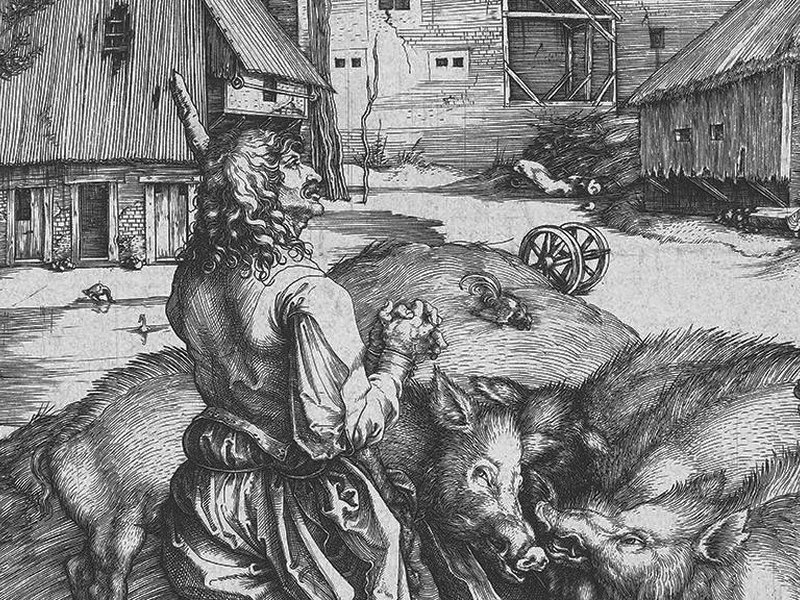
Perspectives on the Prodigal, (Part 2)

In the first essay on the parable of the Prodigal Son, I suggested that the problems commentators and others encounter in interpreting Jesus three-part parable are not accidental. These are not just problems in our ignorance of cultural background. They are intentional features of the stories —stories designed to poke…

by Ralph Allan SmithJuly 11, 2019
durer-prodigal-son-2
Luke

Perspectives on the Prodigal, (Part 1)

The story of the Prodigal Son is perhaps the most well-known story in the Bible. As others have observed, it may also be one of the most misunderstood. In two short essays, I will point out features of this story that are commonly neglected, aspects of Jesus’ parable that might…

by Ralph Allan SmithJuly 9, 2019
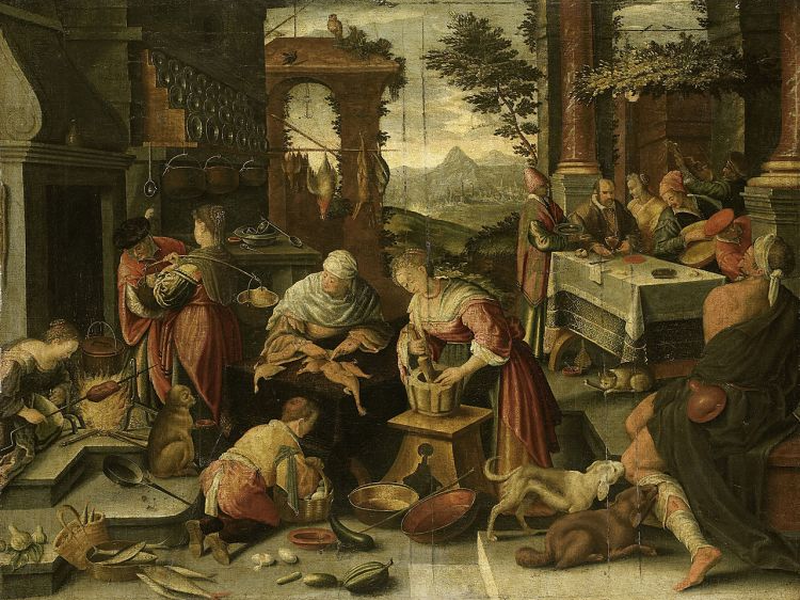
de-rijke-man-en-de-arme-lazarus-by-jacopo-da-ponte-16th-century
Luke

Lazarus and the Rich Man

The parable of Lazarus and the nameless rich man is not an independent story. It is part of a long context that begins in Luke 15:1, where Jesus is eating with tax collectors and sinners and the scribes and Pharisees grumble. In response to their hardheartedness, Jesus tells a three-part…

by Ralph Allan SmithJuly 4, 2019
aaron-burden-uynrnfdkjwg-unsplash
Luke

Everybody has Dropsy - Luke 14:1-24

The Bible is written so that even when a reader cannot pick up on what might be deeper or more detailed aspects of a text, there is virtually always a message to be heard. In the ancient world, where the “reader” of Scripture would likely be a church official facing…

by Ralph Allan SmithJuly 2, 2019
communion
Biblical Theology

Fruit Trees and Grain Plants

The distinction between garden (or vineyard) and field begins in Genesis 2. This relates to the ordering of the formless world. Plants of the field are contrasted with the garden planted by God in Genesis 2:5&8. Later on, under the Old Covenant the Israelites will be required to keep their…

by James B. JordanJune 27, 2019

Showing page 77 of 309

See all

Showing page 29 of 43

See all

Love Renews the World

Love has power to transform the world and lovers. "Love is the answer to the despair in which a reality is lost that knows nothing other than law, fate, and will" (74). Rosenstock-Huessy makes this claim in his Sociology , but he's not being gauzily sentimental. Love takes public form…

April 6, 2018
Trinity

Homoousios

What did the fathers who formulated the Nicene Creed mean to assert when they described the relationship between Father and Son with the term homoouios , "same substance"? In what sense "substance" and in what sense "same"? Surveying the usage of this terminology before Nicea, Christopher Stead ( Divine Substance…

April 5, 2018

Proclaiming the Mystery

Through the administration of the mystery, the manifold wisdom of God is made know through the church to rulers and authorities in the heavenly places (Ephesians 3:9-10). The “mystery” is something hidden in God for ages past and now revealed in Christ. In Ephesians, the mystery is the union of…

April 4, 2018

Secularism and Critique

Public discourse, it is often argued, has to be conducted in common language, and religious language isn't common. Religion has to be left in the "vestibule." Where does that perception come from? asks Charles Taylor . Taylor traces it to an epistemological distinction: "There is secular reason, which everyone can…

April 3, 2018

God from His Works

Stephen Holmes ( Quest for the Trinity ) summarizes Gregory of Nyssa's response to Eunomius's use of divine names: "Gregory is scathing about Eunomius's assumption that the divine essence can be adequately named. His arguments on this point are often unsatisfactory, turning regularly on the assumption that the same divine…

April 3, 2018

Rawls, Tribalist

Lenn Goodman's essay in Theology and the Soul of the Liberal State presents a devastating critique of Rawlsian political liberalism. The fundamental issue, Goodman claims, is that Rawls treats individual decisions as public acts, and therefore believes that liberalism needs to curtail the influence of ideologies even in the voting…

April 2, 2018

Showing page 81 of 2212

Browse by Category

In Medias Res

Your weekly digest for all things Theopolis.

Donate

Theopolis is nearly 100% donor-supported. Consider joining us on our mission.