Theopolis Logo

Writing

Explore our collection of theological essays, biblical studies, and reflections on faith and culture.

See all
last-supper
Luke

Table Talk

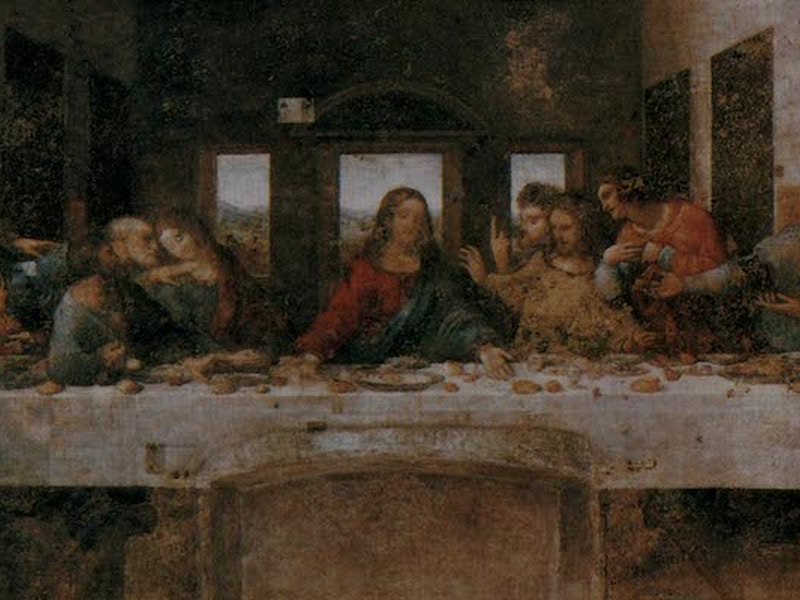
Along His journey to Jerusalem, Jesus stops frequently to have meals, three times with Pharisees (7:37-50; 11:37-54; 14:1-35). Meals were central to Jesus’ ministry. He comes “eating and drinking” (Luke 7:34). While His meals are not just for refreshment, they are opportunities for teaching the protocols of the kingdom. Meals…

by Peter LeithartApril 19, 2016

music-violin
Biblical Theology

A Musical Case for Typological Realism, (Part 4)

Time as a realm of participation can be difficult for us imaginatively to grasp. While music is a profoundly temporal art, exploring the medium of time like no other, most of our temporal experience seems decidedly unmusical in character, disjointed and unorchestrated. The form in which we naturally discover time…

by Alastair RobertsApril 14, 2016
John

Jesus' Burial Clothes

John devotes much attention to Jesus’ burial clothes. He tells us that Nicodemus brought about a hundred pounds of myrrh and aloes to spice Jesus body, and that He was bound in linen wrappings. We find out that His body and His head were wrapped separately. (John 19:39-40; 20:6-7). When…

by James B. JordanApril 12, 2016
clock
Biblical Theology

A Musical Case for Typological Realism, (Part 3)

Thinking about time in terms of music also helps us to appreciate its unity and inner relations. Henri Bergson observes our cultural habit of dividing time into discrete moments, and conceiving of these as if akin to objects in a spatial succession. [1] Against such a notion, Bergson argues for…

by Alastair RobertsApril 7, 2016
screen-shot-2016-03-31-at-9-32-11-am
Biblical Theology

A Musical Case for Typological Realism, (Part 2)

As we attend to these and other aspects of music’s temporality, Begbie suggests, we will find means by which to resist some of our habitual modern ways of conceptualizing time, most especially our tendency to conceive of time as if it were a homogeneous set of technologically quantifiable units laid…

by Alastair RobertsMarch 31, 2016
biblioteca-vasconcelos-crop
Biblical Theology

Systematic Typology (Part Three)

The Hidden Dimension In many fields of scientific study, the apparent complications and contradictions are dispelled once the internal logic is perceived. Biblical hermeneutics is no different, since the author of Creation is the Author of the Word. The Bible’s literary labyrinth radiates organically from an algorithm so simple it…

by Mike BullMarch 29, 2016

Showing page 133 of 309

See all
See all

Dostoevsky's "Socialism"

Following the death of his first wife, Dostoevsky reflected on immortality, a meditation that led him into political musings on "socialism," religious and secular. His premise, exemplified in his own brutal treatment of his wife, is that Ego controls our lives. Christ's commands lay out the path toward fulfillment, but…

December 15, 2017

Migration of the Mystical

One of the key threads of Pecknold’s story (in Christianity and Politics ) is the “migration” of the Christian notion of the mystical body. Henri de Lubac first demonstrated that between patristic period and the high middle ages, the term had moved from the Eucharist to the church itself. Early…

December 15, 2017

Limits of the Fathers

At the beginning of Cur Deus Homo (p. 260), Anselm commends his work to Urban II. In the process, he both commends the Fathers of the church, and suggests that they did not answer every question. First, the commendation: "Many of our holy Fathers and teachers, following the Apostles, speak…

December 15, 2017

Russia's Destiny

In an 1880 speech at the Pushkin Festival, Dostoevsky reflected on the destiny of Russia. The Westernizing reforms of Peter the Great didn't just introduce Western Engineering and fashion into Russia. Peter set the universal mission of the Russian people: "For what is the reform of Peter the Great to…

December 15, 2017

Reaping and Sowing

In The Limits of Power , Andrew Bacevich (a West Point graduate) has argued that we cannot disconnect our foreign policy from our “domestic dysfunction.” Bacevich notes that US foreign policy is driven by a belief in “liberty,” but liberty defined as abundance, the freedom to indulge our lust for…

December 15, 2017

Can Allah Create?

The question here is not, Did Allah create? The question is, Is it conceivable that a god like Allah could create the world? Does it make any sense to say that an absolutely sovereign but Unitarian god created the universe? Our first reaction might be: Why not? If Allah is…

December 14, 2017

Showing page 113 of 2212

Browse by Category

In Medias Res

Your weekly digest for all things Theopolis.

Donate

Theopolis is nearly 100% donor-supported. Consider joining us on our mission.