
Theopolis Logo

Writing

Explore our collection of theological essays, biblical studies, and reflections on faith and culture.

See all
giammarco-zeh-ljawhtg-unsplash
Biblical Horizons

OPEN BOOK: Views and Reviews

Isaac E. Mozeson, The Word: The Dictionary that Reveals the Hebrew Sources of English (Northvale, NJ: Jacob Aaronson Inc., 1995), 310 pp. Reviewed by James B. Jordan. Once there was only one language in the world, the language God spoke to Adam. At the Tower of Babel, there came to…

by James B. JordanJune 28, 1996
tim-wildsmith-j6jv-mkdzqs-unsplash
Esther

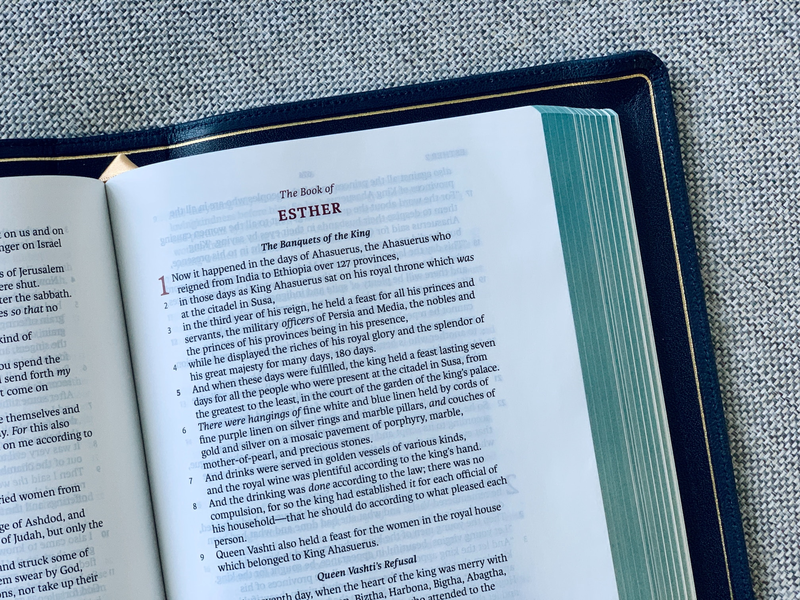
Esther: Historical & Chronological Comments (IV)

2. The Setting of the Book of Esther A. Xerxes (continued from previous issue) Ezra 6:14 says that the Jews finished building "according to the command of the God of Israel and the decree of Cyrus and Darius and Artaxerxes king of Persia." The problem with this verse is that…

by James B. JordanJune 28, 1996

ales-krivec-4mibe6zg5r0-unsplash
Acts

Jesus and Amalek

This essay goes with our previous study of the Amalek pattern back in Biblical Horizons No. 2. Since many do not have this essay, entitled "The Battle of Gog and Magog," let me cite the relevant paragraphs: Note in Genesis 12-15 that Abram moves into the land after escaping Pharaoh…

by James B. JordanJune 28, 1996

aaron-burden-1ebsmyrau-s-unsplash
Proverbs

The Strange Woman

Proverbs 7:6-23 is one of several passages early in the Proverbs in which Solomon warns his son about the wiles and dangers of the "strange woman." It is certainly quite proper to take these as straightforward warnings against sexual sins, and these are certainly warnings that need to be impressed…

by Peter LeithartJune 27, 1996
jan-kahanek-g3o5ztrk2e4-unsplash
Biblical Studies

Some Observations

1. In Luke 4:20 we read that after Jesus finished reading from Isaiah, "the eyes of all in the synagogue were fixed upon Him." This is usually taken in a psychological sense: They were amazed at Jesus somehow. I suggest that, as always, a merely psychological reading is a modern…

by James B. JordanMay 28, 1996
tim-wildsmith-j6jv-mkdzqs-unsplash
Esther

Esther: Historical & Chronological Comments (III)

2. The Setting of the Book of Esther Up to now we have assumed what we must prove, that the king in Esther is Darius the Great. While Biblical chronologists have usually taken this position, commentators on the book of Esther have often taken others as the king. One view,…

by James B. JordanMay 28, 1996

Showing page 265 of 309

See all
See all

Philosophy On Trial

Speech exists that we may "lovingly create names," writes Eugen Rosenstock-Huessy ( In the Cross of Reality , 149). "Speaking is always courting" (149). Courtrooms exist for those times when speech falters. In a courtroom, speech turns from courtship to dispute and this setting changes the character of speech: "In…

December 1, 2017

Coriolanus and Christ

Jay Zysk's Shadow and Substance is a recent contribution to a growing literature linking early modern theology with early modern drama. Zysk focuses on the ways Reformation disputes about the Eucharist play into plays, how Eucharistic semiotics shapes understandings of bodies and signs, flesh and spirit, letter and figure, words…

December 1, 2017

Faith, Love, Marriage

For Luther, faith isn't mere assent to truth, nor even confidence and trust in a distant savior. As David Fink puts it, "Faith . . . becomes the unitive force," or, in Luther's words, it "takes hold of Christ and has Him present, enclosing Him as the ring encloses a…

December 1, 2017

Jerome's Perspective on Paul

In his analysis of Luther's treatment of Galatians (in Reformation Readings of Paul ), David Fink gives a brief overview of pre-Reformation interpretations of the letter. Jerome said that the letter "is concerned especially with establishing the 'cessation of the old Law and the introduction of the new Law.'" Jerome…

December 1, 2017

The True and the Made

Vico's claim that verum et factum convertuntur , "the true and the made are convertible," has been taken as a sign of the foundational atheism of modernity. Benedict XVI sees Vico's claim as a secularization, a turn from the uncreated truth that is God to constructed human things. As Robert…

December 1, 2017

The Faith of Liberalism

"Liberals and communists," writes Eugen Rosenstock-Huessy ( In the Cross of Reality ), "have in common that they wish to make do without church and dogma, and indeed without faith. . . . reason is enough, for we can say what we think" (141). Both retain the term "believe," but…

December 1, 2017

Showing page 118 of 2212

Browse by Category

In Medias Res

Your weekly digest for all things Theopolis.

Donate

Theopolis is nearly 100% donor-supported. Consider joining us on our mission.