
Theopolis Logo

Writing

Explore our collection of theological essays, biblical studies, and reflections on faith and culture.

See all
giammarco-zeh-ljawhtg-unsplash
Biblical Horizons

OPEN BOOK: Views and Reviews

Isaac E. Mozeson, The Word: The Dictionary that Reveals the Hebrew Sources of English (Northvale, NJ: Jacob Aaronson Inc., 1995), 310 pp. Reviewed by James B. Jordan. Once there was only one language in the world, the language God spoke to Adam. At the Tower of Babel, there came to…

by James B. JordanJune 28, 1996
tim-wildsmith-j6jv-mkdzqs-unsplash
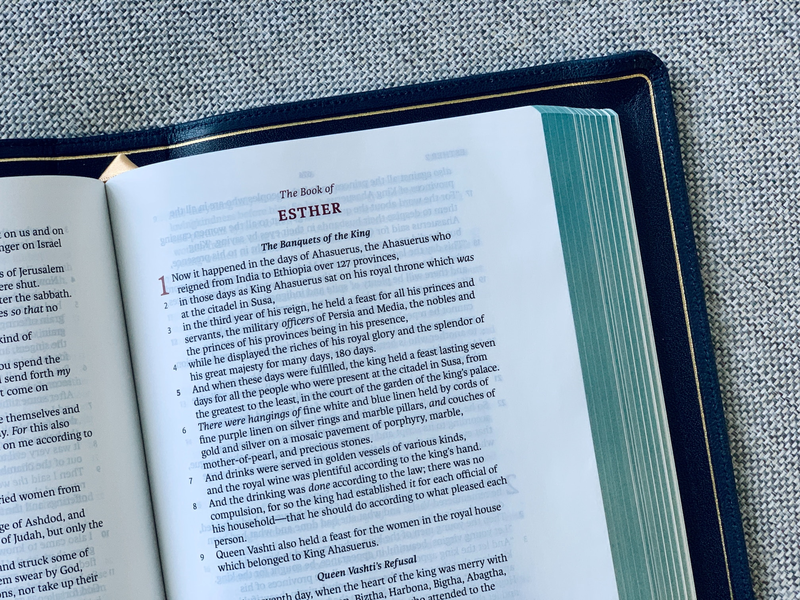
Esther

Esther: Historical & Chronological Comments (IV)

2. The Setting of the Book of Esther A. Xerxes (continued from previous issue) Ezra 6:14 says that the Jews finished building "according to the command of the God of Israel and the decree of Cyrus and Darius and Artaxerxes king of Persia." The problem with this verse is that…

by James B. JordanJune 28, 1996

ales-krivec-4mibe6zg5r0-unsplash
Acts

Jesus and Amalek

This essay goes with our previous study of the Amalek pattern back in Biblical Horizons No. 2. Since many do not have this essay, entitled "The Battle of Gog and Magog," let me cite the relevant paragraphs: Note in Genesis 12-15 that Abram moves into the land after escaping Pharaoh…

by James B. JordanJune 28, 1996

aaron-burden-1ebsmyrau-s-unsplash
Proverbs

The Strange Woman

Proverbs 7:6-23 is one of several passages early in the Proverbs in which Solomon warns his son about the wiles and dangers of the "strange woman." It is certainly quite proper to take these as straightforward warnings against sexual sins, and these are certainly warnings that need to be impressed…

by Peter LeithartJune 27, 1996
jan-kahanek-g3o5ztrk2e4-unsplash
Biblical Studies

Some Observations

1. In Luke 4:20 we read that after Jesus finished reading from Isaiah, "the eyes of all in the synagogue were fixed upon Him." This is usually taken in a psychological sense: They were amazed at Jesus somehow. I suggest that, as always, a merely psychological reading is a modern…

by James B. JordanMay 28, 1996
tim-wildsmith-j6jv-mkdzqs-unsplash
Esther

Esther: Historical & Chronological Comments (III)

2. The Setting of the Book of Esther Up to now we have assumed what we must prove, that the king in Esther is Darius the Great. While Biblical chronologists have usually taken this position, commentators on the book of Esther have often taken others as the king. One view,…

by James B. JordanMay 28, 1996

Showing page 265 of 309

See all
See all

German Reforvolution

Eugen Rosenstock-Huessy claims that the German Reformation qualifies for inclusion as one of the epochal revolutions of Western history ( Out of Revolution ). This is so partly because the German Reformation gave to Europe a new social role, the civil servant: “In the German revolution the drab, grey life…

October 25, 2017

Preaching, An Art of Division

The following is an excerpt from Peter Leithart's forthcoming two-volume commentary on Revelation (T&T Clark). Y ou must prophesy again concerning many peoples and nations and tongues and kings,” a voice tells John (Rev. 10:11). Then someone gives him a “reed like a rod” and instructs him to measure (11:1).…

October 24, 2017

Deep Comedy

The following is an excerpt from the introduction to my Deep Comedy (Canon, 2006). Viewed as a whole, the Christian account of history is eschatological not only in the sense that it comes to a definitive and everlasting end, but in the sense that the end is a glorified beginning,…

October 24, 2017

Time, Natural and Social

"To date," writes Norbert Elias in his Essay on Time , "enquiries into the sociology of time are almost non-existent” (38). This deficit, he suggests, is due to a dichotomy of the natural and human worlds, a dichotomy reflected in academic specializations (71). He blames the “conventional tendency to explore…

October 23, 2017

Two Kingdoms, Two Christs?

David VanDrunen, has worked out an understanding of natural law and the “two kingdoms” Christologically. He writes, “The Son of God rules the temporal kingdom as an eternal member of the Divine Trinity but does not rule it in his capacity as the incarnate mediator/redeemer” ( Natural Law and the…

October 20, 2017

Love Uber Alles

Benedict rejects the notion that Catholic social theory treats social and political institutions – the state, the economy, civil society, for instance – as – autonomous, extrinsically-related “subjects” with different logics. On this view, the economy would be the sphere of wealth-generation, politics the sphere of power, and civil society…

October 20, 2017

Showing page 130 of 2212

Browse by Category

In Medias Res

Your weekly digest for all things Theopolis.

Donate

Theopolis is nearly 100% donor-supported. Consider joining us on our mission.