Theopolis Logo

Writing

Explore our collection of theological essays, biblical studies, and reflections on faith and culture.

See all
sixteen-miles-out-al48tflf4e8-unsplash
Food

Gluttony In The Bible (As Opposed To Gluttony In The American Church)

In the Bible, fatness is such a blessing, that it is especially hard to understand why wicked men are permitted to enjoy such a state. It requires a theodicy and faith in God. Thus: “For they have no pangs until death; their bodies are fat and sleek . They are…

by Mark HorneAugust 12, 2013

jeremy-yap-j39x2xx_8cq-unsplash
How to Worship

Biblical Worship (Video with James B. Jordan)

[fve]http://vimeo.com/71901553[/fve]

by Peter LeithartAugust 8, 2013
chris-bair-ndczc5739ck-unsplash
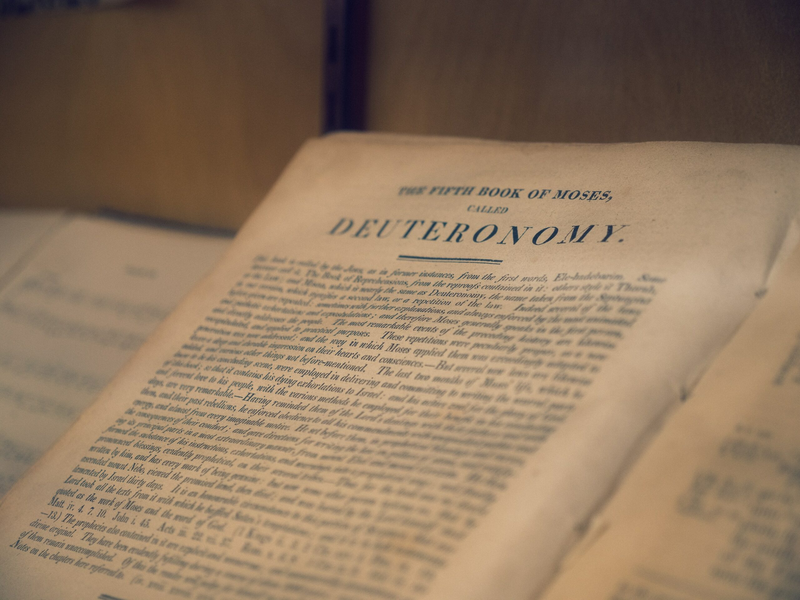
Deuteronomy

Holy Things for Holy People

The allusion to the Exodus story is contained in the first words of Deuteronomy 14:1 — “ye are the sons of Yahweh your God” — as well as in 14:2 in the use of the technical term translated “treasured possession,” “His own possession,” “peculiar people,” “precious people,” and so forth.…

by Ralph Allan SmithAugust 5, 2013
adam-and-eve-in-the-garden-of-eden-wenzel-peter
Deuteronomy

Forbidden Foods

I have argued that Deuteronomy 14:1-21 is an independent literary unit that applies the Third Word to the lives of Israelites from the time of Moses and Joshua. In this short pericope, Moses suggests broad and deep meaning by means of literary allusion to the stories of the creation and…

by Ralph Allan SmithJuly 31, 2013
david-weber-fwuo_zluhnw-unsplash
How to Worship

Pro-Sacramental Reformation

In his recently republished The New Creation , the late, delightful Herbert McCabe defends the priesthood of the plebs as roundly as anyone could want. Citing Hebrews, he claims that "there is an essential difference between the Christian community and the community of the Old Law, or any other religious…

by Peter LeithartJuly 29, 2013
eric-ward-7kqe_8meex8-unsplash
Augustine

Sexual Idolatry

Augustine famously prayed, “Our hearts our restless until they rest in You.” True indeed. Being creatures, we inherently sense our ontological poverty—our innate condition of dependence—and are compelled to find a sense of security. And it is also true—as Augustine’s own narrative painfully illustrates—that one of the things we most…

by Gerald HiestandJuly 24, 2013

Showing page 190 of 309

See all
See all

Names and Words

One of the key distinctions in Rosenstock-Huessy’s grammatical sociology is that between names and words. In his brief discussion of this distinction in The Christian Future (CF), he begins with an expression of his horror at John Dewey’s notion that “We have to find another set of words to formulate…

October 11, 2017

Rehoboam's Cities and House

After the northern tribes abandon the house of David (2 Chronicles 10), Rehoboam settles in Jerusalem (2 Chronicles 11:5). He builds cities for defense and for storage (11:5-12), receives the Levites and priests who flee from idolatrous Israel (11:13-17), marries and has children (11:18-23). The chapter moves from land to…

October 10, 2017

Language and Relation

Underlying Rosenstock-Huessy's entire discussion of the diseases of speech is the assumption that language establishes relations. In this, Rosenstock-Huessy is again assaulting one of the premises of modernity, namely, the centrality of the Ego, and the consequent notion that language exists so that the Ego can express its thoughts and…

October 10, 2017

Learning to Sit in the Sun

My Firstthings.com column last week was about Scottish poet Thomas A. Clark (not to be confused with the American poet Tom Clark). Here are the first few paragraphs: T homas A. Clark is ambitious. In a short essay on “Imaginative Space,” the Scottish poet describes our “late culture,” which is…

October 9, 2017

Purity and Holiness

Though sometimes conflated, purity and holiness aren't the same thing in the Old Testament. There are two overlapping spectra: A spectrum from profane or common on the one side and holiness/sanctity on the other, and a spectrum with unclean/impure to clean/pure on the other. The difference is evident in the…

October 9, 2017

Logos Enables Dia-logos

Truth has a bad rap these days. A claim to know truth sounds dogmatic, oppressive, perhaps even racist. Truth-claims shut down dialogue: If you already know the truth, there's nothing for us to talk about. In his 2009 encyclical Caritas in Veritate , Benedict XVI took on this hostility to…

October 6, 2017

Showing page 135 of 2212

Browse by Category

In Medias Res

Your weekly digest for all things Theopolis.

Donate

Theopolis is nearly 100% donor-supported. Consider joining us on our mission.