
Theopolis Logo

Writing

Explore our collection of theological essays, biblical studies, and reflections on faith and culture.

See all
giammarco-zeh-ljawhtg-unsplash
Biblical Horizons

OPEN BOOK: Views and Reviews

Isaac E. Mozeson, The Word: The Dictionary that Reveals the Hebrew Sources of English (Northvale, NJ: Jacob Aaronson Inc., 1995), 310 pp. Reviewed by James B. Jordan. Once there was only one language in the world, the language God spoke to Adam. At the Tower of Babel, there came to…

by James B. JordanJune 28, 1996
tim-wildsmith-j6jv-mkdzqs-unsplash
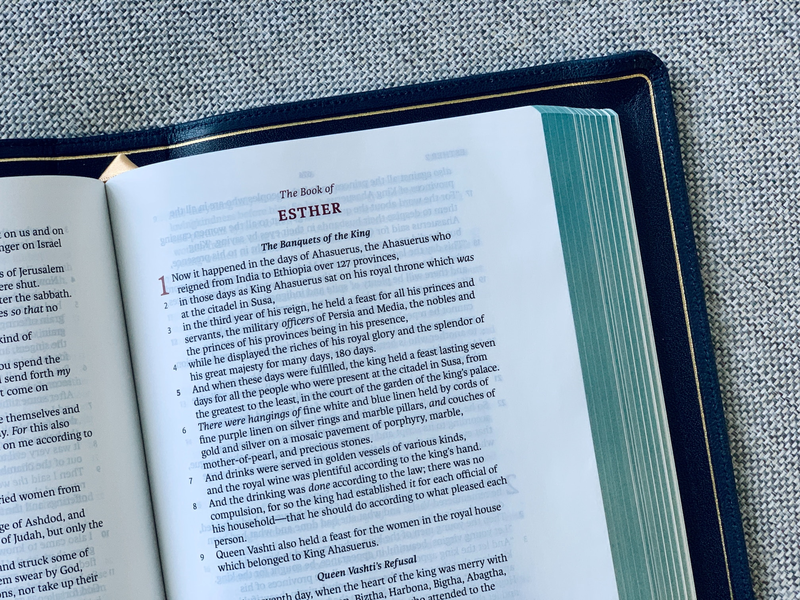
Esther

Esther: Historical & Chronological Comments (IV)

2. The Setting of the Book of Esther A. Xerxes (continued from previous issue) Ezra 6:14 says that the Jews finished building "according to the command of the God of Israel and the decree of Cyrus and Darius and Artaxerxes king of Persia." The problem with this verse is that…

by James B. JordanJune 28, 1996

ales-krivec-4mibe6zg5r0-unsplash
Acts

Jesus and Amalek

This essay goes with our previous study of the Amalek pattern back in Biblical Horizons No. 2. Since many do not have this essay, entitled "The Battle of Gog and Magog," let me cite the relevant paragraphs: Note in Genesis 12-15 that Abram moves into the land after escaping Pharaoh…

by James B. JordanJune 28, 1996

aaron-burden-1ebsmyrau-s-unsplash
Proverbs

The Strange Woman

Proverbs 7:6-23 is one of several passages early in the Proverbs in which Solomon warns his son about the wiles and dangers of the "strange woman." It is certainly quite proper to take these as straightforward warnings against sexual sins, and these are certainly warnings that need to be impressed…

by Peter LeithartJune 27, 1996
jan-kahanek-g3o5ztrk2e4-unsplash
Biblical Studies

Some Observations

1. In Luke 4:20 we read that after Jesus finished reading from Isaiah, "the eyes of all in the synagogue were fixed upon Him." This is usually taken in a psychological sense: They were amazed at Jesus somehow. I suggest that, as always, a merely psychological reading is a modern…

by James B. JordanMay 28, 1996
tim-wildsmith-j6jv-mkdzqs-unsplash
Esther

Esther: Historical & Chronological Comments (III)

2. The Setting of the Book of Esther Up to now we have assumed what we must prove, that the king in Esther is Darius the Great. While Biblical chronologists have usually taken this position, commentators on the book of Esther have often taken others as the king. One view,…

by James B. JordanMay 28, 1996

Showing page 265 of 309

See all
See all

Names and Words

One of the key distinctions in Rosenstock-Huessy’s grammatical sociology is that between names and words. In his brief discussion of this distinction in The Christian Future (CF), he begins with an expression of his horror at John Dewey’s notion that “We have to find another set of words to formulate…

October 11, 2017

Rehoboam's Cities and House

After the northern tribes abandon the house of David (2 Chronicles 10), Rehoboam settles in Jerusalem (2 Chronicles 11:5). He builds cities for defense and for storage (11:5-12), receives the Levites and priests who flee from idolatrous Israel (11:13-17), marries and has children (11:18-23). The chapter moves from land to…

October 10, 2017

Language and Relation

Underlying Rosenstock-Huessy's entire discussion of the diseases of speech is the assumption that language establishes relations. In this, Rosenstock-Huessy is again assaulting one of the premises of modernity, namely, the centrality of the Ego, and the consequent notion that language exists so that the Ego can express its thoughts and…

October 10, 2017

Learning to Sit in the Sun

My Firstthings.com column last week was about Scottish poet Thomas A. Clark (not to be confused with the American poet Tom Clark). Here are the first few paragraphs: T homas A. Clark is ambitious. In a short essay on “Imaginative Space,” the Scottish poet describes our “late culture,” which is…

October 9, 2017

Purity and Holiness

Though sometimes conflated, purity and holiness aren't the same thing in the Old Testament. There are two overlapping spectra: A spectrum from profane or common on the one side and holiness/sanctity on the other, and a spectrum with unclean/impure to clean/pure on the other. The difference is evident in the…

October 9, 2017

Logos Enables Dia-logos

Truth has a bad rap these days. A claim to know truth sounds dogmatic, oppressive, perhaps even racist. Truth-claims shut down dialogue: If you already know the truth, there's nothing for us to talk about. In his 2009 encyclical Caritas in Veritate , Benedict XVI took on this hostility to…

October 6, 2017

Showing page 135 of 2212

Browse by Category

In Medias Res

Your weekly digest for all things Theopolis.

Donate

Theopolis is nearly 100% donor-supported. Consider joining us on our mission.