Theopolis Logo

Writing

Explore our collection of theological essays, biblical studies, and reflections on faith and culture.

See all
sacre-bleu-r__kixb0i5m-unsplash
Death

Integrity

Integrity seems to have two meanings. It can mean the quality of being honest and having strong moral principles. A man of integrity is a person of honour, rectitude and probity, truthful and trustworthy. Integrity also describes a state – the quality of being whole and undivided. If things are…

by Arthur KayMarch 19, 2015

emmanuel-phaeton-1bwmfmvybi8-unsplash
Psalms

Psalm 32 Commentary

Get the Psalm 32 Translation here Psalm 32 is the first part of Ps. 32-33, ending with a call to praise that is answered by what follows. Ultimately the psalm needs to be considered as a whole, but what we call Psalm 32 does have its own structure and logic,…

by James B. JordanMarch 18, 2015
laughter
Humor

On Crude Humor

You wouldn’t hit a man with glasses would ya? No, of course not. I’d hit him with a bat. In our culture of frivolity it is tempting for Christians to think that solemnity should be our defining attribute. The coarseness of the world impedes us from enjoying any sort of…

by Remy WilkinsMarch 17, 2015
standingonamountain
Creation

Maker of Heaven and Earth, Part 2

Taking a cue in my last post from early Christian apologetics, I suggested that if we wish to articulate and defend a doctrine of creation ex nihilo in contemporary theology, we would do well to offer a thick description of Yahweh’s divine monarchia (his sole rule or sovereignty). Rather than…

by Stephen LongMarch 12, 2015
mountain-top-2
Creation

Catechism of the Universe

I’m not sure we really understand the insidiousness of unbelief. It is not merely to reject the gospel of Jesus, the existence of a Creator God, or to question biblical morality. At its core, unbelief is ingratitude, and by the very nature of this ingratitude, it must ultimately reject every…

by Toby SumpterMarch 10, 2015
jonah-under-gourd
Mark

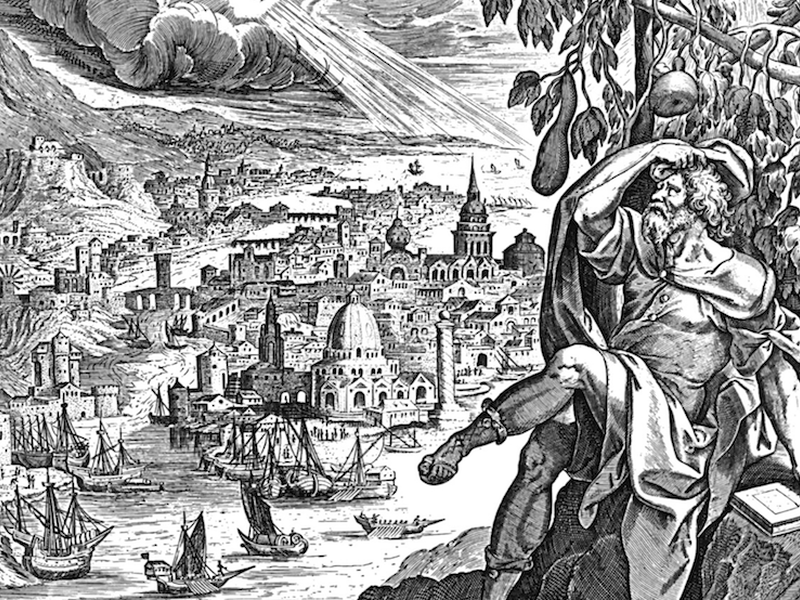
The True Jonah and Lenten Fasting

Mark’s narrative of the baptism of Jesus is characteristically brief: “In those days Jesus came from Nazareth of Galilee and was baptized by John in the Jordan. And when he came up out of the water, immediately he saw the heavens being torn open and the Spirit descending on him…

by Arthur KayMarch 9, 2015

Showing page 158 of 309

See all
See all
History

What is “Christianization”?

Peter Brown asks this question in the first essay in Authority and the Sacred: Aspects of the Christianisation of the Roman World (Canto original series) and sensibly, following the lead of RA Markus, tries to let early Christians themselves answer. There isn’t a single answer. Early in the fourth century,…

June 12, 2009
History

Polis and Oikos

Milbank often makes this point, but it’s huge: “Likewise the household, the site of productive provision, was not an arena of ‘politics’ and dialectical disputation, but of unquestioned paternal control. The Christian gothic ‘merging’ of oikos and polis , which as Ruskin in particular grasped, opened the question of virtue…

June 11, 2009
History

Against Mediating Institutions

Mediating institutions - those formations and associations that stand between the individual and the state - are essential for freedom, we’re often told. I agree with the aim, but have questions about whether the notion of mediating institutions gets at it. The main objection is that the theory appears to…

June 11, 2009

Benediction

The Aaronic blessing promises the “face” and “countenance” of Yahweh, and places the name of God on the people of God (Numbers 6:27). Psalm 44 explains these words of blessing. Yahweh’s hand drove out nations and planted Israel in the land (v. 2) because He shone the “light of [His]…

June 9, 2009

Libido dominandi

David Potter confirms Augustine’s claim that the foreign wars of Rome were an extension of a lust for domination and honor: Roman “thinking [about the outside world] involved terms such as gloria , the glory that was won in battle, the ability to compel a foreign people to do something.…

June 9, 2009

Early Archaeology

David Stone Potter again: “Homeric archaeology did not begin with Calvert or Schliemann. It was a feature of life in the second and third centuries AD, when ancient monuments were recognized as such and attached to the world of the poems. There is no reason to doubt that the scepter…

June 9, 2009

Showing page 1371 of 2212

Browse by Category

In Medias Res

Your weekly digest for all things Theopolis.

Donate

Theopolis is nearly 100% donor-supported. Consider joining us on our mission.