Theopolis Logo

Writing

Explore our collection of theological essays, biblical studies, and reflections on faith and culture.

See all
sixteen-miles-out-al48tflf4e8-unsplash
Food

Gluttony In The Bible (As Opposed To Gluttony In The American Church)

In the Bible, fatness is such a blessing, that it is especially hard to understand why wicked men are permitted to enjoy such a state. It requires a theodicy and faith in God. Thus: “For they have no pangs until death; their bodies are fat and sleek . They are…

by Mark HorneAugust 12, 2013

jeremy-yap-j39x2xx_8cq-unsplash
How to Worship

Biblical Worship (Video with James B. Jordan)

[fve]http://vimeo.com/71901553[/fve]

by Peter LeithartAugust 8, 2013
chris-bair-ndczc5739ck-unsplash
Deuteronomy

Holy Things for Holy People

The allusion to the Exodus story is contained in the first words of Deuteronomy 14:1 — “ye are the sons of Yahweh your God” — as well as in 14:2 in the use of the technical term translated “treasured possession,” “His own possession,” “peculiar people,” “precious people,” and so forth.…

by Ralph Allan SmithAugust 5, 2013
adam-and-eve-in-the-garden-of-eden-wenzel-peter
Deuteronomy

Forbidden Foods

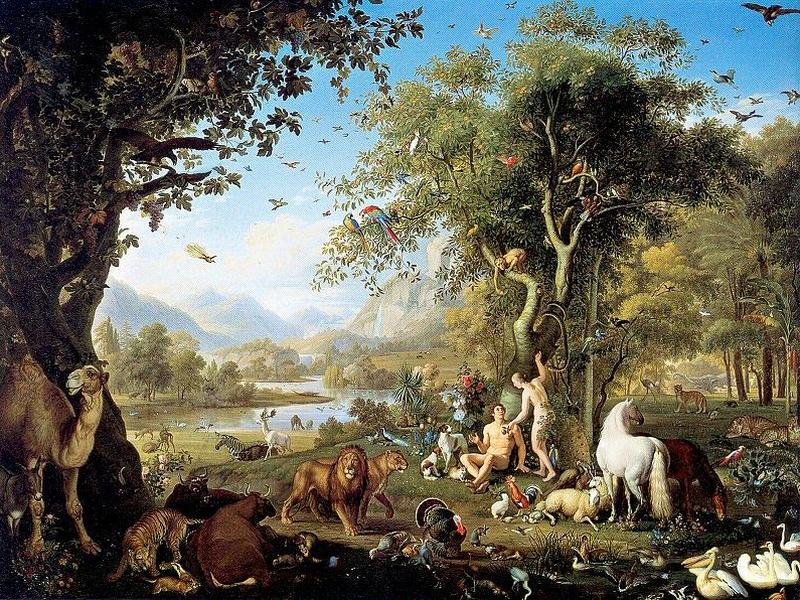
I have argued that Deuteronomy 14:1-21 is an independent literary unit that applies the Third Word to the lives of Israelites from the time of Moses and Joshua. In this short pericope, Moses suggests broad and deep meaning by means of literary allusion to the stories of the creation and…

by Ralph Allan SmithJuly 31, 2013
david-weber-fwuo_zluhnw-unsplash
How to Worship

Pro-Sacramental Reformation

In his recently republished The New Creation , the late, delightful Herbert McCabe defends the priesthood of the plebs as roundly as anyone could want. Citing Hebrews, he claims that "there is an essential difference between the Christian community and the community of the Old Law, or any other religious…

by Peter LeithartJuly 29, 2013
eric-ward-7kqe_8meex8-unsplash
Augustine

Sexual Idolatry

Augustine famously prayed, “Our hearts our restless until they rest in You.” True indeed. Being creatures, we inherently sense our ontological poverty—our innate condition of dependence—and are compelled to find a sense of security. And it is also true—as Augustine’s own narrative painfully illustrates—that one of the things we most…

by Gerald HiestandJuly 24, 2013

Showing page 190 of 309

See all
See all

Modern Sphinx

Modernity, Sergei Bulgakov once said, is a sphinx. It poses a riddle, and those who cannot or will not answer the riddle are devoured. The editors of Political Theology in Orthodox Christianity cite this at the beginning of their study to highlight the ambivalence of modernity. It has both constructive…

September 22, 2017

Bach the Modern?

"One of the factors that has rendered [Bach's] Matthew Passion so successful over the course of its reception," writes John Butt ( Bach's Dialogue with Modernity , 36), "lies in its evocation of subjectivities that somehow resonate with those of the broader modern condition." Bach's Passions target "the individual believer,…

September 22, 2017

Liturgy In Secular Imagination

Alastair Roberts's contribution to Our Secular Age , a collection of essays on Charles Taylor's A Secular Age , focuses on the effect of secularism on liturgical piety. Taylor identifies "authenticity" as one of the features of our secular age, and Roberts observes that this can take the form of…

September 22, 2017

US By TR

Graham Allison's Destined for War is a study of contemporary politics, Sino-American relations in particular. Along the way, he asks what we would think if China started acting like the U.S. did as we rose to global prominence. The career of Teddy Roosevelt makes the point: “ In the decade…

September 22, 2017

Late Bloomer

William Golding, writes Allan Massie in a review of John Carey's biography in the TLS , was "a late starter, one oppressed in youth by doubts and feelings of social, and perhaps intellectual, inferiority. Until his middle forties he was a poor, reluctant and unsatisfied provincial schoolmaster." He more than…

September 22, 2017

Fire Makes the Man

John Lanchester reviews James Scott's latest ( Against the Grain ) in the New Yorker . Scott contends that human civilization is the product of our mastery of fire. Fire enabled humans to cook food, and that gave us, Scott argues, and evolutionary advantage. Chimps put a lot of (unconscious)…

September 22, 2017

Showing page 141 of 2212

Browse by Category

In Medias Res

Your weekly digest for all things Theopolis.

Donate

Theopolis is nearly 100% donor-supported. Consider joining us on our mission.