
Theopolis Logo

Writing

Explore our collection of theological essays, biblical studies, and reflections on faith and culture.

See all
dan-burton-nrw4i8kuyd8-unsplash-2

Tyranny of the Agreeable

Inspired by the “Moscow Mood” Debate In a shocking 1961 study, Yale psychologist Stanley Milgram would don an official-looking white lab coat and tell a volunteer to administer increasing shocks to another “volunteer” in an adjacent room strapped into an “electric chair” just out of sight. The shocks were incrementally…

by John CarpenterJuly 22, 2024
screen-shot-2023-03-21-at-10-37-03-am
Apostle Paul

Why Doesn’t Paul Quote Jesus?

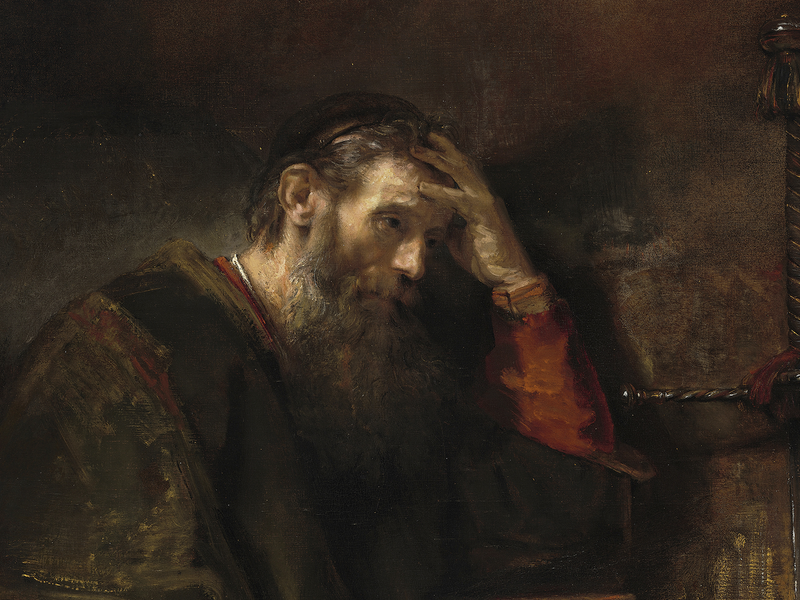
My title and the substance of the article are borrowed from a section of David Wenham’s excellent book, Paul: Follower of Jesus or Founder of Christianity? I am appropriating ideas from the pages in his book which address the question, “Why Does Paul refer to Jesus’ Life and Ministry so…

by Ralph Allan SmithJuly 9, 2024
screenshot-2024-07-04-at-8-35-35-am
James

The Epistle of James: Shotgun or Sniper

Some of us may be familiar with the notion that the epistle of James is like a New Testament version of Proverbs or other wisdom literature. According to this line of thinking, the epistle of James (together with the other wisdom literature) is basically a collection of timeless sayings without…

by Chris JohnsonJuly 4, 2024
metin-ozer-v4q9cqeashy-unsplash
Virtue

Doing What You Don’t Want to Do

This summer I started walking a long trail that ran north from our home. On my best days, I would walk a total of five miles at a brisk pace. This trail follows the power lines that serve a significant portion of North Dallas and stretches far past the two…

by Mandi GerthJune 25, 2024
screenshot-2024-06-18-at-12-49-58-pm
American Culture

Is Queer Theology Christian?

I am an Australian. I went to the American Academy of Religion mega-fest last year to meet up with some friends, to present a paper at a ‘science and religion’ panel, and to marvel at the sheer scale of how Americans do things. It was quite a ride. Looking at…

by Paul TysonJune 18, 2024
thomas-vitali-owhtrwwtpku-unsplash
Ecclesiology

Consumerism, Oikos, and the Role of Women in the Church (Part 4)

Part 1 Part 2 Part 3 We evangelicals do not often understand the roles of men and women in ministry. Because our consumerist culture has gutted the notion of family as it was historically understood, all Biblical passages about women in church ministry (a familial organism) are almost incomprehensible to…

by John CarpenterJune 11, 2024

Showing page 19 of 309

See all
See all
Theology

Barthes’s transcendental argument

That’s Barthes not Barth. As in Roland. Prickett suggests that Barthes’ proclamation of the death of the author, his manumission of interpretation from the obsession with the limited, final, “secret” meaning, and his hope for a liberated “anti-theological” and “revolutionary” reading that refuses “to fix meaning” in fact opens the…

August 5, 2008

Conservatism of Poststructuralism

Poststructuralism likes to think itself radical, but Stephen Prickett (Words and the Word) points out that it excludes the possibility of novelty. Barthes says that a text is “a tissue of quotations drawn from the unnumerable centres of culture.” And Kristeva’s notion of intertextuality, on Prickett’s reading, encloses a text…

August 5, 2008
Literature

Novelistic language

A few highlights from James Wood’s chapter on language in How Fiction Works . Early on, he mentions the “old modernist hope” that prose can be “as well written as poetry.” This will require readers and novelists to develop what Nietzsche called a “third ear”: “We have to read musically,…

August 4, 2008
Literature

Bad Books

Lewis remarks on the high difficulty of adverse criticism, noting that the difficulty lies partly in the fact that the defects of bad literature are found in good literature: “The novel before you is bad - a transparent compensatory fantasy projected by a poor, plain woman, erotically starving. Yes, but…

August 4, 2008

Terms of abuse

Lewis describes the process by which words that once expressed and aroused emotions by appealing to the imagination have been emptied of image-content and become purely emotional. “Damn you” used to be a real curse, because people believed in damnation. Now that fewer do, it’s a more or less purely…

August 4, 2008

Limits of language

In Lewis’s defense, he is trying to explain some of the limits of language, which are worth noting (this in the last chapter of Studies in Words ). One limitation has to do with language’s inability “to inform us about complex physical shapes and movements. Hence descriptions of such things…

August 4, 2008

Showing page 1485 of 2212

Browse by Category

In Medias Res

Your weekly digest for all things Theopolis.

Donate

Theopolis is nearly 100% donor-supported. Consider joining us on our mission.