Theopolis Logo

Writing

Explore our collection of theological essays, biblical studies, and reflections on faith and culture.

See all
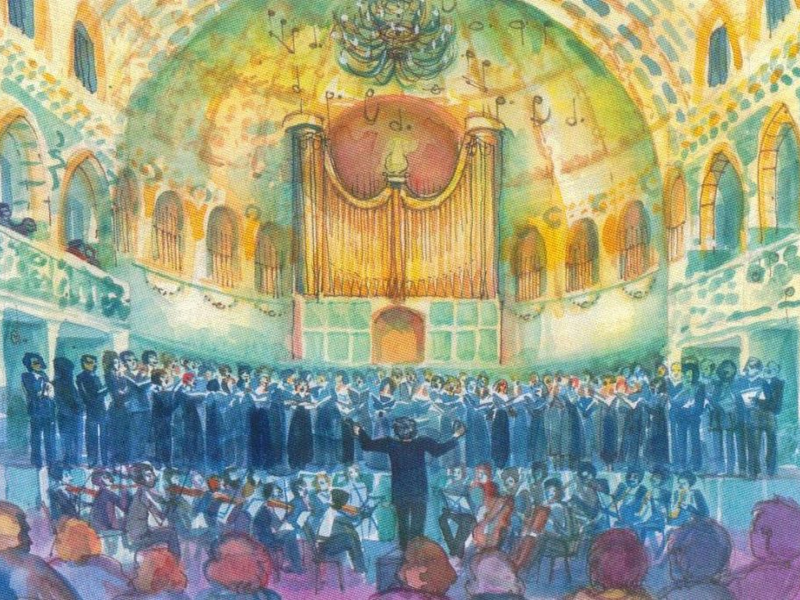
ohs-painting-concert-in-oxford-town-hall
Ephesians

Music and Drunkenness, Part 2

For Part 1, click HERE . How did Paul’s earliest commentators view his juxtaposition of music and drunkenness, and did they connect it to the ancient Greek ideas of musical ethos described in Part I? Origen, one of the earliest commentators on Paul, writes about Ephesians 5:18-19: One, however, who…

by John AhernMay 17, 2018
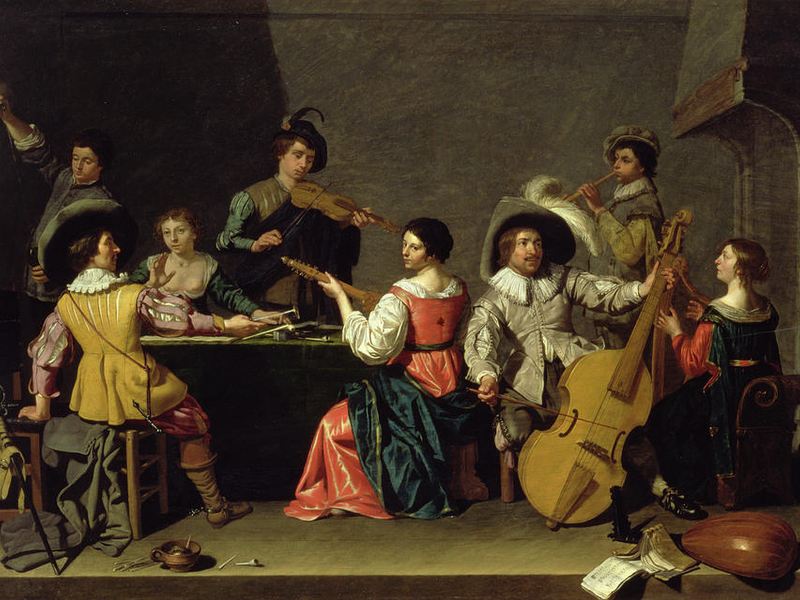
group-of-musicians-jan-van-bijlert-or-bylert
Ephesians

Music and Drunkenness, Part 1

Perhaps it is because I am a musician that I have always found Ephesians 5:18-19 so arbitrary. But isn’t it a little odd to contrast music and drunkenness? Perhaps it is not obvious that that is what Paul is doing; I know, for myself, that it is remarkably easy to…

by John AhernMay 15, 2018
infant-baptism
Baptism

Unequal Holiness

In 1 Corinthians 7:12-16 Paul deals with how the Corinthian Christians are supposed to be relating to unbelieving spouses. He essentially tells them, “Look, if your unbelieving spouse is willing to stay with you as a faithful Christian, don’t initiate a divorce. If he/she wants to leave you, let him/her…

by Bill SmithMay 10, 2018
starwarspt2
Violence

The Sword of Adam: Preterism vs. Pacifism, (Part 2)

For Part 1, click HERE . Those who focus on the supposed “pacifism” of Jesus and condemn the violence of God’s judgments throughout the Old Testament overlook the ministry of sacrificial bloodshed as an alternative to human bloodshed. The sword bearing of the sacrificial system was introduced to avoid the…

by Mike BullMay 8, 2018
obi-wan-death-edit
Violence

The Sword of Adam: Preterism vs. Pacifism, Part 1

How should a Christian respond to the objection that the Bible, like the Koran, is a book of violence and bloodshed? Numerous answers have been offered by well-meaning exegetes, but none of them gets to the heart of the matter: God desires to place a sword in the hands of…

by Mike BullMay 3, 2018
screen-shot-2018-05-02-at-12-55-14-pm
Theopolis News

Alastair Roberts Appointed As Adjunct Senior Fellow

Beginning this summer, Dr. Alastair Roberts will join the Theopolis Institute as an adjunct Senior Fellow, the Institute has announced. Dr. Roberts will be a regular on the Theopolis podcast, teach intensive courses and in the Fellows Program, and help develop new programs and outlets. Roberts earned his PhD from…

by TheopolisMay 2, 2018

Showing page 94 of 309

See all
See all
Theology

Barthes’s transcendental argument

That’s Barthes not Barth. As in Roland. Prickett suggests that Barthes’ proclamation of the death of the author, his manumission of interpretation from the obsession with the limited, final, “secret” meaning, and his hope for a liberated “anti-theological” and “revolutionary” reading that refuses “to fix meaning” in fact opens the…

August 5, 2008

Conservatism of Poststructuralism

Poststructuralism likes to think itself radical, but Stephen Prickett (Words and the Word) points out that it excludes the possibility of novelty. Barthes says that a text is “a tissue of quotations drawn from the unnumerable centres of culture.” And Kristeva’s notion of intertextuality, on Prickett’s reading, encloses a text…

August 5, 2008
Literature

Novelistic language

A few highlights from James Wood’s chapter on language in How Fiction Works . Early on, he mentions the “old modernist hope” that prose can be “as well written as poetry.” This will require readers and novelists to develop what Nietzsche called a “third ear”: “We have to read musically,…

August 4, 2008
Literature

Bad Books

Lewis remarks on the high difficulty of adverse criticism, noting that the difficulty lies partly in the fact that the defects of bad literature are found in good literature: “The novel before you is bad - a transparent compensatory fantasy projected by a poor, plain woman, erotically starving. Yes, but…

August 4, 2008

Terms of abuse

Lewis describes the process by which words that once expressed and aroused emotions by appealing to the imagination have been emptied of image-content and become purely emotional. “Damn you” used to be a real curse, because people believed in damnation. Now that fewer do, it’s a more or less purely…

August 4, 2008

Limits of language

In Lewis’s defense, he is trying to explain some of the limits of language, which are worth noting (this in the last chapter of Studies in Words ). One limitation has to do with language’s inability “to inform us about complex physical shapes and movements. Hence descriptions of such things…

August 4, 2008

Showing page 1485 of 2212

Browse by Category

In Medias Res

Your weekly digest for all things Theopolis.

Donate

Theopolis is nearly 100% donor-supported. Consider joining us on our mission.