Theopolis Logo

Writing

Explore our collection of theological essays, biblical studies, and reflections on faith and culture.

See all
screen-shot-2021-06-03-at-8-49-15-am
Ezra

Ezra: The Aaronic Rest-Giver

If you’re a preacher looking for good commentaries on Ezra, you’ll struggle. Certainly to find ones that wrestle in good detail with the text. And certainly ones that don’t cost you an arm and a leg. There’s a good bit more for Nehemiah, which is odd, as the two are…

by Rhys LavertyJune 8, 2021

christian-lue-k1e6994p3t8-unsplash
1 John

1 John in Community

Quick thought experiment: try to pretend you’ve never read 1 John before. Read 1:1-6. Go ahead; I’ll wait. Now, on to v. 7: “But if we walk in the light as He is in the light, we have fellowship with ______….” What word would you expect in that blank, based…

by Tim NicholsJune 1, 2021
noahs-ark-genesis
Hermeneutics

Spending Time with Noah: Reflections on Prepositions in the Flood Narrative

In my work as a Bible translator, I was recently checking our translation team’s draft of Genesis 8:8, which says of Noah (translating the Hebrew quite literally): And he sent out the dove from with him to see: had the waters lessened from upon the face of the ground? Part…

by Josh JensenMay 25, 2021
86758
Philosophy

Steven Weinberg Destroyed My Faith

Just in case a reader may not know Weinberg, he is a theoretical physicist and the winner of the Nobel prize in physics in 1979, as well as countless other prizes for his research. He is also a prolific, lucid, and captivating writer. If you want to read something on…

by Ralph Allan SmithMay 18, 2021
screen-shot-2020-09-17-at-9-11-45-am
Colossians

Reconciliation in Colossians 1:20

Colossians 1:15-20 is a famous passage in Paul’s epistles because it is a succinct and powerful poem. It appears even to have been a hymn. Given the uniquely Pauline language — “reconciliation” is a term used only by Paul — it should not seem odd to attribute the poem/hymn to…

by Ralph Allan SmithMay 11, 2021
stalker_still
Movies

Terror of Knowing Myself

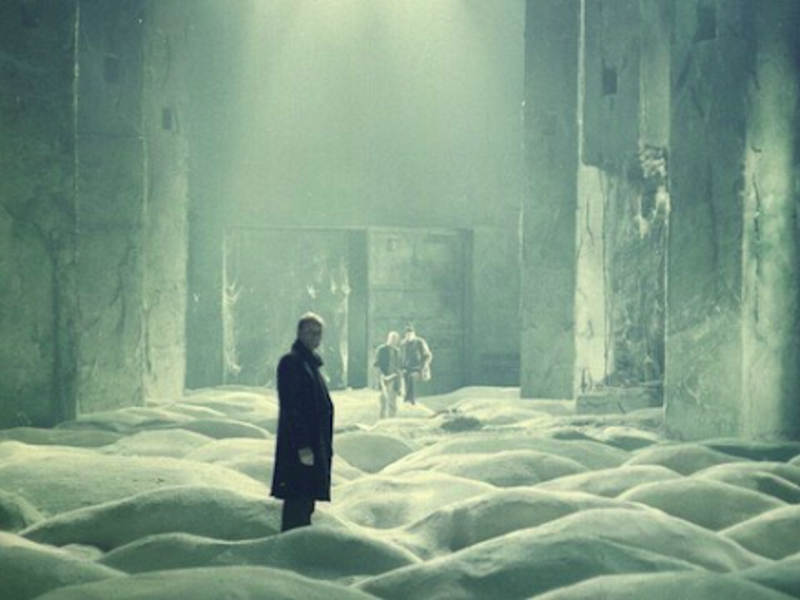
Stalker (1979) is a film by Andrei Tarkovsky based on Roadside Picnic by the Strugatsky brothers. It shows a day from the life of a stalker, a man who enters the so-called "Zone", an Alien landing site, where he leads people to a room that grants people’s innermost desires, which…

by Bogumil JarmulakMay 4, 2021

Showing page 55 of 309

See all
See all
Art

Impressionism and Urban Renewal

In 1859, Baron George-Eugene Haussmann, Prefect of the Seine, began overhauling Paris. The ultimate result was a masterpiece of urban rationality - straight streets, buildings of the same height, squares, a mappable city. On the way to clarity, though, the city was “rendered illegible,” according to art historian T. J.…

June 27, 2008
Philosophy

Horizontal platonism

Knight says that modernity has not left the upper/lower, intelligible/sensible dualism of Platonism behind, but only tipped it on its side. The modern “subject” is a variation on the world of ideas, while the inert “object” corresponds to the lesser reality of the sensible world.

June 27, 2008

Law and gospel

A strict distinction between law and gospel is offered as a prophylactic against works-righteousness. If it is admitted that law is gospel in any sense, all is lost. But this view assumes the very same view of law that it contests. A proponent of works righteousness sees the law as…

June 27, 2008
History

What Is Enlightenment?

In his essay “What is Enlightenment?” Kant described humanity’s coming-of-age. Enlightenment makes man’s deliverance from the tutelage of external authorities and the achievement of mature autonomy. Earlier, Descartes had constructed an entire philosophy on the foundation of “clear and distinct ideas.” The Enlightenment billed itself as the end of blindness…

June 26, 2008

Forgive our debts

Since at least Kant, Western theology has been hesitant to talk about salvation in terms of payment, debt, restitution. This helps create and reinforce the separation of public and private, of inner and outer: “We have divided the theological confession of sin. We have invented two parallel worlds, one in…

June 26, 2008
History

Bully Secularism

Knight defines “secularity” as “the term for the determination of an elite to be autonomous and to make the polis the servant and expression of their autonomy. Some are then free of external intellectual authority, but they themselves comprise an undeclared intellectual authority over others. The state would then not…

June 26, 2008

Showing page 1498 of 2212

Browse by Category

In Medias Res

Your weekly digest for all things Theopolis.

Donate

Theopolis is nearly 100% donor-supported. Consider joining us on our mission.