Theopolis Logo

Writing

Explore our collection of theological essays, biblical studies, and reflections on faith and culture.

See all
49980-nicolas_poussin_-_the_judgment_of_solomon_-_wga18330-800w-tn
Biblical Studies

Advice From a Sojourner, Part 2

In our first essay in this series ( part 1 ), we saw that Proverbs 30 opens with a puzzle, a cryptic sentence that challenges the reader to search out a matter in order to gain understanding. "It is the glory of God to conceal a matter, but the glory…

by James B. JordanOctober 26, 1989
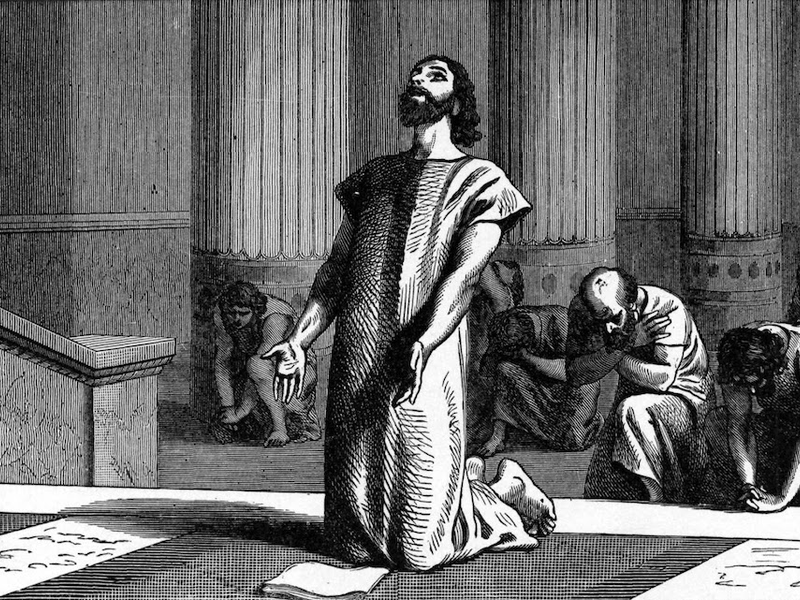
hezekiahs-prayer-2
Isaiah

Hezekiah’s Sign

The story of Hezekiah’s illness and recovery is familiar to every child who has attended Sunday School. Informed that he would die, faithful King Hezekiah pleaded in tears for a longer life. God heard his prayers and saw his tears, and promised fifteen more years. As a sign that He…

by Peter LeithartOctober 13, 1989
screen-shot-2021-08-12-at-2-57-54-pm
Proverbs

An Antidote for Yuppie Postmillennialism

1. The Blessed Hope "Looking for the blessed hope and the appearing of the glory of our great God and Savior, Christ Jesus." Titus 2:13 I was recently asked how I as a postmillennialist would preach on "The Blessed Hope." This is often a sticky question, because postmillennialists believe that…

by James B. JordanAugust 26, 1989
screen-shot-2022-01-10-at-5-52-39-pm
American Culture

Elijah’s War with Baal

1. Jeroboam and Ahab After Solomon died, the people came to his son, King Rehoboam, and asked for tax relief. Rehoboam refused to give it, and indeed told the people that he was going to tax them even more severely than his father had. At that point, with the blessing…

by James B. JordanJuly 26, 1989
screen-shot-2020-08-31-at-10-35-03-am
Biblical Horizons

The Love Feast

One aspect of truth is unity. It was Truth Incarnate who prayed for the unity of His people in John 17, which certainly makes unity a priority for them as well. In one sense, we know by faith that the Church is always invisibly unified in Christ, but there is…

by James B. JordanJune 16, 1989
screen-shot-2022-01-07-at-6-38-22-pm
Biblical Studies

The Son of Joseph, Revisited

Mr. Paul Miller of Vancouver writes that he is not persuaded by my remarks on Luke 4 on " The Son of Joseph ." He calls attention to Mark 6:1-6, where Jesus came "to His own part of the country," taught in the synagogue, and astonished many. The people said,…

by James B. JordanMay 16, 1989
See all
See all

Essential/Accidental Meaning

Gracia’s own suggestion is that we can make sense of the determinateness and indeterminateness of meaning by distinguishing between “essential” and “accidental” meanings: “although texts may have a well-delimited core of meaning (an essential meaning), they may have other meanings that are the result of contingent conditions, such as changes…

June 6, 2008

No Smoking

In the entry on meaning in the Dictionary for Theological Interpretation of the Bible (Baker), Jorge Gracia responds to the view that textual meaning has no limits with this: It is true that “texts are understood by different persons, or even by the same person at different times, to mean…

June 6, 2008

Tallis

Joel Garver writes, in response to several posts from Raymond Tallis’s Not Saussure : “Most post-structuralist authors I’ve read aren’t dealing with things such as cups or trees or rocks, but rather things such as rationality, madness, criminality, virtue, etc. Foucault, for instance, seems to take bodies as ontologically basic,…

June 5, 2008
Literature

Bible and poetry

Fisch yet again: After reviewing the influence of the Old Testament, especially the Psalms, on prose writing in the seventeenth century, he adds: “it is worth bearing in mind that this is not only a matter of the seventeenth century. It is found earlier in the antiphonal plain-song of the…

June 5, 2008
Literature

Hebraic prose

Fisch again: Hebraic prose is different from the grand style of the sixteenth century, and different too from the pared-down plain style shared by many Puritans and all Baconians. It is a rhetoric, not an anti-rhetoric, but it is a rhetoric purified by Puritanism, Senecanism, and scientism. It is biblical…

June 5, 2008
Literature

Jerusalem and Albion

In his 1964 book, Jerusalem and Albion: The Hebraic Factor in Seventeenth-Century Literature , Harold Fisch argues that Blake provides a more insightful and broader account of the seventeenth century’s “dissociation of sensibility” than Eliot, who coined the phrase. For Blake, the great crisis of England was the dissociation of…

June 5, 2008

Showing page 1507 of 2212

Browse by Category

In Medias Res

Your weekly digest for all things Theopolis.

Donate

Theopolis is nearly 100% donor-supported. Consider joining us on our mission.