Theopolis Logo

Writing

Explore our collection of theological essays, biblical studies, and reflections on faith and culture.

See all
hughes-auditorium-ryan-worthen-1024x576
American Culture

The Affections of Asbury

Over the past few days, quite the event has developed at Asbury University down in Wilmore, Kentucky. University students have appeared at the Hughes Auditorium to worship and sing praises to God, which has continued for over 90 hours at the time of this writing. There is recent reporting that…

by Charles JacobiFebruary 16, 2023
screen-shot-2023-02-14-at-1-15-58-pm
Apostle Paul

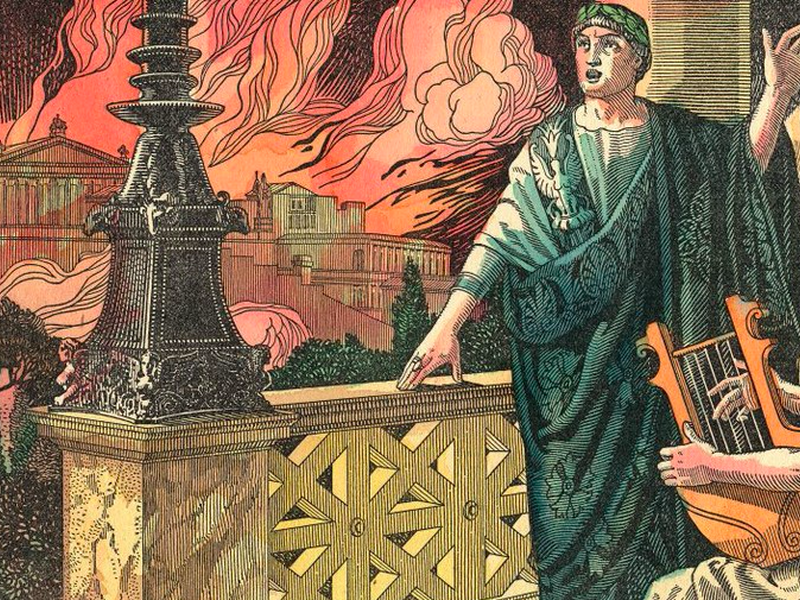
Paul and Nero

It is well-enough known that Nero was emperor from AD 54 when he was just 16 until his death as a young man of 30 in AD 68, just 14 years later. Paul ministered during most of those 14 years (we are not sure which year he died), accomplishing 3…

by Ralph Allan SmithFebruary 14, 2023
alexander-andrews-c91ls-jk7cw-unsplash
Apostle Paul

For Me to Live is Christ!

When the apostle Paul says, “For me to live is Christ!” (Philippians 1:21), we do not find it difficult to understand. Paul had been a faithful servant of Christ from the time that Christ confronted him on the road to Damascus (AD 30) and through Ananias told Paul that he…

by Ralph Allan SmithFebruary 9, 2023
vino-li-j4jjsfjkhpi-unsplash
Song of Songs

Bridal Song

I think there’s a layer to the Song of Songs which has been largely unexamined. The Song is about Christ and his church, Yahweh and Israel, the nature of the marriage covenant, and the marriage of the couple in the Song. But while the Song is “of Solomon” (or to…

by Daniel StanleyFebruary 8, 2023
screen-shot-2023-02-02-at-10-10-22-am
Biblical Studies

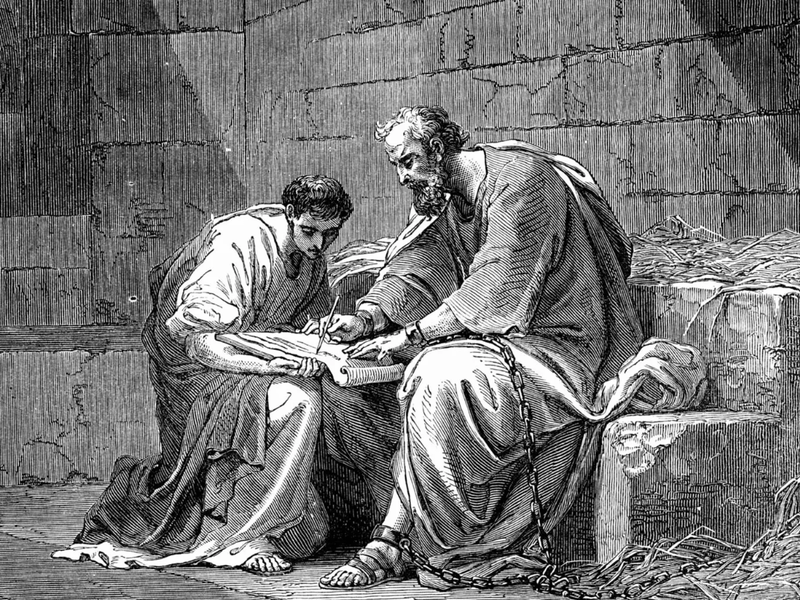
Paul and the Praetorian Guard

In Philippians 1:12-13, Paul informs his beloved brothers in Philippi that his Roman imprisonment — which one would naturally think hindered his ministry and the preaching of the Gospel — actually resulted in the surprising and wonderful progress of the Gospel. Of course, from our perspective 2000 years later and…

by Ralph Allan SmithFebruary 2, 2023
frank-mckenna-cseckew4tm0-unsplash
Biblical Theology

Abraham’s Seed: Heavens, Earth, and Sea Made New

In a recent post , I explored the threefold order of creation—heavens, earth, and sea—and suggested that in Genesis 1 God stamps heaven’s order, his own threefold nature, on the creation, giving earth a trinitarian shape. So what happens to the three-level architecture of creation after Genesis 1? We don’t…

by Josh JensenFebruary 1, 2023

Showing page 34 of 309

See all
See all
Literature

Sympathy for Bertram

Coleridge, on the other hand, stood up for Bertram: “I cannot agree with the solemn abuse which the critics have poured out upon Bertram in All’s Well that ends Well . He was a young nobleman in feudal times, just bursting into manhood, with all the feelings of pride of…

February 6, 2008
Literature

All’s Well?

Samuel Johnson said of Bertram in Shakespeare’s All’s Well that Ends Well : “I cannot reconcile my heart to Bertram, a man noble without generosity, and young without truth, who marries Helena as a coward and leaves her as a profligate; when she is dead by his unkindness, sneaks home…

February 6, 2008
Literature

Shakespeare the Christian

Belated help for a friend: Pastor Ralph Smith of the Mitaka Evangelical Church in Tokyo has produced an course entitled “Shakespeare the Christian.” The lectures cover Shakespeare’s debts to Christianity and his use of the Bible, and then analyze 10 of the plays in detail. Ralph has done his homework,…

February 6, 2008

Universal choir

Augustine on Psalm 149: “Chorus Christi jam totus mundus est.” Christ’s choir is now the whole world.

February 5, 2008
Theology

Augustine, postmodern cynic

Behind Varro’s classification of Roman religion into mythical, natural, and civic, Augustine discerns an interest, and a political one. Varro speaks harshly about the mythic or fabulous religions, for violating the dignity of immortal gods. Yet, the classification system serves to protect civic religion from similar condemnation. On Augustine’s reading,…

February 5, 2008
Politics

Musical city

Augustine quotes Cicero saying, “quae harmonia a musicis dicitur in cantu, eam esse in civitate concordiam.” That is, somewhat loosely, “what musicians call harmony in singing is concord in the city.”

February 5, 2008

Showing page 1572 of 2212

Browse by Category

In Medias Res

Your weekly digest for all things Theopolis.

Donate

Theopolis is nearly 100% donor-supported. Consider joining us on our mission.