Theopolis Logo

Writing

Explore our collection of theological essays, biblical studies, and reflections on faith and culture.

See all
aaron-burden-qjdzyt_k8xg-unsplash
Baptism

Baptismal Efficacy and the Reformed Tradition: Past, Present, and Future

OUR REFORMED HERITAGE When a Reformed Christian hears “baptismal regeneration,” what comes to mind? “Heresy,” most likely. Unfortunately, many in the Reformed community today have lost touch with some important aspects of their own heritage. If Reformed theology is going to continue reforming according to Scripture, we must recover the…

by Rich LuskMay 29, 2002

Theologia

Standing on the Promises | Faith and Assurance in the Bible

Faith and assurance are recurring subjects of controversy in Evangelical circles. We all agree that we are saved by the righteousness of Christ reckoned to us, which we receive through faith alone. Jesus lived and died and rose again as the representative of his people so that all of them…

by Mark HorneMay 24, 2002
screenshot-2023-12-12-at-10-36-28-am-2
New Perspective on Paul

Getting Some Perspectiveon the “New Perspective”

What’s at stake (or not!) for Reformed Pastors regarding the contemporary discussion of Paul and “the works of the law”? There has been a great deal of talk lately about “the New Perspective on Paul” and the works of, among others, Ed Sanders, James Dunn, and N. T. Wright. Each…

by Mark HorneMay 24, 2002
screenshot-2024-06-03-at-5-22-25-pm
Theologia

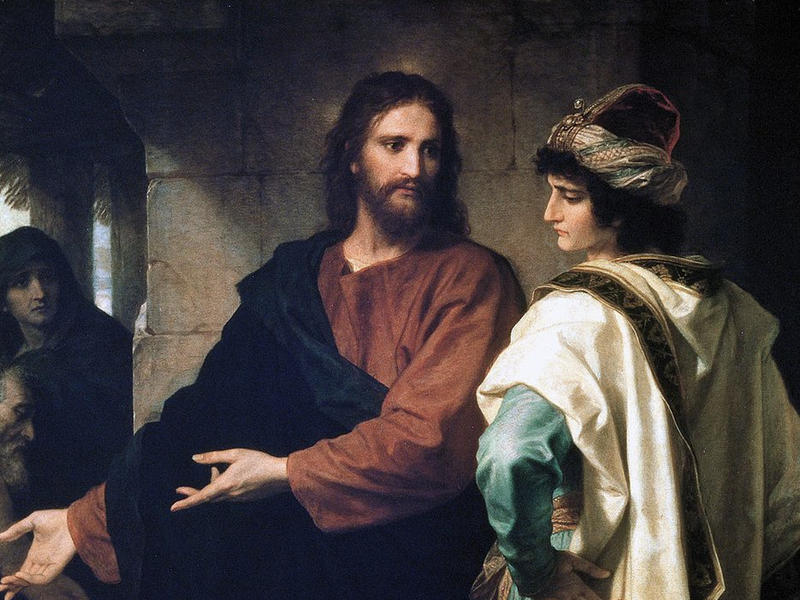
Did Jesus Preach Gospel or Law to the Rich Young Ruler?

When Christ enjoins upon the young man the duty of following him (Mt. 19:23), he does not give a counsel, but a command to all in common because no one can have a hope of salvation unless he follows Christ (2 Pet. 2:21), although from a particular cause it is…

by Mark HorneMay 20, 2002
kelly-sikkema-gpoh17dxqdm-unsplash
New Perspective on Paul

A Short Note on N. T. WRIGHT and His Reformed Critics

This short paper is not an attempt to provide a comprehensive analysis and defense of N. T. Wright, much less the so-called “New Perspective on Paul” as a whole. Indeed, Wright’s theological project has some failings and the New Perspective as a movement must be considered a mixed bag of…

by Rich LuskMay 20, 2002
tanner-mardis-xuxghzhibn4-unsplash-1-2
Biblical Studies

Leviticus 1:3-4, 10

Leviticus 1:3-13, Translation 3 If his Nearbringing is an Ascension from the herd, a perfect male shall he bring him near. To the forecourt of the Tent of Meeting he shall bring him near, for his acceptance before Yahweh. 4 And he shall lean his hand on the head of…

by James B. JordanAugust 5, 2001

Showing page 239 of 309

See all
See all
Uncategorized

1 & 2 Kings

Uriah Y Kim reviews my Kings commentary in a recent issue of Reviews in Religion and Theology . He’s got some criticisms, but overall it’s a fair review. A couple of responses on specific points: 1) He thinks my contention that there is a “seventh-king” pattern is suspect; my counting…

October 22, 2007
History

Patronage

Richard Saller defines patronage by three features (summarized by Griffin): “(1) it involves the reciprocal exchange of goods and services; (2) that it is a personal relationship of some duration; (3) that it is asymmetrical, in the sense that the two parties are of unequal status and offer different kinds…

October 22, 2007

Gratitude in ancient thought

Griffin begins her essay: “The exchange of beneficia - gifts and services - was an important feature of Greek and Roman society at all periods. Its prominence was reflected in the number of philosophical works that analyzed the phenomenon. From the fourth century B.C. onwards, euergesia and charis became subjects…

October 22, 2007
History

Seneca and Roman Society

Miriam Griffin has a richly detailed discussion of Seneca’s de Beneficiis in a 2003 issue of The Journal of Roman Studies . The article discusses the appropriateness of “patronage system” as a description of Roman social relations, Seneca’s use of exaggeration for moral effect, the and similarities between Seneca and…

October 22, 2007
History

Pointy Greeks

Seneca found Chrysippus’s treatment of the Three Graces too subtle: He was a great man but “a Greek, whose intellect, too sharply pointed, is often bent and turned back upon itself; even when it seems to be in earnest it only pricks, but does not pierce.” Seneca himself found in…

October 22, 2007
Philosophy

Kant on Ingratitude

In his Lectures on Ethics, Kant says that ingratitude is among the vices that “are the essence of vileness and wickedness.” He adds, “It is inhuman to hate and persecute one from whom we have reaped a benefit, and if such conduct were the rule it would cause untold harm.…

October 22, 2007

Showing page 1617 of 2212

Browse by Category

In Medias Res

Your weekly digest for all things Theopolis.

Donate

Theopolis is nearly 100% donor-supported. Consider joining us on our mission.