
Theopolis Logo

Writing

Explore our collection of theological essays, biblical studies, and reflections on faith and culture.

See all
lightstock_568139_medium_christ_hold_fast
Eucharist

Eucharistic Remembrance as Godward: The Evidence of Historic Liturgical Practice

Meanings of Remembrance Both Luke’s account of the upper room (Luke 22:14–23) and Paul’s recounting in 1 Corinthians 11:23–25 record Jesus’ words that the Supper in the distribution of bread: “do this in remembrance of me” (τοῦτο ποιεῖτε εἰς τὴν ἐμὴν ἀνάμνησιν). 1 1 Corinthians 11:25 repeats the words in…

by Christopher KouNovember 19, 2024
screenshot-2024-11-12-at-4-59-16-pm
Genesis

Brother Abraham

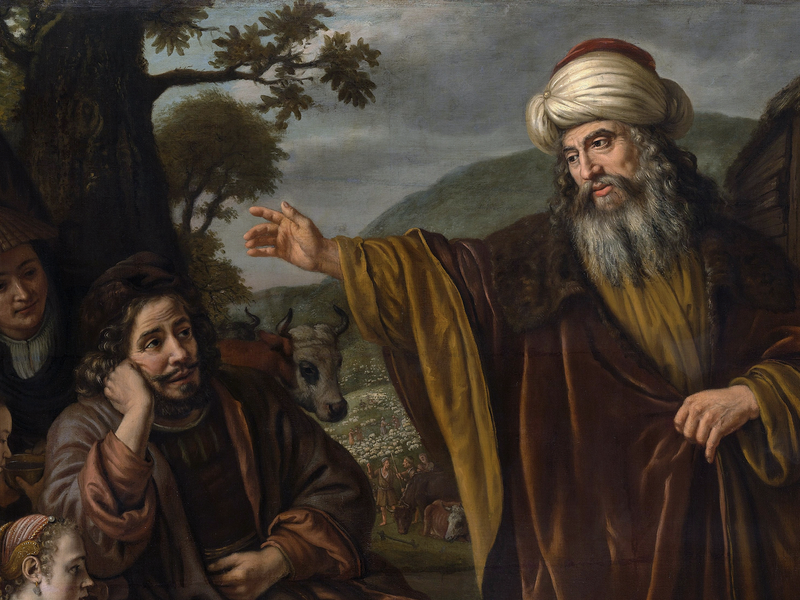
Genesis is a story of brotherly violence. Cain kills Abel. Jacob flees from Esau, his brother, to live with Laban, his mother’s brother, and ends up in a conflict with him too. Joseph’s brothers assault him, sell him away as a slave, and fake his death. All of this frames…

by Donald LinnemeyerNovember 13, 2024
natalia-y-hrklteauoi-unsplash
American Politics

Covenantal Politics

America is like a secular Holy Roman Empire. Contrary to dissidents who expect a collapse of the federal government, the implosion of the fiat dollar, or a national divorce into Jesusland and the United States of Canada, America will persist. Whether as a world hegemon or regional superpower, there is…

by Cal CrucisNovember 5, 2024
katie-moum-o0kbc907i20-unsplash-3
Pentecost

Pentecost and the Gift of a New Politics

Many readers of the New Testament will, at some point or other, be troubled by the question of why Jesus’ earthly ministry did not address the Roman occupation. Perhaps as a child in Sunday school you were taught that the Jews were expecting a military deliverer, and that the form…

by Alastair RobertsNovember 1, 2024
valentino-mazzariello-ndm1hhicwhc-unsplash-2
Culture

On the Pursuit of Status

In a recent tweet , which he later expanded into a Substack post , Aaron Renn wrote about the importance of ‘picking the right ladders to climb’. One of our most critical life decisions, Renn argues, is that of choosing the right ‘status hierarchies’ to which we will commit ourselves;…

by Alastair RobertsOctober 25, 2024
sixteen-miles-out-d40gdcd_-he-unsplash
Biblical Law

The Law in the Christian Life

The Third Use of the Created Word “Lord have mercy upon us, and incline our hearts to keep this law.” Those words are reflexive for almost any Anglican. Repeated nine times weekly at least during Lent and Advent if not year round, they are said between 54 and 468 times…

by Jackson WatersOctober 22, 2024

Showing page 16 of 309

See all
See all

Exhortation

Most of the Beatitudes in Matthew are stated in third person. “Blessed are the poor in spirit, for theirs is the kingdom of heaven.” ” They shall be comforted,” ” they shall inherit the earth,” ” they shall be called the sons of God.” At the end, Jesus changes the…

September 2, 2007
Theology

Music, Time, and Augustine

One of the best discussions of Augustine’s views on time comes from Jeremy Begbie’s Theology, Music, and Time (ch. 3). Following Ricoeur’s discussion, Begbie claims that Augustine’s distentio “is conceived as the three-fold present, and the threefold present as distentio . The distentio consists in the non-coincidence of the mind’s…

August 30, 2007
Theology

Escaping time

John Rist offers some important insights into Augustine’s view of time. He notes, as many commentators do, that Augustine is not aiming to provide a definition of time but to answer the question of how time can be measured. The dilemma is: If the past no longer is, and the…

August 30, 2007

Distention and eschatology

In a 1957 essay in Man and Time , Gilles Quispel claims that Augustine’s views of time have been extracted from the “great struggle between a cyclical and a historical view of the world, between archaism and Christianity,” and therefore have been misunderstood. Augustine “comes to grips with the Neoplatonists…

August 30, 2007
Philosophy

Augustine’s non-Aristotelian Universe

Augustine argues in Confessions that time is not reducible to the movement of the celestial bodies. Aristotle agreed; but, as Ricoeur points out, the arguments that Augustine used departed radically from Aristotle. First, if the sun and stars stopped moving, and yet a potter’s wheel continued to move, time would…

August 30, 2007

Showing page 1638 of 2212

Browse by Category

In Medias Res

Your weekly digest for all things Theopolis.

Donate

Theopolis is nearly 100% donor-supported. Consider joining us on our mission.