Theopolis Logo

Writing

Explore our collection of theological essays, biblical studies, and reflections on faith and culture.

See all
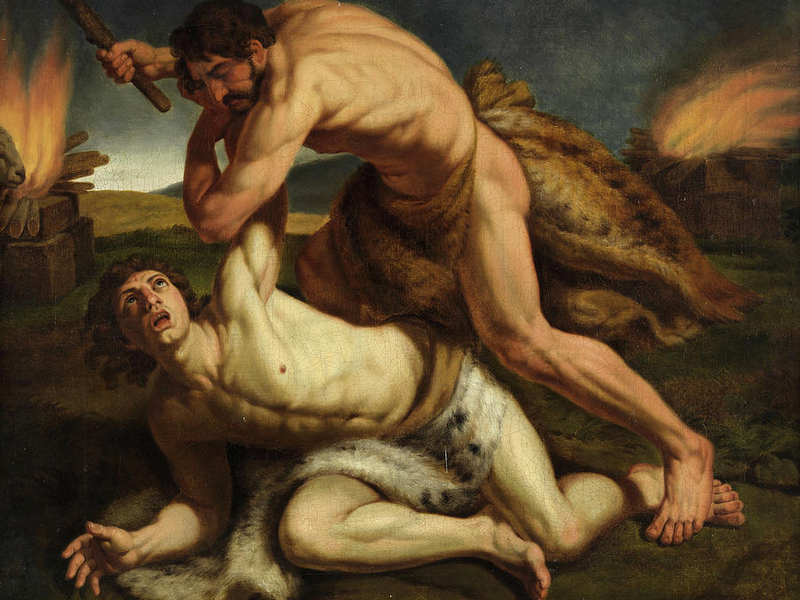
cain-killing-abel-unknown-19th-century
Biblical Horizons

The Servant of the Ground

Why was Abel’s offering approved and Cain’s rejected? This question has been debated for many centuries. Some have argued that Cain’s offering was rejected because it was not a bloody offering; others that Cain’s offering was rejected because it was not from the firstfruits; others that Cain’s offering was rejected…

by Peter LeithartSeptember 19, 1990

timothy-eberly-djj49s6ud2o-unsplash
Luke

The Unjust Steward Revisited

Last year I had occasion to work through the book of Luke as I did some work for one of my editorial clients, and this year my pastor has been preaching through Luke. Thus, I have twice been reminded of the Parable of the Unjust Steward (Luke 16:1-13), a parable…

by James B. JordanSeptember 2, 1990
alfons-morales-ylswjsy7stw-unsplash-1
Biblical Chronology

The Mysterious Numbers of Edwin R. Thiele

We come now to what some have called the "Gordian Knot" of Biblical chronology: the period of the kings of Israel and Judah. We do not have a summary figure that tells exactly how long this period of time was. The book of Kings provides the years each king reigned,…

by James B. JordanSeptember 2, 1990
screen-shot-2022-02-22-at-11-59-32-am
Matthew

Additional Reflections on the Dew of Hermon

In an earlier article , while examining the biblical symbolism of dew, I noted the parallel in Psalm 133 between the dew upon Mount Hermon and the oil poured upon the head of Aaron. Both the dew of Hermon and the oil of ordination are compared to the pleasantness of…

by Peter LeithartAugust 19, 1990
screen-shot-2021-07-15-at-9-01-42-am
Biblical Horizons

Cornelius van der Waal, "The Covenantal Gospel"

The Covenantal Gospel was the last book written by the remarkable South African theologian and exegete Cornelius van der Waal. Two other works of van der Waal’s have been translated: Hal Lindsey and Biblical Prophecy , and Search the Scriptures . Because this book was written in 1979, it does…

by James B. JordanAugust 2, 1990
biljana-martinic-igj_21drt3g-unsplash
Beer

The Evangelical Cocaine Lobby

A year or so ago, my wife and I were invited to a Christian school in order to preview a film on drug abuse that was going to be shown to our children. One of the children in this film turned out, of course, to be using drugs. This child’s…

by James B. JordanAugust 2, 1990

Showing page 302 of 309

See all
See all

Radical Penance

According to the Muslim commentator Ibn Abbas, “after the fall, Adam and Eve fasted for forty days and Adam abstained from having sex with Eve for a hundred years.”

July 13, 2007
History

Longing for myth

George Williamson argues in Longing for Myth in Germany (Chicago, 2004) that the search for a “new mythology” developed from “the postrevolutionary experience of historical rupture and religious crisis.” Nationalist writers gave a particular spin to this by calling for a “German mythology.” Originally, in the early German romantics, the…

July 13, 2007
Philosophy

Fruhromantik and postmodernism

It is widely argued today that the early German romantic movement anticipates postmodernism; the early romantics were postmoderns before their time. Frederick Beiser differs, and notes three critical differences between German romanticism and the mainstream of postmodern philosophy. First, the early romantics were Platonists “in their belief in a single…

July 13, 2007
Philosophy

Germans Against Descartes

German idealism is often seen as the completion of the subjectivization of knowledge and reality begun by Descartes. Not so, says Frederick Beiser in his massive 2002 history of German idealism (Harvard): “In fundamental respects it is more accurate to say the exact opposite: that the development of German idealism…

July 13, 2007
Philosophy

Amo, ergo sum

Jean-Luc Marion challenges the Cartesian cogito by stressing the primacy of the erotic. According to Descartes’s formula ( Ego sum res cogitans ), “it follows by omission that I am no longer supposed to love, nor to hate; or better: I am of such a sort that I have neither…

July 12, 2007
Theology

Reasonable Christianity

Barth argues that 18th-century rational theology was rooted in prior commitments to peaceable citizenship and morality. The dynamic goes something like this: Christianity is interpreted pragmatically - it’s about the transformation of human life; but it doesn’t work - human life isn’t transformed; there must therefore be something wrong with…

July 12, 2007

Showing page 1656 of 2212

Browse by Category

In Medias Res

Your weekly digest for all things Theopolis.

Donate

Theopolis is nearly 100% donor-supported. Consider joining us on our mission.