Theopolis Logo

Writing

Explore our collection of theological essays, biblical studies, and reflections on faith and culture.

See all
max-kukurudziak-qbc3zmxw0g8-unsplash
History

Report from Ukraine

We lost Crimea. That is very clear. Putin proved he was not lying when he said he would place women and children ahead of his soldiers to storm Ukrainian military bases. Russian soldiers did exactly that with women (some who volunteered and some who were forced). Russia now occupies all…

by San SanychMarch 28, 2014

screenshot-2023-09-21-at-3-59-23-pm
Church Calendar

God Gone Silent

Sound is an indicator of life and energy. “Sound signals the present use of power, since sound must be in active production to exist at all.” Things don’t have to be alive to make themselves visible, and “a primitive hunter can see, feel, smell, and taste an elephant when the…

by Peter LeithartMarch 26, 2014
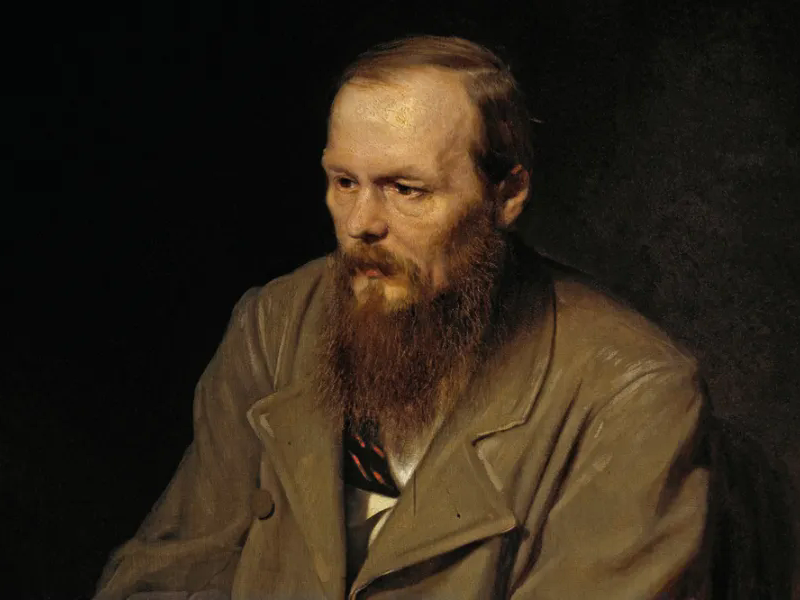
web-lead-image_final_dostoevsky
Books

Dostoevsky the Liberal

In the most famous section of his best-known novel, Dostoevsky’s Ivan Karamazov brings forward his case against God. He opens with a horrific litany of outrages against children. Turkish soldiers make a baby laugh and then shoot a pistol into his face. A little girl is beaten, thrashed, kicked by…

by Peter LeithartMarch 24, 2014
kelly-sikkema-ggs0_g6wi-i-unsplash
Epistemology

Subsidiary-Focal Integration and Liturgy

​At the heart of Esther Lightcap Meek's splendid ​Little Manual for Knowing is a concept she picked up from Michael Polanyi, "subsidiary-focal integration." The concept begins from the insight that all our knowing, all our experience, is double. We focus on something, but we are capable of "indwelling" that focal…

by Peter LeithartMarch 19, 2014
engin-akyurt-uz9qpvbol0e-unsplash
Revelation

White Stone

Jesus promises the overcomers of Pergamum "hidden manna" and a "white stone." The hidden manna is often linked with the manna stashed away in the ark of the covenant. The white stone has proved more elusive. Exodus tells us that manna was white (Exodus 16:31) and like bdellium (Numbers 11:7),…

by Peter LeithartMarch 17, 2014
226961fgsdl
Leviticus

A Theology of Festivity

Leviticus 23 begins with a reference to “Yahweh’s appointed times” ( mo’ade-YHWH ). Mo’ed is the common term for the feasts of Israel. A few dimensions to this term. First, it means “appointed time” or “designated time.” It is a time set by Yahweh. Yahweh has claimed certain times as…

by Peter LeithartMarch 12, 2014

Showing page 177 of 309

See all
See all
History

Chinese and Hebraic thought

In his fascinating Faith of Our Fathers , Chan Kei Thong points to many biblical images embedded in Chinese characters. His argument could be made even stronger by looking at Hebrew terminology. For instance, he says of the character “zui,” which means sin, that “The top part is . .…

May 11, 2007
History

Chinese Creation

At the beginning of the Great Sacrifice performed by the Chinese emperor for centuries, singers sang the song of creation, addressed to the “Sovereign Lord” known as “Shang Di”: “Of old in the beginning, there was the great chaos, without form and dark. The five planets had not begun to…

May 11, 2007

Perichoretic imagination

One of the differences between those associated with “Federal Vision” theology and those opposed to it is a difference of theological imagination. The opponents operate with a theological imagination that distinguishes and clarifies; ontology is distinguished from relationality, nature from supernature, ecclesiology from soteriology. On the other side are theologians…

May 11, 2007
History

Bos and Bobos

According to Adolf Loos, a turn of the 20th-century Viennese architect and critic, modern style combines beauty and practicality. Both are necessary: “By beautiful, what we mean is that something has achieved fullness, completion. But no useless, impractical object can really be described as ‘full’ or ‘complete.’” One can imagine…

May 8, 2007

Kiuchi on Leviticus

Some initial observations on Nobuyoshi Kiuchi’s recent commentary on Leviticus in the Apollos series from IVP. 1) Kiuchi intriguingly translates hata and hatta’t , traditionally rendered in terms of “sin” or “purification” in terms of “hiding”: ” hata and hatta’t mean ‘to hide oneself’ and the condition of ‘hiding oneself,’…

May 8, 2007

The Spoken Son

A student points out that Hebrews 1-2:4 contains seven quotations from the Old Testament. Through these seven words, God speaks His Son as the new creation.

May 7, 2007

Showing page 1682 of 2212

Browse by Category

In Medias Res

Your weekly digest for all things Theopolis.

Donate

Theopolis is nearly 100% donor-supported. Consider joining us on our mission.