Theopolis Logo

Writing

Explore our collection of theological essays, biblical studies, and reflections on faith and culture.

See all
300298rgsdl
Biblical Studies

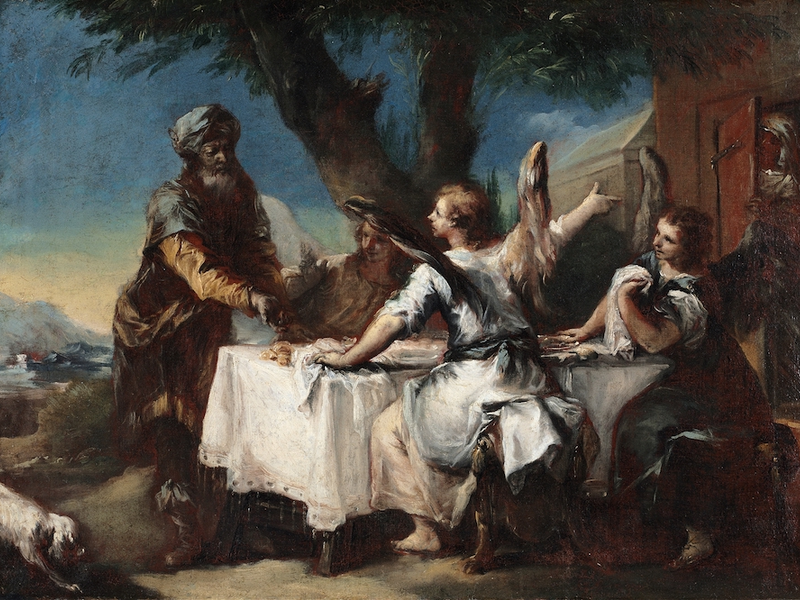
Is Abraham’s Life a Type?

The preceding essay has caused me to consider the possibility that the life of Abraham as recounted in Genesis contains a typological prophecy of the history of Israel; that is, that the events in Abraham’s life broadly anticipate events in Israel’s history. This kind of pattern is seen in the…

by James B. JordanMay 5, 2001

screen-shot-2022-05-12-at-12-07-23-pm
Hermeneutics

Thirty-Eight Years by the Sheep Pool

by: Jeff Meyers and James Jordan In the fifth chapter of John’s gospel we read of a man who had been ill for 38 years and who was lying by a pool located by the Sheep Gate of Jerusalem. This sheep waited, as did many other infirm people, for an…

by Jeff MeyersDecember 5, 2000
238070fgsdl
Biblical Horizons

How Are Women Saved?

What had been reduced to ruin by this sex, would by the selfsame sex be recovered to salvation. As Eve believed the serpent, so Mary believed the angel. The delinquency which the one occasioned by believing, the other by believing effaced. —Tertullian What is Paul saying about women and salvation…

by Jeff MeyersOctober 5, 2000
ben-white-w8qqn1pmqh0-unsplash
Jeremiah

The Return of Hamor

Back in Biblical Horizons 132 I discussed the horrible abuse of the converted men of Salem/Shechem in Genesis 34. These Hivites had joined the covenant by circumcision and then were slaughtered by Simeon and Levi. That, however, is not the end of their story. In Joshua 9 we find the…

by James B. JordanOctober 4, 2000
abraham-defeats-kings-g-jollain-2
Biblical Horizons

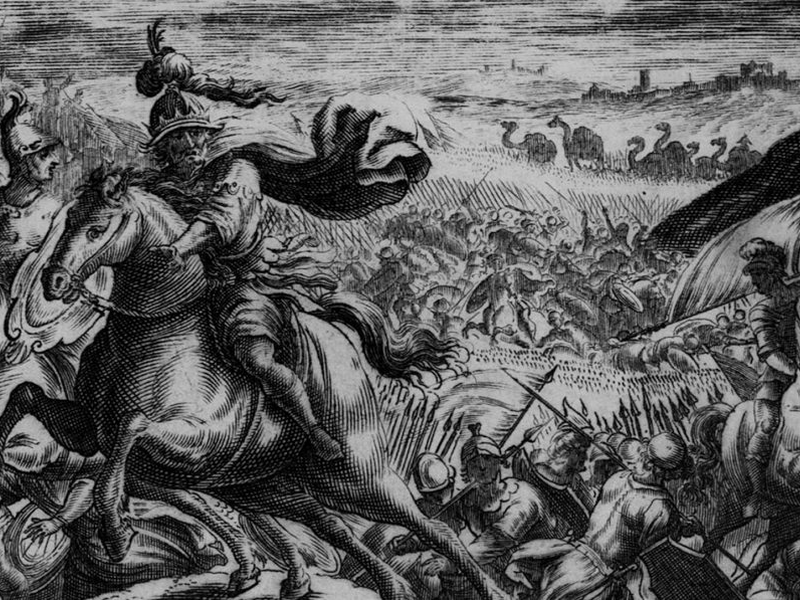
Abram’s 318 Men

Genesis 14:14 says that Abram mustered his trained men, “born in his house,” to rescue Lot, and gives their number as 318. It is clear that the precise number is provided for some reason, but what is it? S. Gevirtz notes that 318 is the sum of all the prime…

by James B. JordanSeptember 4, 2000
mikhail-preobrazhenskiy-9kszdpif_fo-unsplash
Hermeneutics

153 Large Fish

Simon Peter went up, and drew the net to land, full of large fish, a hundred and fifty-three; and although there were so many, the net was not torn. (John 21:11) This is one of those texts in the Bible that many people puzzle over. It is not a puzzle…

by James B. JordanSeptember 4, 2000

Showing page 241 of 309

See all
See all

Public and Private Piety

Thanks to Jayson Grieser for sending along notes and quotations from Ramie Targoff’s 2001 Common Prayer: The Language of Public Devotion in Early Modern England . Targoff points out that, contrary to what we might think, Protestants were more interested than Catholics in communal worship. “For sixteenth-century Catholics,” she writes,…

April 7, 2007

Calvin and allegory

Calvin is harsher on allegorical interpretation than almost anyone, yet he is all in favor of typology. David, Zedekiah, Joseph, Aaron, Samson, Joshua, Zerubbabel, Cyrus and others are types of Christ. It is no easy task to discover where he draws the line between allegory and typology, though. At times,…

April 5, 2007

Yahweh/Iehave

“Yahweh” is often thought to be a purely modern rendering of the Hebrew name, but Smalley finds a medieval glossator who writes the name as “Iahave.” She goes on: “The ‘monstrous form’ Jehoveh was already known to Christians in the late thirteenth century. Henry Crossy seems to compromise between Jehoveh…

April 5, 2007

Kids in Mother’s Milk

Aquinas rejected Augustine’s dismisal of literal interpretations of the law as “absurdities,” arguing that “the end of the ceremonial precepts was twofold, for they were ordained to divine worship, for that particular time, and to the foreshadowing of Christ.” Applying this principle, he sought for a plausible literal interpretation of…

April 5, 2007

Kids in Mother’s Milk

Aquinas rejected Augustine’s dismisal of literal interpretations of the law as “absurdities,” arguing that “the end of the ceremonial precepts was twofold, for they were ordained to divine worship, for that particular time, and to the foreshadowing of Christ.” Applying this principle, he sought for a plausible literal interpretation of…

April 5, 2007

Man of Sorrows

Following Jewish exegetes of his time, Andrew of St. Victor interpreted Isaiah 53 as a prophecy of Israel. Isaiah used the phrase “man of sorrows” to speak “of the people as though of one man.” “Bearing infirmities” refers to “the people who were to suffer in the Babylonian captivity” and…

April 5, 2007

Showing page 1696 of 2212

Browse by Category

In Medias Res

Your weekly digest for all things Theopolis.

Donate

Theopolis is nearly 100% donor-supported. Consider joining us on our mission.