Theopolis Logo

Writing

Explore our collection of theological essays, biblical studies, and reflections on faith and culture.

See all
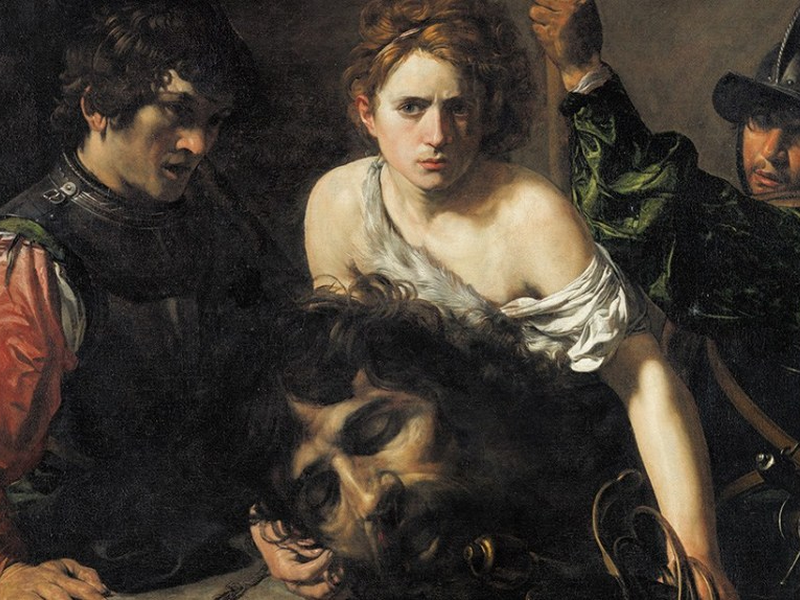
david-with-goliaths-head-and-soldiers-crop

David, Goliath, and the Body of Moses, Part 1

In the Bible, all the world is a stage, but like the Tabernacle, that stage moves around a lot. David’s defeat of Goliath can only be fully understood as liturgy fulfilled in history. Liturgy, as a sacrifice of praise, is the step-by-step process of resolving a conflict. It relinquishes all…

by Mike BullAugust 22, 2019

andrew-welch-eozrev7i3pi-unsplash
Aristotle

On Friendship

Aristotle isn’t fundamentally wrong about friendship, nor is the long tradition that follows him. But you might not gather that by reading some of the more pointed critics of the classical conception of friendship. I think, however, that the classical view is not only viable but taken up and fulfilled…

by Jack FranicevichAugust 20, 2019
jachan-devol-xdplirqchx8-unsplash
Epistemology

Integration: Putting the Pieces Together

#13 in Theopolis Papers, Seeking Integration in a Fragmented World It is time for me to “cast off” integration, the way a knitter removes a completed scarf from the needles. I want to bring my quest concerning integration to a decent closure, though my happy quest for reality continues. With…

by Esther Lightcap MeekAugust 13, 2019
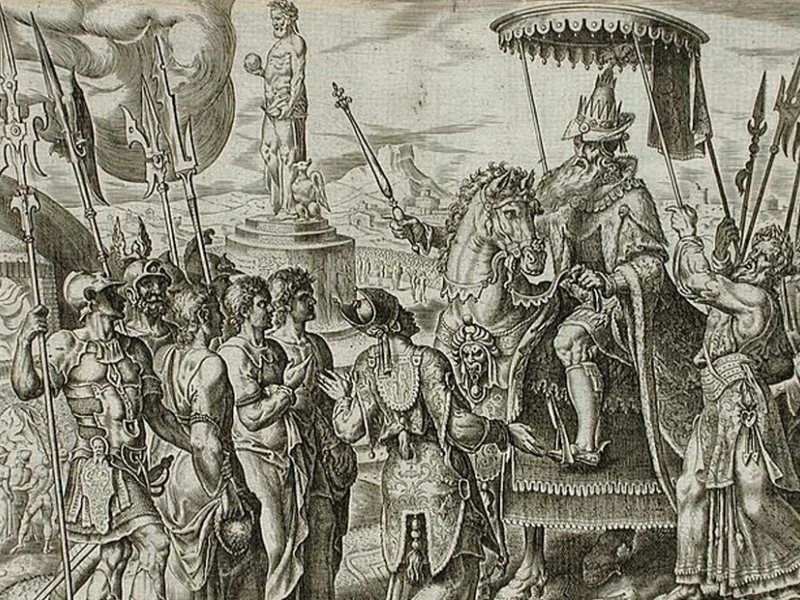
nebuchadnezzar
Revelation

Nebuchadnezzar’s Unfinished Symphony

Below are some notes on a particular sub-theme of Daniel 3, namely the downfall of Babylon’s liturgy. First up, a few words on our text’s literary construction. One of the most conspicuous features of Dan. 3 is its author’s love of lists . Personnel are listed (vs. 2, 3, 27),…

by James BejonAugust 6, 2019
e99a0657
Prayer

Praying for God's Good Name

Few things in Scripture, few things in the Christian life, are more familiar than the Lord’s Prayer. Sunday after Sunday, we pray these words together with our brothers and sisters. At home, alone or with our families, we pray this prayer daily, as Jesus taught us (Luke 11:2: “When you…

by John BarachJuly 30, 2019
catholicity_1
Culture

The Head, the Heart, and the “Gay Christian” Movement

At the 2019 General Assembly of the Presbyterian Church in America, the denominational delegates considered a number of official overtures (requests for action from the regional parts of the denomination) relating to issues of gender and sexuality. The PCA is conservative. As evidence of this, the assembly passed a resolution…

by Jonathan BarlowJuly 23, 2019

Showing page 76 of 309

See all
See all
History

Converted Jerusalem

In his fascinating Rise of Christianity , Rodney Stark cites estimates that there were between 10,000 and 20,000 inhabitants of Jerusalem in the first century. Stark uses this to falsify Luke’s claims that there were 5000 Christians in Jerusalem (Acts 4:4) and “many thousands” of Jews (Acts 21:20): “Had there…

March 30, 2007

Hebraic hermeneutics

One Rhonda Wauhkonen discusses Nicholas of Lyra’s “Hebraic” semiotics and hermeneutics in a 1992 article on Chaucer. She begins by contrasting Augustine’s signum/res distinction to Lyra’s Hebraic viewpoint: “In the Hebrew system as evidenced in Scripture and as adapted by Nicholas, such stratification of signification did not exist, for the…

March 29, 2007

Last and first

Nicholas of Lyra is known for his notion of a “double literal” sense to Scripture. For him, interpretation ad litteram includes both the historical and the doctrinal/christological senses, and he suggests that the ancient Hebrews could well have seen the Messianic sense as the literal sense. He also suggests that…

March 29, 2007

Nicholas of Lyra’s afterlife

In Book 3 of Gargantua and Pantagruel, Rabelais attributes an odd opinion to the 14th-century exegete, Nicholas of Lyra: “Pantagruel, having wholly subdued the land of Dipsody, transported thereunto a colony of Utopians, to the number of 9,876,543,210 men, besides the women and little children, artificers of all trades, and…

March 29, 2007

Nicholas of Lyra’s afterlife

In Book 3 of Gargantua and Pantagruel, Rabelais attributes an odd opinion to the 14th-century exegete, Nicholas of Lyra: “Pantagruel, having wholly subdued the land of Dipsody, transported thereunto a colony of Utopians, to the number of 9,876,543,210 men, besides the women and little children, artificers of all trades, and…

March 29, 2007

Thomas on the Parable of the Workers

Steinmetz summarizes Thomas’s remarkably “NTWrightian” commentary on Matthew 20:1-16. While acknowledging an Origenist tradition that sees the hours as moments of an individual life, Thomas is more interested in the Irenaean tradition that interprets the parable in terms of redemptive history: “The hours mentioned in the parable are not stages…

March 29, 2007

Showing page 1699 of 2212

Browse by Category

In Medias Res

Your weekly digest for all things Theopolis.

Donate

Theopolis is nearly 100% donor-supported. Consider joining us on our mission.