Theopolis Logo

Writing

Explore our collection of theological essays, biblical studies, and reflections on faith and culture.

See all
kelly-sikkema-gpoh17dxqdm-unsplash
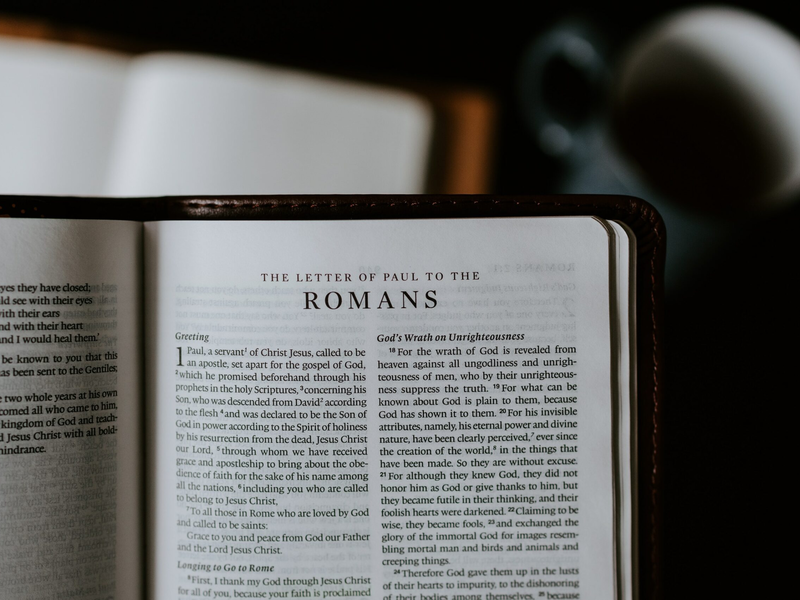
Romans

A Pathway into Romans, Addendum

An addendum to the earlier post on Romans. In my first essay, I pointed out how the role of the sin of Joseph’s brothers in bringing about Joseph’s exaltation in Egypt, and the resulting salvation of the world from famine, might show us and explanation to some of the distinctive…

by Mark HorneMarch 7, 2013

kelly-sikkema-gpoh17dxqdm-unsplash
Romans

A Pathway into Romans

When Paul wrote to the Romans, he was obviously writing a missionary support letter of a sort. One can read Romans 1.15 and then jump into 15.23 (“[S]ince I no longer have any room. . . .) without losing virtually any coherence. Yet into this letter he “dropped,” as it…

by Mark HorneMarch 5, 2013
preston-goff-xncifslw0jw-unsplash
Biblical Studies

Mapping of Time

The Westminster Confession says that each passage has one meaning , not many, and that gets picked up on by lots of people who are suspicious of and do not like typological readings of Scripture. I will defer to wiser and more learned heads than mine as to exactly what…

by Richard BledsoeMarch 1, 2013
kiwihug-l4gw27xzn1i-unsplash
John

How Jesus Saved the World | (Part 2)

By arresting, torturing, and killing Jesus, the authorities thought that they were securing well being and peace again in their society by means of the tried and true method of a single-victim scapegoat. Everyone’s thirst for violence will be satisfied and we can get on with the business of everyday…

by Jeff MeyersFebruary 28, 2013
lea-v-z2ied5ktd-8-unsplash
Ecclesiology

A Vision of Social Harmony

This is the second in a series of essays on "Continuing the Reformation." In his important though sadly unavailable book, Calvin's Doctrine of the Church (Brill, 1970), Benjamin Charles Milner argues persuasively that in Calvin's view God's perfect order for His creation, an order that was to grow and develop…

by James B. JordanFebruary 25, 2013
markus-winkler-aid-xyrtlec-unsplash
Theopolis News

Jordan Lectures

Trinity House Fellow James Jordan recently gave a series of lectures in London on how to read the Bible. They are available online at NorthLondonChurch.org .

by Peter LeithartFebruary 24, 2013

Showing page 198 of 309

See all
See all
Literature

Dickens and Modernity: Background

This is the opening portion of a lecture on Dickens’s Hard Times, but I want to examine Dickens not only as an artist but in relation to his fictional depiction of what we think of as “modernity.” Modernity is in part a set of ideas and aspirations, a set of…

January 16, 2007
Literature

Dickens and the French Revolution: Background

A Tale of Two Cities was published in 1859, the 70th anniversary of the beginning of the original revolution, usually dated to the fall of the Bastille on July 14, 1789. This stood to Dickens’s time approximately as WW II does for us. My parents, and your grandparents, remember WW…

January 15, 2007

Sermon Notes, Third Sunday After Epiphany

INTRODUCTION God is unseen, John says (v. 12). How then can the world know Him? John places the burden of showing God on us: The world knows the God who is love through the love we have for one another. THE TEXT “No one has seen God at any time.…

January 15, 2007

Eucharistic meditation, Second Sunday after Epiphany

1 John 4:9: By this the love of God is manifested in us, that God has sent His only begotten Son into the world so that we might live through Him. In this is love, not that we loved God, but that He loved us and sent His Son to…

January 14, 2007

Exhortation, Second Sunday After Epiphany

Love is blind, we like to say. John says the opposite. John teaches that we need to test and discern and judge the spirits and prophets. Discernment means keeping your eyes open. Discernment means not believing everything that you hear, not jumping on every bandwagon that passes through town, not…

January 14, 2007
History

Ex cathedra

When Frederick the Elector of Saxony protected Luther from church and imperial authorities, it was not as a personal friend but to protect the rights of the university faculty to exercise censorship in religious matters. The Reformation thus planted the seeds for the exaltation of the university Professor in German…

January 13, 2007

Showing page 1735 of 2212

Browse by Category

In Medias Res

Your weekly digest for all things Theopolis.

Donate

Theopolis is nearly 100% donor-supported. Consider joining us on our mission.