Theopolis Logo

Writing

Explore our collection of theological essays, biblical studies, and reflections on faith and culture.

See all
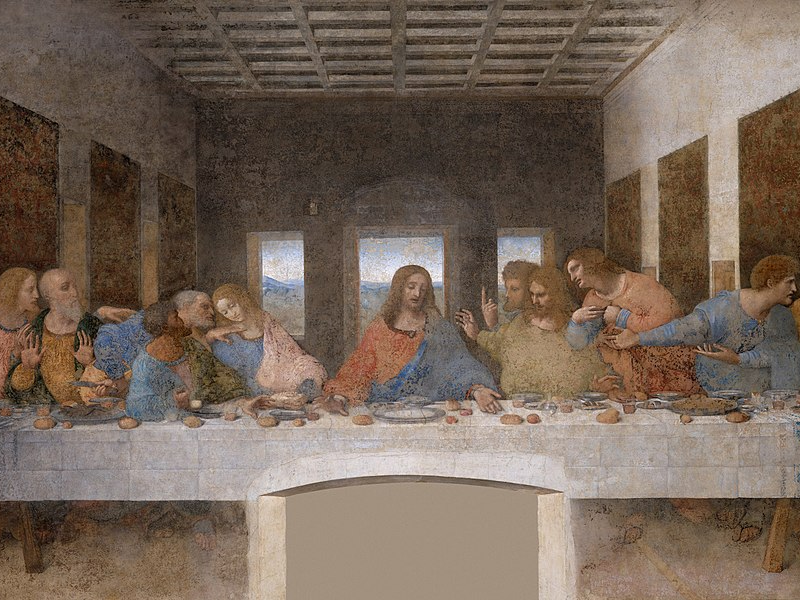
the_last_supper_-_leonardo_da_vinci_-_high_resolution_32x16-2
Biblical Horizons

Was the Last Supper a Passover?

Some readers of my essay, “ Strange and Glorious New Rites ,” have written to object that I have strained a gnat and swallowed a camel. I have strained out the gnat of a possible link to the memorial bread of the minchah (Lev. 2), while overlooking the camel that…

by James B. JordanMarch 22, 2011

screenshot-2023-09-19-at-10-48-12-am
Biblical Horizons

Planetary Judgments

In his lectures on Comparative Religion, Eugen Rosenstock-Huessy points to five fundamental gods that were over ancient man and still can dominate us today, and which must be respected. When we sin, we respect these gods more than we respect the Creator, disobeying the First Word: “You will have no…

by James B. JordanMarch 22, 2011

timothy-eberly-djj49s6ud2o-unsplash
Biblical Studies

Notes on the Book of Judges

A. Israel’s failure to hold land against the Canaanites. Progressive compromise, leading to judgment. 1:1–2:5. B. Israel’s idolatry, the cycle of judges, and war as God’s chastisement. 2:6–3:6. C. Northern Gentiles (Mesopotamia), and Othniel. 3:7-11. D. Lot: Moab, and Ehud. 3:12-13. E. Minor judge: Shamgar. 3:31. F. Canaanites opposed. Women…

by James B. JordanMarch 21, 2011
briana-tozour-mrfapsuyy8a-unsplash
Biblical Horizons

Principalities and Powers, (Part 2)

The great question for the emerging East, for Asia and other awakening third world areas, for an emerging nation like China is, “what fate awaits them?” They are now emerging from an analogous paganism that the West emerged from centuries ago. Here an amazing quotation from David Aikman, the Time…

by Richard BledsoeMarch 15, 2011
sinitta-leunen-dvibhmzsy8e-unsplash
Colossians

The Principalities and Powers, Part I

Paul contends that with the death of Christ on the Cross, there was an overcoming of the Principalities and the Powers (Col. 2:15). A great deal has been written on this subject over the last 60 years. What was for a long time either ignored, or regarded by liberal scholars…

by Richard BledsoeMarch 10, 2011
jimpreaching
Biblical Horizons

Eating and Drinking Together

One of the odd customs that has arisen in the 20th century is that many evangelical churches warp the rites of the Lord’s Supper by insisting that everyone wait so that they eat and drink together. Supposedly this is to emphasize the unity of the Church. This practice has no…

by James B. JordanMarch 3, 2011

Showing page 205 of 309

See all
See all

Sermon notes, Second Sunday After Epiphany

INTRODUCTION John frequently exhorts his readers to love one another (2:10; 3:10, 11, 23), and speaks of God’s love for us (3:1). Here, he connects these two loves inseparably. The noun or verb “love” is used 27 times (3 x 3 x 3) in this chapter, and twice he addresses…

January 8, 2007

Gnostic bodies

Nothing seems as anti-gnostic as the contemporary obsession with bodily perfection. We can remold our bodies in any way we want - tuck in here, enhance there, replant hair and remold biceps, remove wrinkles and signs of aging. In fact, this obsession is completely gnostic. It attempts to side-step the…

January 7, 2007

Eucharistic exhortation, First Sunday After Epiphany

1 John 4:2: Every spirit that confesses that Jesus Christ has come in the flesh is from God. Why do we have this meal? The simple answer is that Jesus commanded it. But why did He command it? After all, aren’t we in the New Covenant, which is a Spiritual…

January 7, 2007

Exhortation, First Sunday After Epiphany

Yesterday, January 6, was Epiphany, the beginning of one of the traditional seasons of the church year. The word “epiphany” means “manifestation” or “revelation.” Advent celebrates the coming of the Lord; Epiphany, His revelation. We need both. If God comes to us, but remains veiled and incognito, we will never…

January 7, 2007
Philosophy

Idealism to Textualism

In a 1980 essay, Richard Rorty offers a quick overview of the development of European thought from idealism through romanticism and pragmatism to what he calls textualism. The two ends of this development, idealism and textualism, are similar in various ways: both are antagonistic toward science, both claim that we…

January 7, 2007
Theology

Theology from the margins

Lubac is by all accounts one of the great Catholic theologians of the past century, and one of the most influential. He never worked on a dissertation, and because of the disruptions of war never went through a great deal of the formal training expected of Jesuits. He was eventually…

January 6, 2007

Showing page 1739 of 2212

Browse by Category

In Medias Res

Your weekly digest for all things Theopolis.

Donate

Theopolis is nearly 100% donor-supported. Consider joining us on our mission.