
Theopolis Logo

Writing

Explore our collection of theological essays, biblical studies, and reflections on faith and culture.

See all
sunrise-2
Creation

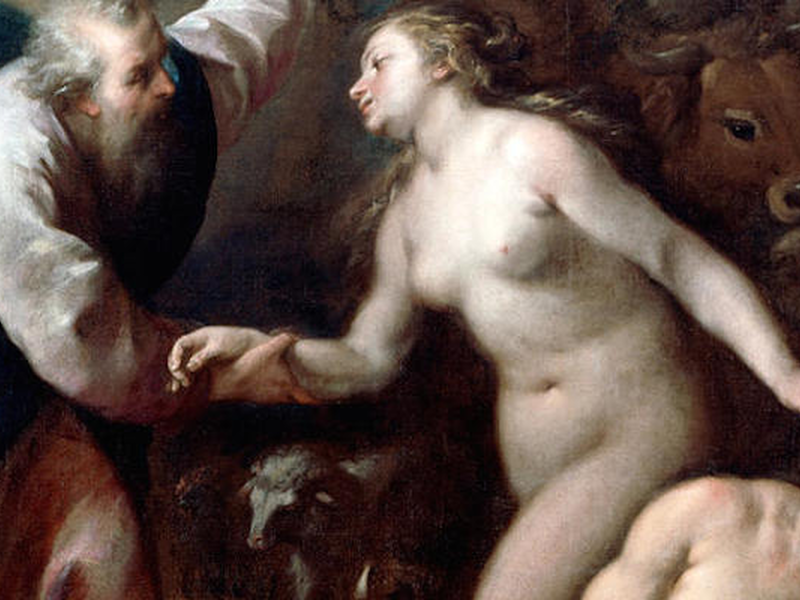
Maker of Heaven and Earth, (Part 4)

In my previous two posts, I looked at aspects of Psalms 93, 95, 96 and 98 that declare Yahweh, the divine King, to be the world’s own Creator. In my next post, I plan to argue that the creation theology of the sub-section constituted by Psalms 93-100 contributes to the…

by Stephen LongApril 23, 2015
creation-eve
Otherness

Sexual Difference, Liberal and Christian

Ethika Politika has published a fascinating interview within which the French Catholic philosopher Fabrice Hadjadj discusses his recent work on the subject of sexuality. While there are many points where our lines of reasoning as Protestants will sharply diverge from Hadjadj’s, there is also much that is deeply perceptive in…

by Alastair RobertsApril 21, 2015
giammarco-zeh-ljawhtg-unsplash
Literature

Macbeth and the Fall of Adam

For anyone in Shakespeare’s audience who knew the real story of Macbeth, his play must have been surprising. Shakespeare changed so many important details of the historical Macbeth’s life that had Raphael Holinshed, the main author of the most popular history of the British Isles in Shakespeare’s day — Holinshed…

by Ralph Allan SmithApril 16, 2015
medievalilluminatedmanuscript
Creation

Maker of Heaven and Earth, (Part 3)

I started looking at a sequence of psalms on divine Kingship (Psalms 93-100) in my last post, part of a series looking at the Old Testament’s witness to Yahweh’s exercise of absolute mastery over his cosmos. I am not trying to “prove” a doctrine of creation ex nihilo directly from…

by Stephen LongApril 14, 2015
pearls
Anxiety

(Un)Holy Fear

Most of the time I believe that dread is wise, anxiety righteous, fear a holy thing. It sounds ridiculous, but bear with me. There are days when fear seems to be not only a rational response to my circumstances, but a moral duty. After all, being a grown-up means responsibility.…

by Leta SundetApril 11, 2015
emmanuel-phaeton-1bwmfmvybi8-unsplash
Psalms

Psalm 36 Commentary

Get the Psalm 36 Translation here Psalm 36 begins with several translation problems. First, the first word in the actual psalm, as it is found in the English text, is the word "oracle." This word also begins the second verse in the medieval Massoretic Hebrew text, which is our basic…

by James B. JordanApril 10, 2015

Showing page 155 of 309

See all
See all
Philosophy

Heidegger in his woods

Latour is tired of being accused of having forgotten Being, and offers this clever brush-off of Heidegger: “If, scorning empiricism, you opt out of the exact sciences, then the human sciences,, then traditional philosophy, then the sciences of language, and you hunker down in your forest - then you will…

November 15, 2006
History

Semi-modernism

Postmoderns, Latour suggests, think they are still modern, but in fact they have greatly oversimplified the modern Constitution. Postmoderns might emphasize the separation of subject and world, and stretch that opposition to a breaking point (Latour vividly describes them as doing the splits to keep subject and world apart); but…

November 15, 2006
History

Modern temporality

In his very good section on modern temporality, Latour argues that modernity assumes that everything in the present, modern moment, is purely modern, novel. Anything that appears that is not up-to-date is a “archaism,” and moderns worry constantly that this or that event or trend might “turn back the clock.”…

November 15, 2006
History

Representation

One of the key moves made since the 17th century, Latour argues, is a distinction between modes of “representation.” In the laboratory Boyle is representing things before selected witnesses through scientific experiments, giving mute nature a voice through the scientist, while in politics Hobbes suggests that the Sovereign speaks for…

November 15, 2006
History

We Have Never Been Modern

Bruno Latour’s We Have Never Been Modern (Harvard 1993) is a rich study. He describes modernity in terms of a dual process of “purification” and “hybridization.” Purification involves the clean construction of a nature (and science) separated off from society and the self, while hybridization involves mixtures of nature and…

November 15, 2006

Tears of things

And/Or: Virgil is aware that the furor of civil war can be curbed only by an opposing, and more intense, furor. That, as Milbank says, is the way of paganism - peace established only by superior violence against violence. But in those tears Virgil expresses the the painful recognition -…

November 13, 2006

Showing page 1763 of 2212

Browse by Category

In Medias Res

Your weekly digest for all things Theopolis.

Donate

Theopolis is nearly 100% donor-supported. Consider joining us on our mission.