Theopolis Logo

Writing

Explore our collection of theological essays, biblical studies, and reflections on faith and culture.

See all
banner
Theopolis News

Theopolis Fellows Program Postponed

Since Theopolis began in 2013, we have been aiming for the fall of 2016 as the launch date for our year-long Fellows Program. As it turned out, we had only a handful of applicants, most withdrew for one reason or another (none for lack of interest), and we are left…

by Peter LeithartJuly 6, 2016
good-samaritan-2
Justice

Aiming at Shalom, (Part 1)

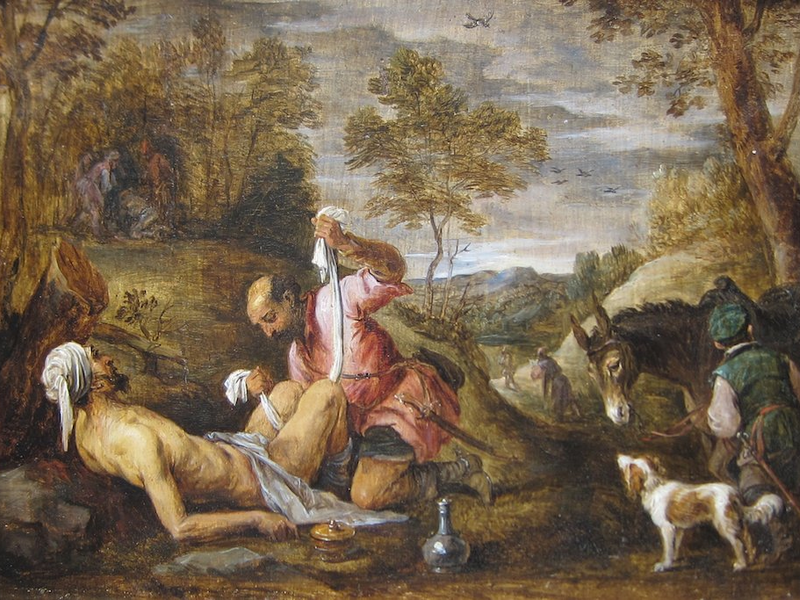
Charles Spurgeon once quipped, “If you give a man the gospel, wrap it in a sandwich. And if you give a man a sandwich, wrap it in the gospel.” With those words, the great Baptist preacher captured the essence of the church’s mission in the world. The church’s mission is…

by Rich LuskJuly 5, 2016
city-heaven
Contentment

Learning Contentment, (Part 2)

This is a continuation of a previous essay by Lindsey Tollefson . 6. We own everything . Sometimes the biggest thing that is keeping us discontent is because we are not happy with what we have been given in material possessions. Especially in the United States it is so easy…

by Lindsey TollefsonJune 30, 2016
medievalilluminatedmanuscript

Do Not Forget

Proverbs 3:1-12 form a section marked off by the reference to the father-son relationship at the beginning and end (vv. 1, 12). Within this section, Solomon gives a series of six commands to his son (vv. 1, 3, 5, 7, 9, 11), the first and the last (vv. 1, 11)…

by Peter LeithartJune 28, 2016
e99a1883
Theopolis News

Year-End Letter

A letter from Theopolis President Peter Leithart as our fiscal year draws to an end . Dear Friend of Theopolis: It was one of those moments when you realize that other people understand you better than you understand yourself. I was having lunch with a pastor friend at a BJ’s…

by TheopolisJune 27, 2016
sky-from-bridge
Contentment

Learning Contentment, (Part 1)

Learning to be content and completely satisfied in Christ is certainly a life-long process and a lesson that we are always learning, and always being tested on. As I am learning and wrestling against discontent, I am always looking for practical and tangible ways to set my course towards joy…

by Lindsey TollefsonJune 23, 2016

Showing page 129 of 309

See all
See all
Philosophy

Hyper-Cartesians

Walter Truett Anderson suggests that postmoderns may be distinguished from others by the fact that they not only have a culture, but know that they have it. Or, put differently: “You do not choose to be premodern. If you choose, you are at least modern. If you know you are…

November 9, 2006
Politics

Therapeutic politics

Christopher Lasch pointed to the therapeutic dimensions of 1960s radicalism: “Acting out fantasies does not end repressions . . . it merely dramatizes the permissible limits of antisocial behavior. In the sixties and early seventies, radicals who transgressed these limits, under the illusion they were fomenting insurrection or ‘doing gestalt…

November 9, 2006
Politics

PR Politics

Clem Whittaker, a pioneer in the political use of media during the 1930s and 40s, candidly explained his theory of campaigning in a speech to the PUblic Relations Society of America: “There are thousands of experts bidding for every man’s attention - and every man has a limited amount of…

November 9, 2006
History

Pseudo-war

Walter Truett Anderson points to the US invasion of Grenada (1983) as an example of a postmodern public-relations war: “its primary purpose was to give the American public a ‘win,’ to flex the muscles of the Reagan administration, to allow Americans to (in the phrase current at the time) ‘feel…

November 9, 2006

Poet or poem revisited

A reader, Dan Glover, sent the following response to my hints about the Christian as “poem.” “Christ, the eternal Word, indwells his people and his people corporate. He is the Word which controls us with his words (‘go, make disciples . . . baptizing them in the name of the…

November 9, 2006
History

Social Construction

Walter Truett Anderson suggests that postmodernism takes is rise from the recognition of the social construction of reality. This means: The institutions, practices, and habits that make up the contents of social life are made by human beings; and even natural reality is known and experienced through a linguistic and…

November 9, 2006

Showing page 1766 of 2212

Browse by Category

In Medias Res

Your weekly digest for all things Theopolis.

Donate

Theopolis is nearly 100% donor-supported. Consider joining us on our mission.