Theopolis Logo

Writing

Explore our collection of theological essays, biblical studies, and reflections on faith and culture.

See all
stalker
Advent

Why Stalker Should be Added to Your Christmas Watchlist

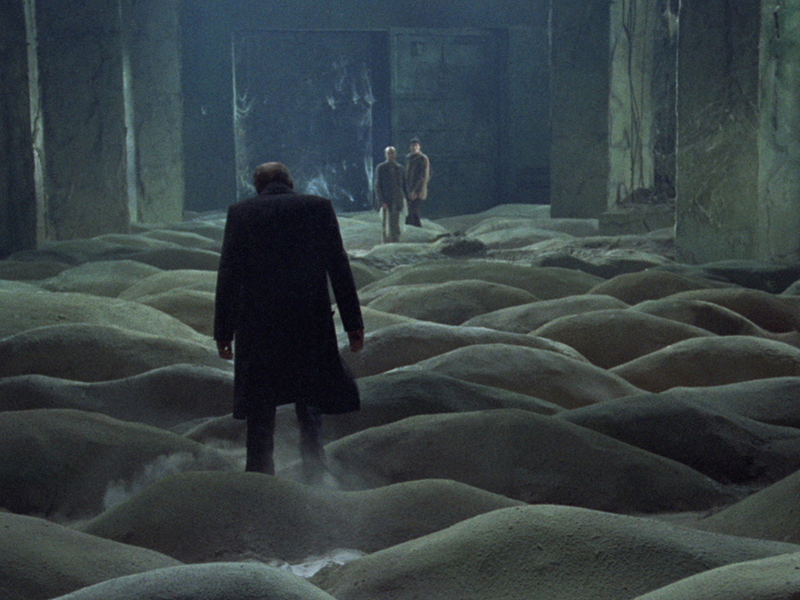
Stalker is a Soviet-era film by Andrei Tarkovsky in which an enigmatic location comes into existence either through an alien crash or a nuclear disaster; the film never makes it clear, but knowing Tarkovsky’s criticism of the spectacle nature of the alien motif after his own filming of Solaris and…

by Garrett SoucyDecember 19, 2023

jessica-rockowitz-5nlcaz2wjxe-unsplash
Motherhood

A Greater Capacity

I was scrolling through Instagram on the night of Thanksgiving, the only one awake (as usual), coming down from my extrovert-high after all the conversation and merriment of the day, when I came across a post that stopped me in my tracks. The post contained a picture-perfect image of some…

by Lindsey MurphyDecember 18, 2023
screen-shot-2020-12-03-at-1-47-33-pm
Theopolis News

The 2024 James B. Jordan Prize

The Theopolis Institute is pleased to announce the fourth round of the James B. Jordan Prize to honor outstanding doctoral dissertations in biblical theology. James Jordan is one of the most insightful biblical scholars of our time. The Jordan Prize exists to encourage more of the deep Scriptural investigation of…

by Peter LeithartDecember 15, 2023
screenshot-2023-12-12-at-10-36-28-am-2
Eschatology

What Kind of Story Is History?

Suppose I were to write three versions of a story. In every version, the first half of the book looks forward to the coming of the king. There are promises about him and about how glorious his kingdom will be, about how his kingdom will fill the earth with peace…

by John BarachDecember 12, 2023
13071-probablyvalentindeboulogne-saintpaulwritinghi-1
Galatians

Re-Considering Doug Wilson's "Covenant with Hagar"

Introduction Doug Wilson’s American Milk and Honey is now available. There’s a great deal in the book worth commenting on, and I anticipate engaging with that material more broadly in the near future. In the lead up to its release, however, Moscow has not been silent concerning Israel, the Jews,…

by Gabe HarderDecember 11, 2023
screenshot-2023-12-05-at-5-51-01-pm
Parables

The Older Son

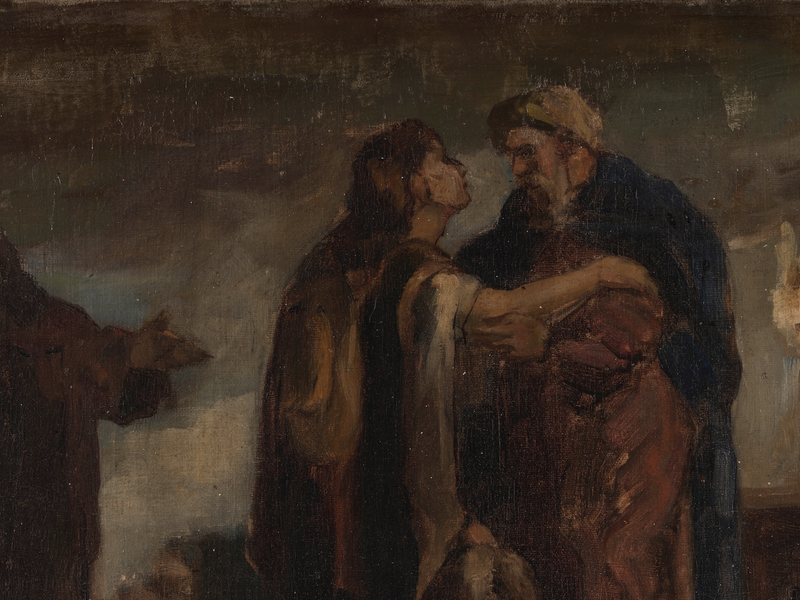
Our telling of the Prodigal Son parable usually (and rightly) focuses on the runaway younger brother: the lost son returns, and his father joyfully and graciously receives him. But the full story has an additional element: an angry older brother. Jesus uses the older brother to rebuke the religious leaders…

by Tim NicholsDecember 6, 2023

Showing page 25 of 309

See all
See all
Philosophy

Continental v. analytic

Continuing through Simon Critchley’s book on Continental philosophy, the following analogy seems to capture some aspects of the contrast of Continental and analytic: Continental is Catholic: conscious of tradition, respectful of saints, aware of historical contextualization. Philosophy is the history of philosophy. Analytic is Protestant: deals with de-contextualized philosophical problems,…

September 14, 2006
History

Modernist postmoderns

Postmodern critics of modernity sometimes treat the latter not only as the pursuit and ambition for totality; they treat it as a totality, as an undifferentiated whole. But if postmoderns are right, even modernity was fragmented and frayed at the edges, and the appearance of totality is a modernist ruse.…

September 13, 2006
History

Modernity and dirt

A subsidiary thesis: Modernity is motivated by a desire for purity, by dirt-avoidance - dirt being, as Mary Douglas says, “matter out of place.” Counter-modernity is dirt’s revenge, celebration of dirt.

September 13, 2006
History

Modernity as court culture

Featherstone once again. He points out that sometime in the 18th century, upper class culture divided from lower class culture: “in 1500 the educated strata despised the common people although they shared their culture. Yet by 1800 their descendants had ceased to join spontaneously in popular culture and were rediscovering…

September 13, 2006
History

Romantic ethic and Consumption

In his 1987 book, The Romantic Ethic and the Spirit of Modern Consumerism , C. Campbell attempts to explain the origins of contemporary obsession with novelty, pleasure in the new, self-expression through consumption of goods. He traces it to romanticism’s focus on “imagination, fantasy, mysticism, creativity and emotional exploration” (Featherstone’s…

September 13, 2006
History

Consumption, Body, and the Sacred

A couple of further notes from Featherstone’s very stimulating book. First, citing Pierre Bourdieu, he notes the limits of seeing consumption as an isolated marker of status. The signs “that betray a person’s origins and trajectory through life are manifest in body shape, size, weight, stance, walk, demeanour, tone of…

September 13, 2006

Showing page 1794 of 2212

Browse by Category

In Medias Res

Your weekly digest for all things Theopolis.

Donate

Theopolis is nearly 100% donor-supported. Consider joining us on our mission.