Theopolis Logo

Writing

Explore our collection of theological essays, biblical studies, and reflections on faith and culture.

See all
300298rgsdl
Biblical Studies

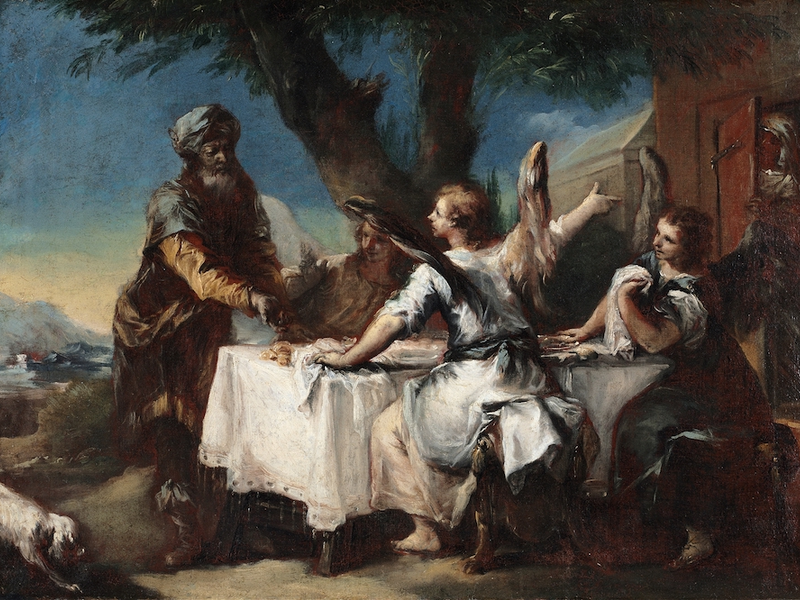
Is Abraham’s Life a Type?

The preceding essay has caused me to consider the possibility that the life of Abraham as recounted in Genesis contains a typological prophecy of the history of Israel; that is, that the events in Abraham’s life broadly anticipate events in Israel’s history. This kind of pattern is seen in the…

by James B. JordanMay 5, 2001

screen-shot-2022-05-12-at-12-07-23-pm
Hermeneutics

Thirty-Eight Years by the Sheep Pool

by: Jeff Meyers and James Jordan In the fifth chapter of John’s gospel we read of a man who had been ill for 38 years and who was lying by a pool located by the Sheep Gate of Jerusalem. This sheep waited, as did many other infirm people, for an…

by Jeff MeyersDecember 5, 2000
238070fgsdl
Biblical Horizons

How Are Women Saved?

What had been reduced to ruin by this sex, would by the selfsame sex be recovered to salvation. As Eve believed the serpent, so Mary believed the angel. The delinquency which the one occasioned by believing, the other by believing effaced. —Tertullian What is Paul saying about women and salvation…

by Jeff MeyersOctober 5, 2000
ben-white-w8qqn1pmqh0-unsplash
Jeremiah

The Return of Hamor

Back in Biblical Horizons 132 I discussed the horrible abuse of the converted men of Salem/Shechem in Genesis 34. These Hivites had joined the covenant by circumcision and then were slaughtered by Simeon and Levi. That, however, is not the end of their story. In Joshua 9 we find the…

by James B. JordanOctober 4, 2000
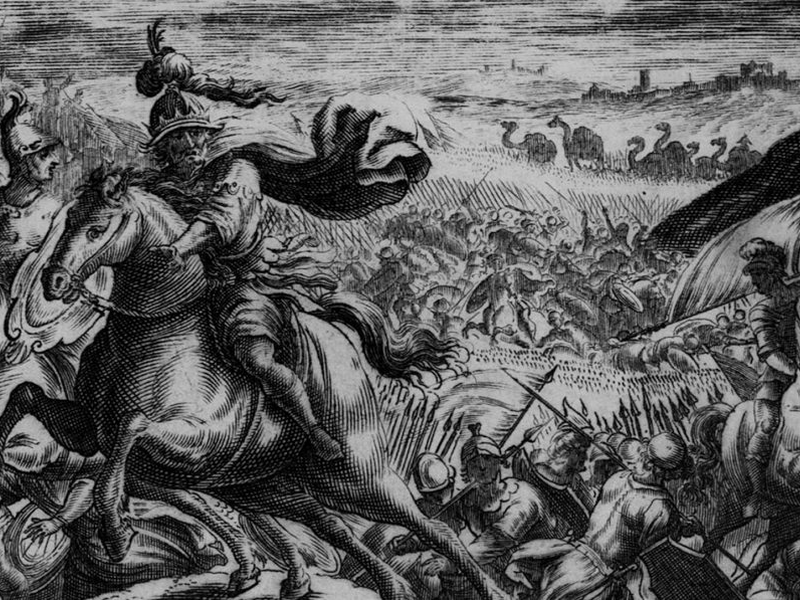
abraham-defeats-kings-g-jollain-2
Biblical Horizons

Abram’s 318 Men

Genesis 14:14 says that Abram mustered his trained men, “born in his house,” to rescue Lot, and gives their number as 318. It is clear that the precise number is provided for some reason, but what is it? S. Gevirtz notes that 318 is the sum of all the prime…

by James B. JordanSeptember 4, 2000
mikhail-preobrazhenskiy-9kszdpif_fo-unsplash
Hermeneutics

153 Large Fish

Simon Peter went up, and drew the net to land, full of large fish, a hundred and fifty-three; and although there were so many, the net was not torn. (John 21:11) This is one of those texts in the Bible that many people puzzle over. It is not a puzzle…

by James B. JordanSeptember 4, 2000

Showing page 241 of 309

See all
See all
Philosophy

Hermeneutics v. Semiology

According to Michel Foucault, what Marx, Nietzsche, and Freud introduce is an age of interpretation. He develops one of the implications of this by suggesting there is a “fierce war” between semiology and hermeneutics, between treating words as signs and treating them as interpretations. Nietzsche in particular, Foucault claims, develops…

August 26, 2006
Literature

Shakespeare and Bible

Steven Marx’s Shakespeare and the Bible (Oxford, 2000), purports to be the “first book to explore the pattern and significance” of Shakespeare’s biblical allusions. Perhaps. The results are mixed. Each chapter of Marx’s book attempts to show structural, plot, and thematic parallels between a section of Scripture and a play…

August 26, 2006
Literature

Ubiquitous Shakespeare

Exploring Lake Superior in 1840, one Charles W Penny wrote, “We read the Bible I dare say much more than we would have done had we been in Detroit. Shakespeare was duly honoured, as he is every day when we travel. When on the water, some one of the party…

August 26, 2006

Divine Love

The Persons of the Trinity live out an eternal round of self-sacrificing love. If a proof text is needed, John 15 supplies it. 1) Jesus says, “as the Father loved Me, I have also loved you” (v. 9). Jesus’ love for the disciples is modeled on the Father’s for Him.…

August 26, 2006

Queen of the Sciences

John Stuart Mill declared at the beginning of his book on logic that “Logic is the common judge and arbiter of all particulars investigations. It does not undertake to find evidence, but to determine whether it has been found. Logic neither observes, nor invents, nor discovers; it judges.”

August 24, 2006
History

New

Hans Jonas writes in an essay on technological and scientific advance that one of the key cultural shifts in the sixteenth and seventeenth centuries was a, well, new understanding of “new,” and a corresponding revision of traditional ways of thinking about history: “A sign of this spreading mood is the…

August 24, 2006

Showing page 1804 of 2212

Browse by Category

In Medias Res

Your weekly digest for all things Theopolis.

Donate

Theopolis is nearly 100% donor-supported. Consider joining us on our mission.