Theopolis Logo

Writing

Explore our collection of theological essays, biblical studies, and reflections on faith and culture.

See all
giammarco-zeh-ljawhtg-unsplash
Biblical Horizons

OPEN BOOK: Views and Reviews

Isaac E. Mozeson, The Word: The Dictionary that Reveals the Hebrew Sources of English (Northvale, NJ: Jacob Aaronson Inc., 1995), 310 pp. Reviewed by James B. Jordan. Once there was only one language in the world, the language God spoke to Adam. At the Tower of Babel, there came to…

by James B. JordanJune 28, 1996
tim-wildsmith-j6jv-mkdzqs-unsplash
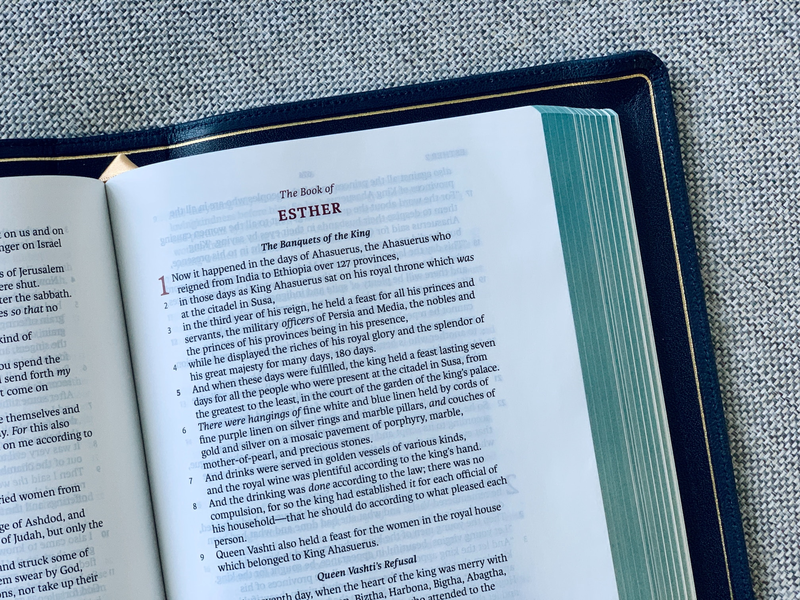
Esther

Esther: Historical & Chronological Comments (IV)

2. The Setting of the Book of Esther A. Xerxes (continued from previous issue) Ezra 6:14 says that the Jews finished building "according to the command of the God of Israel and the decree of Cyrus and Darius and Artaxerxes king of Persia." The problem with this verse is that…

by James B. JordanJune 28, 1996

ales-krivec-4mibe6zg5r0-unsplash
Acts

Jesus and Amalek

This essay goes with our previous study of the Amalek pattern back in Biblical Horizons No. 2. Since many do not have this essay, entitled "The Battle of Gog and Magog," let me cite the relevant paragraphs: Note in Genesis 12-15 that Abram moves into the land after escaping Pharaoh…

by James B. JordanJune 28, 1996

aaron-burden-1ebsmyrau-s-unsplash
Proverbs

The Strange Woman

Proverbs 7:6-23 is one of several passages early in the Proverbs in which Solomon warns his son about the wiles and dangers of the "strange woman." It is certainly quite proper to take these as straightforward warnings against sexual sins, and these are certainly warnings that need to be impressed…

by Peter LeithartJune 27, 1996
jan-kahanek-g3o5ztrk2e4-unsplash
Biblical Studies

Some Observations

1. In Luke 4:20 we read that after Jesus finished reading from Isaiah, "the eyes of all in the synagogue were fixed upon Him." This is usually taken in a psychological sense: They were amazed at Jesus somehow. I suggest that, as always, a merely psychological reading is a modern…

by James B. JordanMay 28, 1996
tim-wildsmith-j6jv-mkdzqs-unsplash
Esther

Esther: Historical & Chronological Comments (III)

2. The Setting of the Book of Esther Up to now we have assumed what we must prove, that the king in Esther is Darius the Great. While Biblical chronologists have usually taken this position, commentators on the book of Esther have often taken others as the king. One view,…

by James B. JordanMay 28, 1996

Showing page 265 of 309

See all
See all

Luther and Medieval Piety

T he great question haunting late medieval piety was that of the inadequacy of human piety. As Berndt Hamm puts it ( Reformation of Faith ), the “harrowing question” was that of the “spiritual inadequacy” of Christians (88). The late medieval answer was to reduce the requirements necessary to meet…

April 14, 2017

Politics of the Picturesque

I n his Landscape, Liberty and Authority , Tim Fulford examines the paradox of William Gilpin's travel writings and tour-leading in the picturesque wilds of Wales, England, and Scotland. Gilpin was aware that “the picturesque might be socially dangerous,” so much so that he apologizes to the noble landowners whose…

April 14, 2017

Separation and Incorporation

I n his contribution to Signifying Identities , Fredrik Barth suggests that our notion of political, economic and social boundaries is an extension of the feeling that a tool extends the body: When you hold a knife or a spoon in your hand and use it as an implement, the…

April 14, 2017

Early Christian Disenchantment

G uy G. Stroumsa writes in The Making of the Abrahamic Religions in Late Antiquity that “For Weber, as is well known, the most striking ‘disenchantment of the world' in history occurred with the rise of the ‘inner-worldly' asceticism ( innerweltliche Askese ) of the Calvinist Reformation. And yet, it…

April 14, 2017

From Reform to Revolution?

M ichel de Certeau ( The Writing of History , 126-7) quotes Alphonse Dupront on the post-Reformation situation of the church: “a first piece of raw material, as obvious as capital for the modern mind, is the progressive promotion of heresy in confession and of confession in church. . .…

April 14, 2017

The Unity of Christian Europe

In a 1971 essay, H.G. Koenigsberger challenged the notion that the Reformation broke up a unified Europe. He criticizes historians and social scientists for assuming a norm of unity: “We have assumed that the theological and ecclesiastical unity of Catholic Christendom was its natural condition and that, in consequence, the…

April 13, 2017

Showing page 186 of 2212

Browse by Category

In Medias Res

Your weekly digest for all things Theopolis.

Donate

Theopolis is nearly 100% donor-supported. Consider joining us on our mission.