Theopolis Logo

Writing

Explore our collection of theological essays, biblical studies, and reflections on faith and culture.

See all
aaron-burden-qjdzyt_k8xg-unsplash
Biblical Horizons

Twelve Fundamental Avenues of Revelation, Part 2

Theophanic revelation is historically progressive, or eschatological, in character. First of all, in Genesis 1:2, the Spirit appeared inside the creation, sent by the Father. After the creation of man, the Spirit worked and works with humanity to bring us to maturity, from Daughter to Bride to fruitful Mother. He…

by James B. JordanFebruary 28, 1997

gang-coo-nt7tyrsofwk-unsplash
Biblical Studies

The Calf of the Purification Offering

On the eighth day of the rite of "filling the hand," Aaron began his service at the altar. His first offering was a "calf" (Heb. `egel ), which served as a purification offering for himself and (apparently) his household (Leviticus 9:2, 8). This is striking for a couple of reasons.…

by Peter LeithartFebruary 27, 1997
sergey-shmidt-koy6flccy5s-unsplash
Exodus

A Blossom of Yahweh’s Garden

One of the distinctive items of the high priest’s clothing was the "golden plate" inscribed with the words "Holy to Yahweh" (Exodus 28:36-38). The word translated as "plate" is tsits , which literally means "flower." The verbal and noun forms are both used in Numbers 17:8, which describes Aaron’s rod…

by Peter LeithartFebruary 27, 1997
davide-ragusa-slgtmf8ejye-unsplash
Biblical Horizons

Squaring Off and Crossing Up

The square, rectangle, and cross shapes appear all over the sanctuaries God reveals in the Bible: Tabernacle, Solomon’s Temple, Ezekiel’s Temple, New Jerusalem. One thing that can be said right away about these designs, and the occasional perfect circle (the lavers), is that they do not occur in nature. They…

by James B. JordanJanuary 28, 1997
schlanger_jonah_prison_090913_620px
Biblical Studies

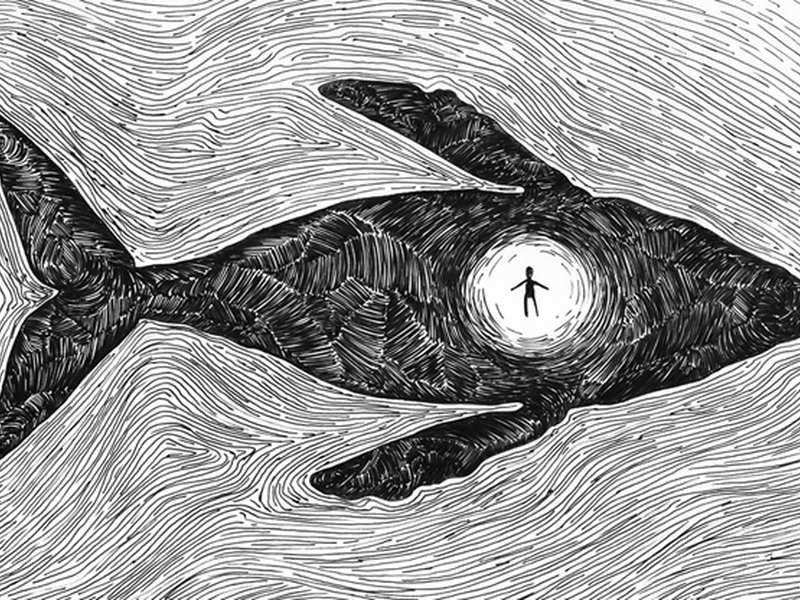
In the Fish: The Church as Tomb

"For just as Jonah was three days and three nights in the belly of the sea-monster, so will the Son of Man be three days and three nights in the heart of the earth" (Matthew 12:40). Some reflections on Jonah’s Big Fish have led to the following essay. Let me…

by James B. JordanJanuary 28, 1997
Hermeneutics

God Most High

Citing Melchizedek in Genesis 14:18-20, James Jordan has written that "the name of God in use among the nations was God Most High’" (Hebrew, `el `elyon ; in Through New Eyes , p. 176). In addition to Melchizedek, one could cite the example of Balaam, who invokes the Lord both…

by Peter LeithartJanuary 27, 1997

Showing page 260 of 309

See all
See all

Ocularity and the ancients

A TLS reviewer examines what sounds like a fascinating book on Plato and Aristotle’s appropriation of “theoria” (originally referring to spectators who watch the Olympics and other festivals in a kind of “sacralized spectating”). Along the way, the reviewer comments on recent criticisms of the “spectator theory of knowledge” often…

March 6, 2006

Eucharistic meditation, first lent

2 Kings 14:25: Jeroboam restored the border of Israel from the entrance of Hamath as far as the Sea of the Arabah, according to the word of the Lord, the God of Israel, which he spoke through His servant Jonah the son of Amittai, the prophet, who was of Gath-Hepher.…

March 5, 2006

Exhortation, First Sunday of Lent

What is the cross? Originally a Persian invention, crucifixion became a Roman method of execution, reserved for slaves and for the most dangerous political criminals. Josephus described it as the “most wretched of deaths,” as a victim slowly suffocated with the weight of his own body. One writer describes crucified…

March 5, 2006
Philosophy

Beginnings

A man went searching for the beginning of the road he was traveling. He traced his footsteps back the way he had come, until he came to where he started. But the beginning of the road was not a beginning. Something lay on the far side of the road’s beginning,…

March 4, 2006
Philosophy

Foucault on man

Another discarded fragment. Perhaps the best-known of the postmodern theories of the self is that of Michel Foucault. According to Foucault, “man” is an invention of the recent past, of the modern world. Contrary to popular opinion, “man” has not been the subject of investigation since the time of the…

March 4, 2006

Bultmannian irony

Bultmann says that we moderns who can flick on electric lights cannot believe in the dichotomous anthropology of the New Testament, which distinguishes absolutely between the spiritual core of the self and the physical body. Problem is, that’s not the New Testament anthropology. In fact, it’s ironically the product of…

March 4, 2006

Showing page 1871 of 2212

Browse by Category

In Medias Res

Your weekly digest for all things Theopolis.

Donate

Theopolis is nearly 100% donor-supported. Consider joining us on our mission.