Theopolis Logo

Writing

Explore our collection of theological essays, biblical studies, and reflections on faith and culture.

See all
img_4660-2
Sacramental Theology

The Gospel According to the Sacraments, (Part 1)

My first title for this series of posts was “Evangelical Sacramental Ecumenism” – not exactly a clickbait title. But those three words, evangelical, sacramental, and ecumenical, say a lot: The centrality of the gospel; a focus on baptism, bread, and wine; and the quest for visible unity among diverse churches.…

by Michael SpalioneDecember 12, 2017

e99a2313
Baptism

Baptism and Contextualization, (Part 1)

I can imagine someone reading the title of this essay and saying to himself, "I have two questions. First, what in the world is “contextualization”?" Second, even before hearing the answer to the first question, he may wonder, "what does baptism have to do with such an awkward and vague…

by Ralph Allan SmithDecember 7, 2017
sixteen-miles-out-al48tflf4e8-unsplash
Deuteronomy

Law of the Rebellious Son

Deuteronomy 21:18-21 My colleague Ralph Smith has recently written on this passage, here . I entirely agree with Ralph's thrust, which is typological, that the passage is ultimately aimed at the entire nation of Israel itself as the rebellious son. But what I am thinking is from another perspective, perhaps…

by Richard BledsoeDecember 5, 2017
e99a2313
Baptism

Like A Dove (Part 2)

In the previous article in this series, I drew attention to the threefold meaning of the Spirit of God descending as a dove on Jesus at His baptism. On a related note, I also argued that 1 Corinthians 6:9-11 and Titus 3:3-7 were parallel passages that addressed the same issues…

by Ralph Allan SmithNovember 30, 2017
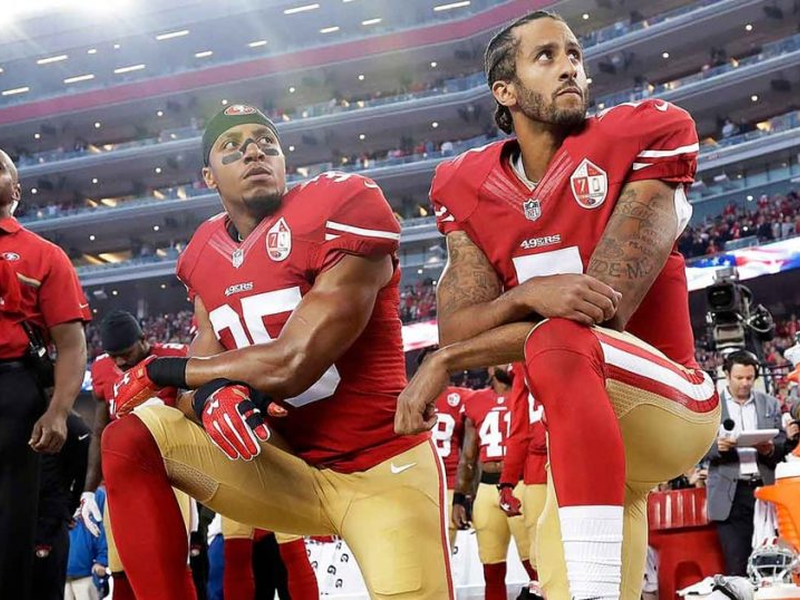
colin-1
Politics

What’s in a Flag?

The National Anthem protest is misguided. So too the conservative backlash. The Church’s response has been disappointing. I address each in turn. The greatest triumph of the American Civil Rights Movement was its seizing of the moral high ground in American politics. It did so by insisting only on those…

by A. K. ShaukuNovember 28, 2017
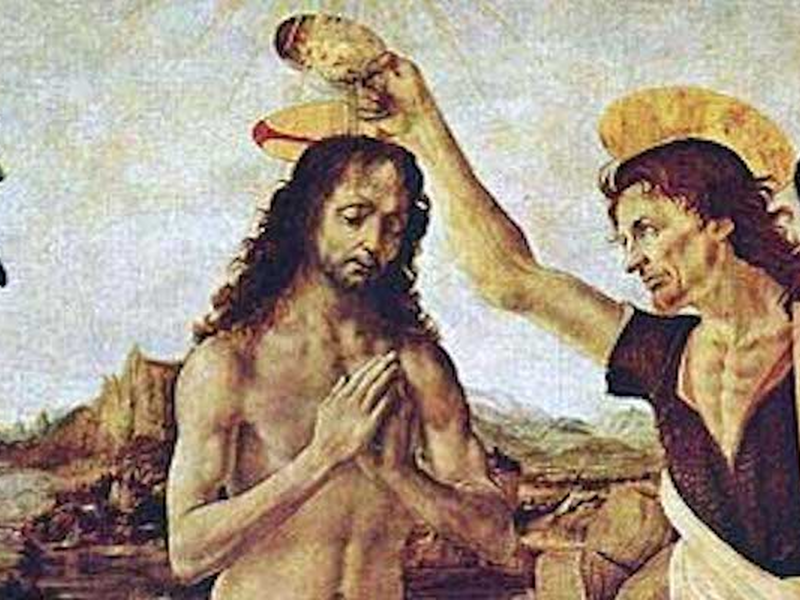
baptism-of-christ
Baptism

Like a Dove

Peter Leithart’s book, The Priesthood of the Plebs: A Theology of Baptism , argues that baptism is parallel to and the fulfillment of the old covenant rite of priestly ordination. But this is not something explicitly stated in the New Testament. Why, then, should we believe it? Leithart shows in…

by Ralph Allan SmithNovember 23, 2017

Showing page 102 of 309

See all
See all
History

Modernity and antiquity

Kumar suggests that “some of the principal hall-marks of modernity” are already evident in the Christian notions of time and history. Both Christianity and modernity separate time from nature, and humanize time; time is seen by both as “linear and irreversible”; both see history as an Aristotelian drama with beginning,…

February 24, 2006
History

First Modernity

The Latin modernus was coined in the late fifth century, as an antonym to antiquus , and variations of modernus became particularly common after the 10th century. Thus, Krishan Kumar writes, “Modernity is . . . an invention of the Christian Middle Ages,” and was used to emphasize the radical…

February 24, 2006
Philosophy

Computer Communications and the Self

Poster lists four effects that computer communications (email, chat groups, etc) have on the self: “1 they introduce new possibilities for playing with identities; 2 they degender communications by removing gender cues; 3 they destabilize existing hierarchies in relationships and re-hierarchize communications according to criterio that were previously irrelevant; and…

February 24, 2006
Philosophy

Computers, subjects and objects

Descartes famously contrasted the mind (res cogitans) with the external world (res extensa), but Mark Poster suggests that computer writing fudges that distinction: “the computer dematerializes the written trace. As inputs are made to the computer through the keyboard, pixels of phosphor are illuminated on the screen, pixels that are…

February 24, 2006
Media

Community and New Communications

Mark Poster points to a tension between the modern institutions of production and the postmodern technologies of communication, particularly as they impact the formation of the self: “If modernity or the mode of production signifies patterned practices that elicit identities as autonomous and (instrumentally) rational, postmodernity or the mode of…

February 24, 2006
Media

Telephone

Prior to World War I, Telefon Hirmondo, the telephone system of Budapest, was used as a broadcast system, with a published schedule of programs that were restricted to certain classes of people in Hungary. Only later did it develop into a communications system in which everyone could pass information to…

February 24, 2006

Showing page 1878 of 2212

Browse by Category

In Medias Res

Your weekly digest for all things Theopolis.

Donate

Theopolis is nearly 100% donor-supported. Consider joining us on our mission.