Theopolis Logo

Writing

Explore our collection of theological essays, biblical studies, and reflections on faith and culture.

See all
timothy-eberly-djj49s6ud2o-unsplash
Leviticus

Yahweh's War Against Death

Stories, frankly all human stories are practically always about one thing aren’t they? Death. The inevitability of death. . . . “There is no such thing as a natural death. Nothing that happens to man is ever natural, since his presence calls the whole world into question. All men must…

by Brian MarrApril 14, 2014

screenshot-2023-09-21-at-4-52-42-pm
Matthew

Inescapable Blood

Matthew is organized around 5 discourses, which trace out the history of Jesus as a recapitulation of the history of God and Israel in the Old Testament. Jesus first speaks as a new Moses, instructing His disciples on a mountain about a righteousness that surpasses the righteousness of the scribes…

by Peter LeithartApril 10, 2014
screen-shot-2022-05-12-at-12-07-23-pm
Angels

Did Angels Marry People? The Sin of Cultural Intermarriage

The fall of the Sethites in Genesis 6 is the third fall of mankind, or the third degree of Adam’s original fall. Adam sinned in a Garden against his Father by stealing something he was supposed to wait to obtain. (“Every tree shall be food for you” Genesis 1:29.) Cain…

by James B. JordanApril 7, 2014
sixteen-miles-out-al48tflf4e8-unsplash
Angels

Did Angels Marry People? The Sons of God in Genesis 6

The recent fantasy film Noah and a slightly related blog comment by my friend Douglas Wilson have stirred up again the question of whether the “sons of God” in Genesis 6 who married the “daughters of men” were fallen angels or the priestly line of Seth. Doug argues for angels,…

by James B. JordanApril 4, 2014
kiwihug-l4gw27xzn1i-unsplash
Angels

The Angels of Jude

The prophecy of Jude concerns apostasy. An illustration of apostasy and its consequences is found in verse 6, which the New American Standard Bible translates this way: "And angels who did not keep their own domain, but abandoned their proper abode, He has kept in eternal bonds under darkness for…

by James B. JordanApril 3, 2014
screenshot-2023-09-21-at-4-22-42-pm
Matthew

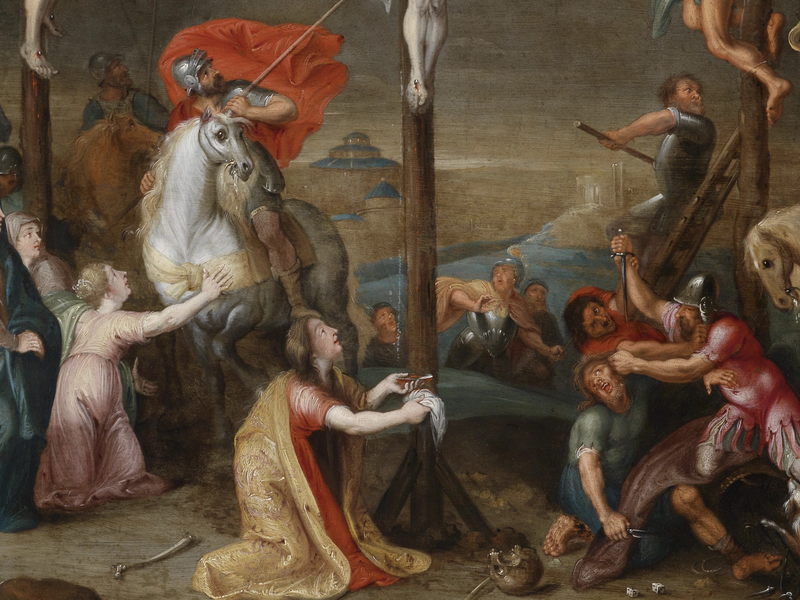
Women at the Cross

At His death, Jesus is surrounded by a Roman centurion and his cohort of Gentile solders. Matthew doesn't say that any disciples are there. But women are, and so is Joseph of Arimathea, identified as a “disciple” but, as John tells us, a “secret disciple for fear of the Jews,”…

by Peter LeithartMarch 31, 2014

Showing page 176 of 309

See all
See all

Language of deficit

After listing 22 descriptive terms for the self (including stressed, self-alienated, paranoid, bulimic), Kenneth Gergen notes that “they are all terms of mental deficit. They discredit the individual, drawing attention to problems, shortcomings, or incapacities. To put it more broadly, the vocabulary of human deficit has undergone enormous expansion within…

February 8, 2006

When to start philosophy

Montaigne wrote in his essay on the education of children, “The boy we would breed has a great deal less time to spare; he owes but the first fifteen or sixteen years of his life to education; the remainder is due to action. Let us, therefore, employ that short time…

February 8, 2006
History

Self-conscious modernity

Postmodernity is from one angle modernity coming to self-consciousness. Managerialism is as much at the heart of modernity as of postmodernity, but postmoderns know they are being managed. As a result, management is always shot through with irony. How can we take the wizard seriously after the curtain has been…

February 8, 2006
History

Postmodern society

David Lyon’s little book, Postmodernity, provides an excellent introduction to the sociological, technological, and political contexts in which postmodern thought has arisen. He is cautious about inflating claims about a “postmodern” condition or the coming of a “new society,” but attempts to isolate those features of contemporary life that have…

February 7, 2006
Literature

More on Hamlet

INTRODUCTION As many critics have pointed out, Act 2 of Hamlet focuses on the efforts of both the “mighty opposites” - Hamlet and Claudius - to spy out the intentions and plans of the other. Thus begins the process of inserting various mediators between the two, all of whom end…

February 7, 2006

Watts on Mark 1:1f

Rikki Watts offers some other dimensions to the quotation from Mark 1:1. He notes that Mark is quoting not only from Isaiah 40, but also from Exodus 23 and Malachi 3, and shows how these three texts overlay each other in Mark’s presentation. Exodus 23 is a warning to Israel…

February 7, 2006

Showing page 1888 of 2212

Browse by Category

In Medias Res

Your weekly digest for all things Theopolis.

Donate

Theopolis is nearly 100% donor-supported. Consider joining us on our mission.