Theopolis Logo

Writing

Explore our collection of theological essays, biblical studies, and reflections on faith and culture.

See all
tim-marshall-k2u71wv2ei4-unsplash
Modernity

Protestantism and the Postmodern self

Postmodernism has, we are told, “decentered” the modern self, that unified, sovereign, isolated, godlike “thinking thing” discovered by Rene Descartes. The postmodern self is not single but multiple; not sovereign but controlled by external forces; not isolated but “embedded” in the world and in relation; not godlike, but human, all…

by Peter LeithartMay 6, 2013

kiwihug-l4gw27xzn1i-unsplash
Matthew

Law and History: How to Read the Law of Moses (Part 8)

This is the eighth in a series of studies on Deuteronomy 22:30-23:8. And Jesus went out thence, and withdrew into the parts of Tyre and Sidon. And behold, a Canaanitish woman came out from those borders, and cried, saying, Have mercy on me, O Lord, thou son of David; my…

by Ralph Allan SmithMay 1, 2013
screen-shot-2023-09-20-at-7-04-07-am
Augustine

A Cusan Modernity?

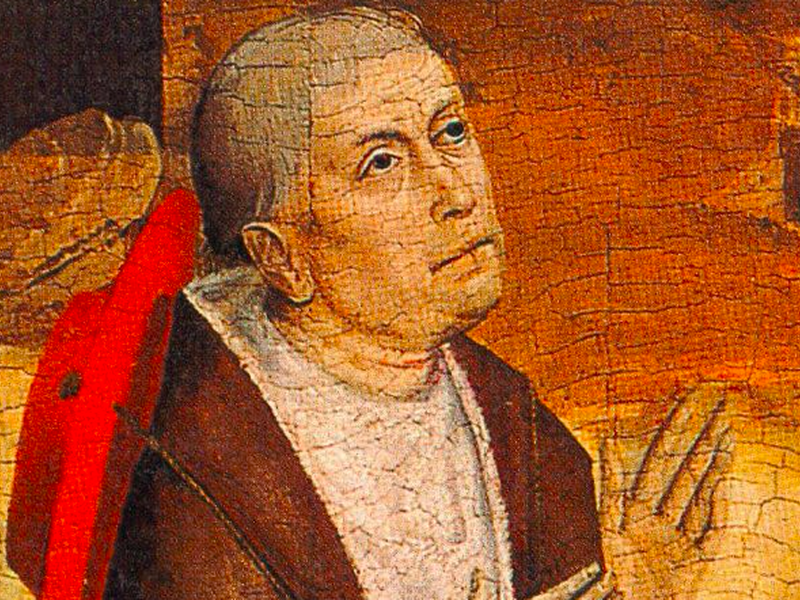
The fifteenth-century German Cardinal Nicholas of Cusa led a busy and wide-ranging life. Educated in liberal arts and law at Heidelberg and Padua, Nicholas was a leading figure in the Conciliarist movement, and later served as a papal legate to both Constantinople and throughout Germany. As Bishop of Brixen, he…

by Peter LeithartApril 29, 2013
screenshot-2023-07-27-at-10-25-35-am
Deuteronomy

Law and History: How to Read the Law of Moses (Part 7)

This is the seventh in a series of studies on Deuteronomy 22:30-23:8. Thou shalt not abhor an Edomite, for he is thy brother; thou shalt not abhor an Egyptian, because thou wast a sojourner in his land. The children of the third generation that are born unto them shall enter…

by Ralph Allan SmithApril 25, 2013
ivan-aleksic-16yxcjsoaek-unsplash
Romans

What Advantage the Jew?

A sermon on Romans 3:1-8. 1 Then what advantage has the Jew? Or what is the value of circumcision? 2 Much in every way. To begin with, the Jews were entrusted with the oracles of God. A lot of people speculate here about what kind of advantage Paul is talking…

by Mark HorneApril 22, 2013
screenshot-2023-07-27-at-10-25-35-am
Deuteronomy

Law and History: How to Read the Law of Moses (Part 6)

This is the sixth in a series of studies on Deuteronomy 22:30-23:8. An Ammonite or a Moabite shall not enter into the assembly of Yahweh; even to the tenth generation shall none belonging to them enter into the assembly of Yahweh forever: because they met you not with bread and…

by Ralph Allan SmithApril 17, 2013

Showing page 195 of 309

See all
See all
Science

End of Modernity?

Iain Provan offers this comment in his Ecclesiastes commentary: “Modern people tend to view the movement of history, as far as human beings are concerned, as being from primeval swamp to divinity. The beginning was unpromising, but quite against expectation the forces of evolution have propelled us along, to a…

January 29, 2006

Eucharistic meditation, Fourth Epiphany

Ecclesiastes 12:1: Remember also your Creator in the days of your youth. Solomon ends Ecclesiastes, as we have seen, emphasizing again the brevity of life. Life is vapor, all is vapor, a vapor of vapors, most vaporous, superlatively vaporous. Solomon makes it clear at the end of the book that…

January 29, 2006

Baptismal meditation, Fourth Epiphany

Ecclesiastes 11:1: Cast your bread on the face of the waters, for you will find it after many days. We saw in this morning’s sermon Solomon’s image of casting bread on the water encourages a reckless faith, a willingness to act in spite of the risks. You don’t know whether…

January 29, 2006

Exhortation, Fourth Epiphany

What kind of guidance should we give our children? We often focus exclusively on all the things that they may not do. That is a perfectly sound approach, especially for younger children. After all, we worship and serve a God whose first words to newborn Israel were “Thou Shalt Not.”…

January 29, 2006
Philosophy

No dry light

Francis Bacon offered this wise caution, “The human understanding is no dry light but receives an infusion from the will and affections; whence proceed sciences which may be called ‘sciences as one would.’ For what a man had rather were true he more readily believes . . . . Numberless…

January 26, 2006

Notes on Freud

Some notes on Freud, mainly as background for discussion of Ernest Jones psycho-analytic treatment of Hamlet, largely based on Merold Westphal’s summary in Suspicion & Faith. FREUD AND SCIENCE Freud is an Enlightenment man who subverted the Enlightenment, an advocate of scientism whose theories rendered scientism impossible. He appears not…

January 26, 2006

Showing page 1892 of 2212

Browse by Category

In Medias Res

Your weekly digest for all things Theopolis.

Donate

Theopolis is nearly 100% donor-supported. Consider joining us on our mission.