
Theopolis Logo

Writing

Explore our collection of theological essays, biblical studies, and reflections on faith and culture.

See all
giammarco-zeh-ljawhtg-unsplash
Biblical Horizons

OPEN BOOK: Views and Reviews

Isaac E. Mozeson, The Word: The Dictionary that Reveals the Hebrew Sources of English (Northvale, NJ: Jacob Aaronson Inc., 1995), 310 pp. Reviewed by James B. Jordan. Once there was only one language in the world, the language God spoke to Adam. At the Tower of Babel, there came to…

by James B. JordanJune 28, 1996
tim-wildsmith-j6jv-mkdzqs-unsplash
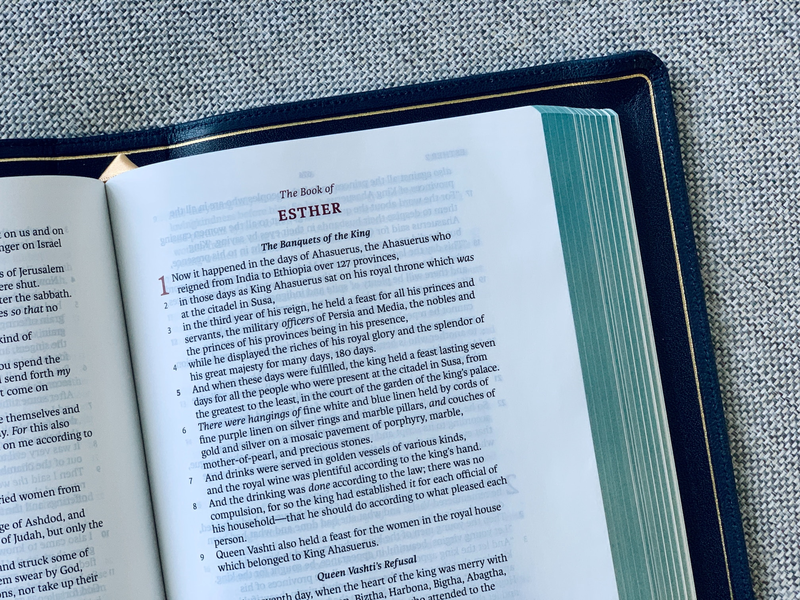
Esther

Esther: Historical & Chronological Comments (IV)

2. The Setting of the Book of Esther A. Xerxes (continued from previous issue) Ezra 6:14 says that the Jews finished building "according to the command of the God of Israel and the decree of Cyrus and Darius and Artaxerxes king of Persia." The problem with this verse is that…

by James B. JordanJune 28, 1996

ales-krivec-4mibe6zg5r0-unsplash
Acts

Jesus and Amalek

This essay goes with our previous study of the Amalek pattern back in Biblical Horizons No. 2. Since many do not have this essay, entitled "The Battle of Gog and Magog," let me cite the relevant paragraphs: Note in Genesis 12-15 that Abram moves into the land after escaping Pharaoh…

by James B. JordanJune 28, 1996

aaron-burden-1ebsmyrau-s-unsplash
Proverbs

The Strange Woman

Proverbs 7:6-23 is one of several passages early in the Proverbs in which Solomon warns his son about the wiles and dangers of the "strange woman." It is certainly quite proper to take these as straightforward warnings against sexual sins, and these are certainly warnings that need to be impressed…

by Peter LeithartJune 27, 1996
jan-kahanek-g3o5ztrk2e4-unsplash
Biblical Studies

Some Observations

1. In Luke 4:20 we read that after Jesus finished reading from Isaiah, "the eyes of all in the synagogue were fixed upon Him." This is usually taken in a psychological sense: They were amazed at Jesus somehow. I suggest that, as always, a merely psychological reading is a modern…

by James B. JordanMay 28, 1996
tim-wildsmith-j6jv-mkdzqs-unsplash
Esther

Esther: Historical & Chronological Comments (III)

2. The Setting of the Book of Esther Up to now we have assumed what we must prove, that the king in Esther is Darius the Great. While Biblical chronologists have usually taken this position, commentators on the book of Esther have often taken others as the king. One view,…

by James B. JordanMay 28, 1996

Showing page 265 of 309

See all
See all

Solomon’s imagination

Iain Provan doubts that Solomon wrote Ecclesiastes . One of the “striking” bits of evidence is “that many of the later passages in Ecclesiastes appear to be written from a non-Solomonic point of view (i.e., from the perspective of the subject rather than the ruler, e.g., 5:8-9; 8:1-9).” It’s a…

December 31, 2005

Vapor and Wind

More thoughts on Ecclesiastes, stealing, as always, from James Jordan . The image of “shepherding wind” has a particular application to the king, who is the shepherd of flock of Israel. Solomon recognizes that ruling a kingdom is like trying to shepherd wind, which is of course impossible for human…

December 31, 2005

Remnant and reunion

Some additional thoughts about the role of the “remnant” in Israel’s history, which supercede earlier posts on the subject. 1) The word “remnant” in the OT normally refers to the whole of Israel that survives a judgment, rather than to some sub-division of Israel that remains faithful during a period…

December 30, 2005
History

Christopher Dawson and the New Age

Christopher Dawson, who died in 1970, was one of the leading historians of the twentieth century. A devout Roman Catholic, hededicated his career, and some 25 books, to understanding andexplaining history, particularly Western history, from aChristian perspective. One little book, Christianity and the New Age, provides a glimpse of thewisdom…

December 30, 2005
Philosophy

What I Think of Postmodernism

As if anyone cares, here are some unfinished and amateurish comments on “what I think of postmodernism.” 1) First, it is helpful to distinguish, as many writers do, between postmodernism and postmodernity. The latter is a cultural/political mood or condition, referring to movements in architecture, film, and other arts that…

December 30, 2005
Theology

Foundationalism and Inerrancy

Somewhere in his blog discussion of Brian McLaren’s Generous Orthodoxy , Doug Wilson indicated that McLaren considers inerrancy a sell-out to modernist foundationalism. To support this, Doug pointed me to this quotation from John Franke’s foreword to McLaren’s book: “In the nineteenth and twentieth centuries, the foundationalist impulse produced a…

December 30, 2005

Showing page 1906 of 2212

Browse by Category

In Medias Res

Your weekly digest for all things Theopolis.

Donate

Theopolis is nearly 100% donor-supported. Consider joining us on our mission.